• HOME
  • NEWS
  • EXPLORE
    • CAREER
      • Companies
      • Jobs
    • EVENTS
    • iGEM
      • News
      • Team
    • PHOTOS
    • VIDEO
    • WIKI
  • BLOG
  • COMMUNITY
    • FACEBOOK
    • INSTAGRAM
    • TWITTER
Sunday, May 10, 2026
BIOENGINEER.ORG
No Result
View All Result
  • Login
  • HOME
  • NEWS
  • EXPLORE
    • CAREER
      • Companies
      • Jobs
        • Lecturer
        • PhD Studentship
        • Postdoc
        • Research Assistant
    • EVENTS
    • iGEM
      • News
      • Team
    • PHOTOS
    • VIDEO
    • WIKI
  • BLOG
  • COMMUNITY
    • FACEBOOK
    • INSTAGRAM
    • TWITTER
  • HOME
  • NEWS
  • EXPLORE
    • CAREER
      • Companies
      • Jobs
        • Lecturer
        • PhD Studentship
        • Postdoc
        • Research Assistant
    • EVENTS
    • iGEM
      • News
      • Team
    • PHOTOS
    • VIDEO
    • WIKI
  • BLOG
  • COMMUNITY
    • FACEBOOK
    • INSTAGRAM
    • TWITTER
No Result
View All Result
Bioengineer.org
No Result
View All Result
Home NEWS Science News Chemistry

As many as six billion Earth-like planets in our galaxy, according to new estimates

Bioengineer by Bioengineer
June 16, 2020
in Chemistry
Reading Time: 2 mins read
0
IMAGE
Share on FacebookShare on TwitterShare on LinkedinShare on RedditShare on Telegram

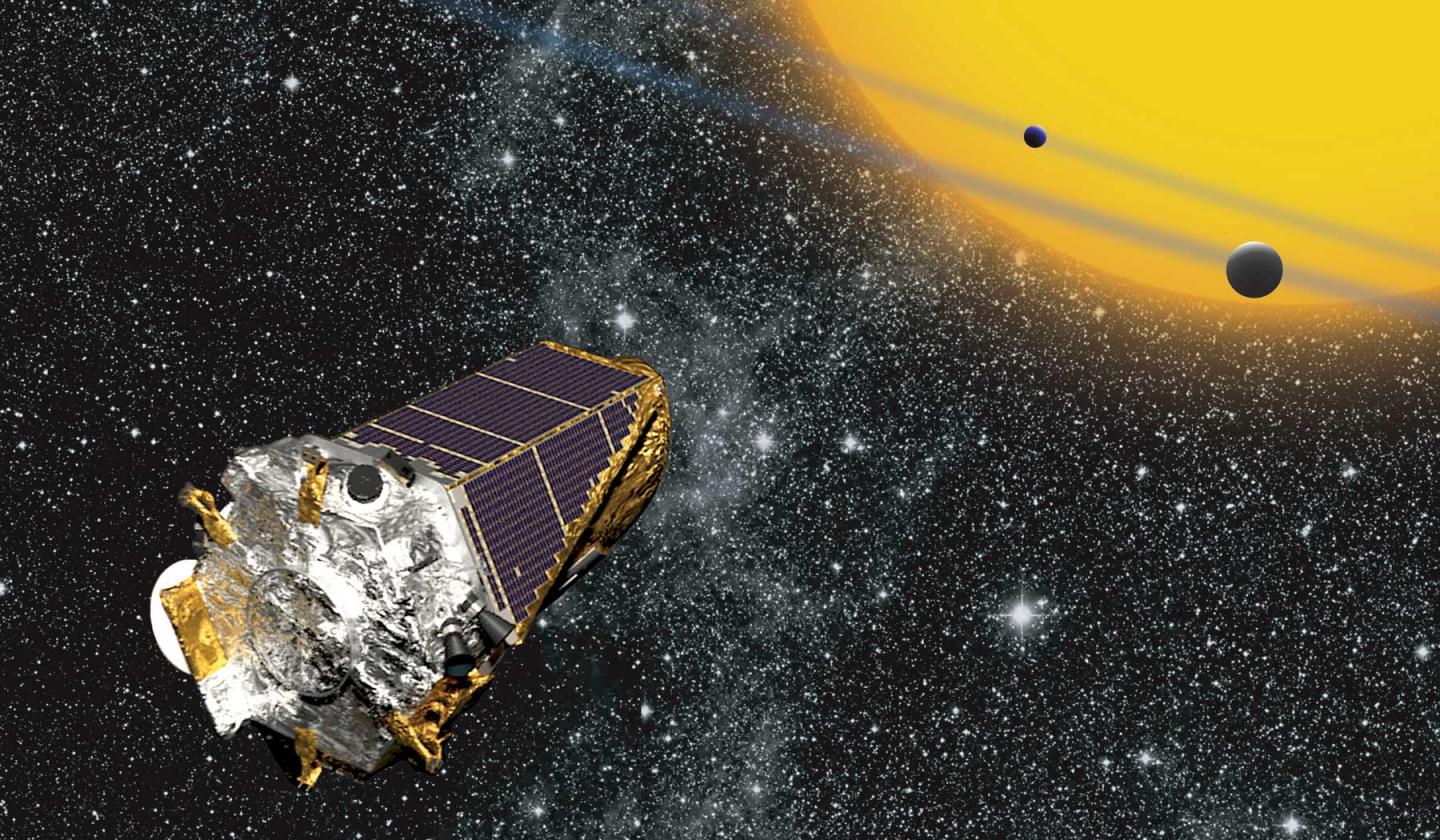
There may be as many as one Earth-like planet for every five Sun-like stars in the Milky way Galaxy, according to new estimates by University of British Columbia astronomers.
IMAGE

Credit: NASA Ames/ W Stenzel.

To be considered Earth-like, a planet must be rocky, roughly Earth-sized and orbiting Sun-like (G-type) stars. It also has to orbit in the habitable zones of its star–the range of distances from a star in which a rocky planet could host liquid water, and potentially life, on its surface.

“My calculations place an upper limit of 0.18 Earth-like planets per G-type star,” says UBC researcher Michelle Kunimoto, co-author of the new study in The Astronomical Journal. “Estimating how common different kinds of planets are around different stars can provide important constraints on planet formation and evolution theories, and help optimize future missions dedicated to finding exoplanets.”

According to UBC astronomer Jaymie Matthews: “Our Milky Way has as many as 400 billion stars, with seven per cent of them being G-type. That means less than six billion stars may have Earth-like planets in our Galaxy.”

Previous estimates of the frequency of Earth-like planets range from roughly 0.02 potentially habitable planets per Sun-like star, to more than one per Sun-like star.

Typically, planets like Earth are more likely to be missed by a planet search than other types, as they are so small and orbit so far from their stars. That means that a planet catalogue represents only a small subset of the planets that are actually in orbit around the stars searched. Kunimoto used a technique known as ‘forward modelling’ to overcome these challenges.

“I started by simulating the full population of exoplanets around the stars Kepler searched,” she explained. “I marked each planet as ‘detected’ or ‘missed’ depending on how likely it was my planet search algorithm would have found them. Then, I compared the detected planets to my actual catalogue of planets. If the simulation produced a close match, then the initial population was likely a good representation of the actual population of planets orbiting those stars.”

Kunimoto’s research also shed more light on one of the most outstanding questions in exoplanet science today: the ‘radius gap’ of planets. The radius gap demonstrates that it is uncommon for planets with orbital periods less than 100 days to have a size between 1.5 and two times that of Earth. She found that the radius gap exists over a much narrower range of orbital periods than previously thought. Her observational results can provide constraints on planet evolution models that explain the radius gap’s characteristics.

Previously, Kunimoto searched archival data from 200,000 stars of NASA’s Kepler mission. She discovered 17 new planets outside of the Solar System, or exoplanets, in addition to recovering thousands of already known planets.

###

Media Contact
Chris Balma
[email protected]

Original Source

https://science.ubc.ca/news/many-six-billion-earth-planets-our-galaxy-according-new-estimates

Related Journal Article

http://dx.doi.org/10.3847/1538-3881/ab88b0

Tags: AstronomyAstrophysicsExperiments in SpaceMeteorologyPlanets/MoonsSatellite Missions/ShuttlesSpace/Planetary ScienceStars/The Sun
Share12Tweet8Share2ShareShareShare2

Related Posts

Miniature Sensor Uses Light to Detect Touch — Chemistry

Miniature Sensor Uses Light to Detect Touch

May 8, 2026
Iron Minerals Determine Whether Dissolved Organic Matter Fuels Microbes or Becomes Long-Term Carbon Storage — Chemistry

Iron Minerals Determine Whether Dissolved Organic Matter Fuels Microbes or Becomes Long-Term Carbon Storage

May 8, 2026

Kate Evans Appointed Associate Lab Director for Biological and Environmental Systems Science at ORNL

May 8, 2026

Advancing Multiscale Modeling and Overcoming Operational Challenges in Autothermal COâ‚‚-to-Methanol Reactors

May 8, 2026
Please login to join discussion

POPULAR NEWS

  • Research Indicates Potential Connection Between Prenatal Medication Exposure and Elevated Autism Risk

    840 shares
    Share 336 Tweet 210
  • New Study Reveals Plants Can Detect the Sound of Rain

    727 shares
    Share 290 Tweet 181
  • Scientists Investigate Possible Connection Between COVID-19 and Increased Lung Cancer Risk

    68 shares
    Share 27 Tweet 17
  • Salmonella Haem Blocks Macrophages, Boosts Infection

    61 shares
    Share 24 Tweet 15

About

We bring you the latest biotechnology news from best research centers and universities around the world. Check our website.

Follow us

Recent News

Evaluating Digoxin Use in Patients with Symptomatic Rheumatic Heart Disease

Evaluating the Effectiveness and Safety of Digitalis Glycosides in Treating Heart Failure

Urdu Fall Risk Questionnaire Adapted for Elderly

Subscribe to Blog via Email

Success! An email was just sent to confirm your subscription. Please find the email now and click 'Confirm' to start subscribing.

Join 82 other subscribers
  • Contact Us

Bioengineer.org © Copyright 2023 All Rights Reserved.

Welcome Back!

Login to your account below

Forgotten Password?

Retrieve your password

Please enter your username or email address to reset your password.

Log In
No Result
View All Result
  • Homepages
    • Home Page 1
    • Home Page 2
  • News
  • National
  • Business
  • Health
  • Lifestyle
  • Science

Bioengineer.org © Copyright 2023 All Rights Reserved.