


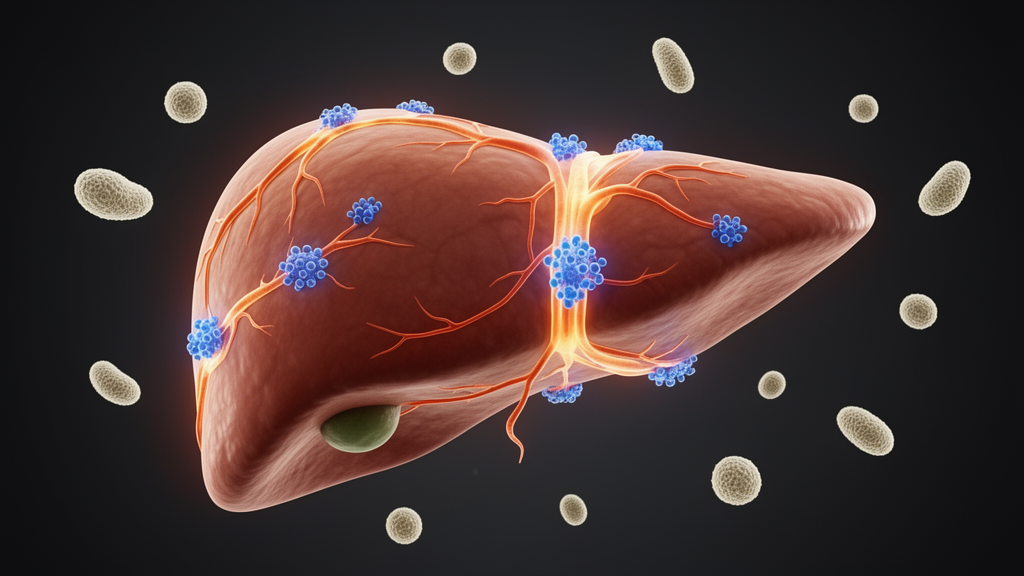
Triazole antifungal drugs such as voriconazole are mainstays of treatment for pulmonary mycosis, but their hepatotoxicity risks have remained incompletely understood. A new study published in Cell Biology and Toxicology on 30 October 2026 combined a retrospective clinical cohort with transcriptomic and computational analyses to characterize triazole antifungal drug-associated liver injury in patients with pulmonary mycosis. The research was authored by Yiding Xu, Minghui Wang, Yichun Zhu, Xiaodan Zhu, Jie Liu, Yong Zhang, Hongni Jiang, Lin Shi and colleagues, and was released as an open access article carrying a permanent DOI.
The clinical arm of the study analyzed a retrospective cohort of 199 patients with pulmonary mycosis who received triazole antifungal monotherapy. The investigators found that the incidence of liver adverse events was 31.7 percent and the incidence of liver injury was 11.6 percent, with voriconazole showing the highest rates among the triazoles studied. Cholestatic injury predominated as the pattern of damage observed in the cohort.
Elevated baseline levels of the liver enzymes ALT, AST, GGT and ALP, together with an immunocompromised status, emerged as independent risk factors for developing drug-associated liver injury. The researchers then built a prediction model from these factors and internally validated it, reporting an optimism-corrected C-index of 0.73.
The analysis showed that KDR was upregulated in cholestatic liver injury tissue. Single-cell level cell–communication analysis further revealed enhanced VEGFA–KDR signaling between Kupffer cells and endothelial cells.
The study’s authors state that their work provides a comprehensive characterization of triazole antifungal drug-associated liver injury, identifying key risk factors and KDR as a candidate shared hepatotoxicity target. They suggest the findings offer insights for risk stratification of patients receiving these antifungals and for potential therapeutic intervention. Because the prediction model was internally validated, and because the mechanistic findings rest on computational prediction, docking and virtual knockout rather than direct experimental intervention, the clinical application of these results remains at the hypothesis-generating stage.
Several further limitations frame the interpretation of these results. The cohort was retrospective and limited to patients receiving triazole monotherapy for pulmonary mycosis. The transcriptomic validation used bulk and single-cell RNA-seq data from cholestatic liver injury patients rather than from triazole-treated patients directly. The early-access status of the article means the version is subject to further edits and will be replaced automatically by the final Version of Record.
In this cohort, baseline liver enzyme values and immunocompromised status were identified as independent risk factors for triazole-associated liver injury. The study combined molecular docking, cell–communication analysis and virtual knockout experiments around KDR and the VEGFA–KDR axis. The study does not establish that inhibiting or modulating KDR would prevent or treat triazole-associated liver injury, and no therapeutic recommendation follows directly from these observational and computational findings. The study characterized the incidence and pattern of liver injury, identified independent risk factors, and identified KDR as a candidate shared hepatotoxicity target with strong binding to all three triazole antifungals.
Subject of Research: Clinical and bioinformatic characterization of liver injury associated with triazole antifungal drugs in pulmonary mycosis patients
Article Title: Integrating clinical cohort and integrative transcriptomic and computational analysis reveal shared and unique characteristics and targets of triazole antifungal drugs-associated liver injury in patients with pulmonary mycosis
Article References: Xu, Y., Wang, M., Zhu, Y., Zhu, X., Liu, J., Zhang, Y., Jiang, H., & Shi, L. (2026). Integrating clinical cohort and integrative transcriptomic and computational analysis reveal shared and unique characteristics and targets of triazole antifungal drugs-associated liver injury in patients with pulmonary mycosis. Cell Biology and Toxicology. https://doi.org/10.1007/s10565-026-10313-w
Image Credits: AI Generated
DOI: 10.1007/s10565-026-10313-w
Keywords: triazole antifungals, drug-induced liver injury, pulmonary mycosis, voriconazole, cholestatic injury, KDR, VEGF signaling, risk prediction model, single-cell RNA sequencing, molecular docking, hepatotoxicity, Kupffer cells
News Source: Drew Townsend. (October 30, 2026). Antifungal liver injury study pinpoints KDR as shared hepatotoxicity target. Scienmag.



