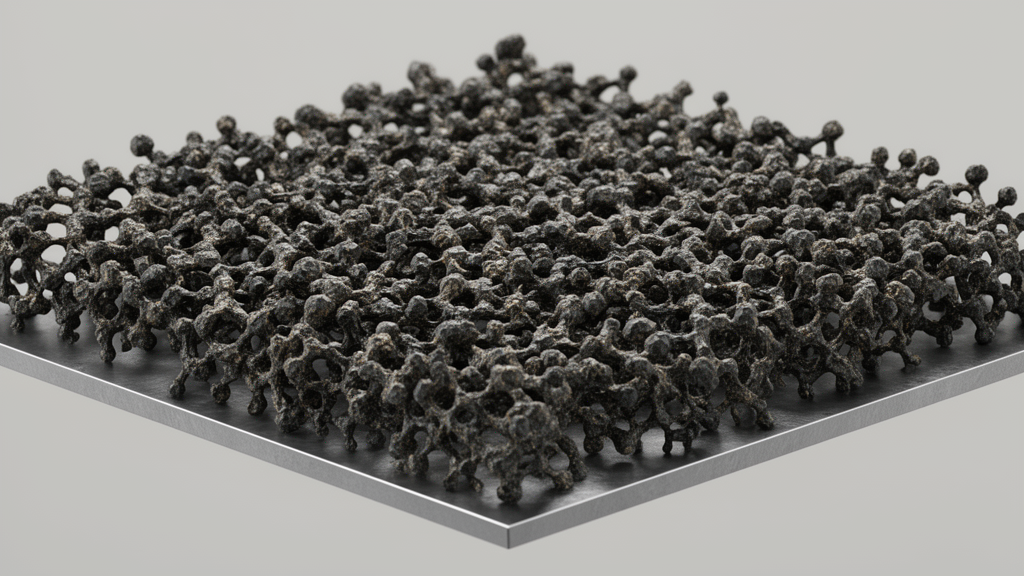
Thermal annealing temperature significantly influences the pseudocapacitive behavior and overall performance of manganese dioxide nanostructures synthesized for supercapacitor electrodes. Researchers employed a hydrothermal technique to synthesize manganese dioxide nanostructures before thermally treating them at different temperatures to investigate their physicochemical and electrochemical characteristics, confirming the successful synthesis through structural and morphological characterization.
Electrochemical assessments revealed that calcination temperature directly determined electrode behavior across the evaluated temperatures of 400 °C for sample MO-1, 500 °C for MO-2, and 600 °C for MO-3. Among these conditions, the MO-1 electrode annealed at 400 °C demonstrated optimal performance in a 1 M potassium hydroxide electrolyte.
Under testing at a current density of 10 mA/cm2 in the 1 M potassium hydroxide electrolyte, the optimized MO-1 electrode achieved a specific capacitance of 280 F/g. The electrode also exhibited robust cycling stability, retaining approximately 82.3% of its initial capacitance following 5,000 galvanostatic charge-discharge cycles.
To assess practical energy storage capability, an asymmetric supercapacitor device was constructed utilizing the MO-1 nanostructures as the positive electrode and activated carbon as the negative electrode. At 10 mA/cm2, the assembled asymmetric system delivered a specific capacitance of 126.7 F/g, preserved 95.4% of its capacitance after 10,000 cycles, and reached an energy density of 39.6 Wh/kg alongside a power density of 3,750 W/kg.
Subject of Research: Electrochemical performance and calcination temperature of manganese dioxide supercapacitor electrodes
Article Title: Synthesis of MnO2 nanostructures as efficient electrode materials for supercapacitors: effect of calcination temperature
Article References: Dhas, S. D., Thonge, P. N., Ghazal, A., Patil, A. H., Patil, T. M., Bhosale, T. T., Karthigaimuthu, D., Shaikh, S. M., & Awwad, F. (2026). Synthesis of MnO2 nanostructures as efficient electrode materials for supercapacitors: effect of calcination temperature. Materials for Renewable and Sustainable Energy. https://doi.org/10.1007/s40243-026-00409-y
Image Credits: AI Generated
DOI: 10.1007/s40243-026-00409-y
Keywords: manganese oxide, MnO2, nanostructures, supercapacitors, electrode materials, calcination temperature, thermal annealing, hydrothermal synthesis, pseudocapacitive behavior, specific capacitance, cycling stability, asymmetric supercapacitor, activated carbon, energy density, power density, potassium hydroxide
News Source: Denise Maddox. (November 23, 2026). Annealing Manganese Oxide at 400 °C Optimizes Supercapacitor Electrode Performance. Scienmag.