• HOME
  • NEWS
  • EXPLORE
    • CAREER
      • Companies
      • Jobs
    • EVENTS
    • iGEM
      • News
      • Team
    • PHOTOS
    • VIDEO
    • WIKI
  • BLOG
  • COMMUNITY
    • FACEBOOK
    • INSTAGRAM
    • TWITTER
Monday, October 5, 2026
BIOENGINEER.ORG
No Result
View All Result
  • Login
  • HOME
  • NEWS
  • EXPLORE
    • CAREER
      • Companies
      • Jobs
        • Lecturer
        • PhD Studentship
        • Postdoc
        • Research Assistant
    • EVENTS
    • iGEM
      • News
      • Team
    • PHOTOS
    • VIDEO
    • WIKI
  • BLOG
  • COMMUNITY
    • FACEBOOK
    • INSTAGRAM
    • TWITTER
  • HOME
  • NEWS
  • EXPLORE
    • CAREER
      • Companies
      • Jobs
        • Lecturer
        • PhD Studentship
        • Postdoc
        • Research Assistant
    • EVENTS
    • iGEM
      • News
      • Team
    • PHOTOS
    • VIDEO
    • WIKI
  • BLOG
  • COMMUNITY
    • FACEBOOK
    • INSTAGRAM
    • TWITTER
No Result
View All Result
Bioengineer.org
No Result
View All Result
Home NEWS Science News

AJR: Smartphone, laptop prove reliable and accurate for acute ischemic stroke decision

Bioengineer by Bioengineer
February 12, 2020
in Science News
Reading Time: 3 mins read
0
IMAGE
Share on FacebookShare on TwitterShare on LinkedinShare on RedditShare on Telegram

American Journal of Roentgenology (AJR) finds mobile devices both reliable and accurate for the clinical decision to administer IV thrombolysis in patients with acute stroke
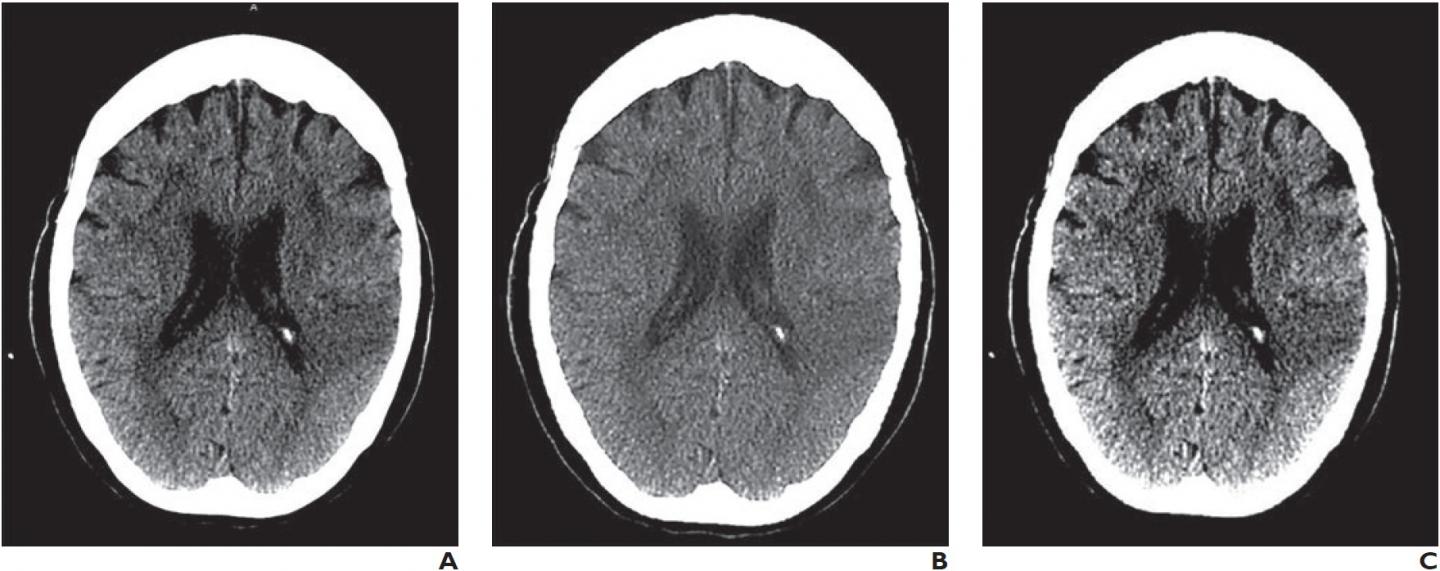
IMAGE

Credit: American Journal of Roentgenology (AJR)


Leesburg, VA, February 12, 2020–Mobile devices proved both reliable and accurate for the clinical decision to administer IV thrombolysis in patients with acute stroke, according to an ahead-of-print article in the April issue of the American Journal of Roentgenology (AJR).

To assess reliability and accuracy of IV thrombolysis recommendations made after interpretation of head CT images of patients with acute stroke symptoms displayed on smartphone or laptop reading systems–compared with those made after interpretation of images displayed on a medical workstation monitor–Antonio J. Salazar at the University of Los Andes in Bogotá, Columbia utilized a factorial design with 188 patients, four radiologists, and three reading systems to produce 2256 interpretations.

To evaluate reliability, Salazar and colleagues calculated the intraobserver and interobserver agreements using the intraclass correlation coefficient (ICC) and five interpretation variables: hemorrhagic lesions, intraaxial neoplasm, stroke dating (acute, subacute, chronic), hyperdense arteries, and infarct size assessment. Accuracy equivalence tests were also performed for the IV thrombolysis recommendation; for this variable, sensitivity, specificity, and ROC curves were evaluated.

Good or very good intraobserver agreements were observed for all the variables. Specifically, for those variables required to establish contraindications for IV thrombolysis, the agreements were ranked as very good. “This finding is important,” wrote Salazar et al., “because it reflects the good performance of mobile devices to evaluate the most significant imaging variables for clinical decisions.”

For IV thrombolysis recommendation, the main subject of this evaluation, the interobserver agreements for the three reading systems were ranked as very good (ICC > 0.88). Similarly, very good intraobserver agreements were observed for all comparisons (ICC > 0.84). The AUC values (0.83-0.84) and sensitivities (0.94-0.95) for IV thrombolysis recommendation were equivalent among all the reading systems at a 5% equivalent threshold.

A unique assessment of imaging-based recommendations for the administration of IV recombinant tissue plasminogen activator based on unenhanced brain CT scans, Salazar also noted: “These results constitute a strong foundation for the development of mobile-based telestroke services because they increase neuroradiologist availability and the possibility of using reperfusion therapies in resource-limited countries.”

###

Founded in 1900, the American Roentgen Ray Society (ARRS) is the first and oldest radiological society in North America, dedicated to the advancement of medicine through the profession of radiology and its allied sciences. An international forum for progress in medical imaging since the discovery of the x-ray, ARRS maintains its mission of improving health through a community committed to advancing knowledge and skills with an annual scientific meeting, monthly publication of the peer-reviewed American Journal of Roentgenology (AJR), quarterly issues of InPractice magazine, AJR Live Webinars and Podcasts, topical symposia, print and online educational materials, as well as awarding scholarships via The Roentgen Fund®.

Media Contact
Logan K. Young
[email protected]
703-858-4332

Original Source

https://arrs.org/ARRSLIVE/Pressroom/PressReleases/Smartphone_Laptop_Reliable_Accurate_Acute_Stroke_Decision.aspx

Related Journal Article

http://dx.doi.org/10.2214/AJR.19.21896

Tags: BiologyBiotechnologyDiagnosticsHealth Care Systems/ServicesMedicine/HealthneurobiologyNeurochemistryStrokeTelecommunications
Share12Tweet8Share2ShareShareShare2

Related Posts

Wavelets Meet Attention: New AI Spots Tiny Changes in Satellite Images With Unusual Precision

Wavelets Meet Attention: New AI Spots Tiny Changes in Satellite Images With Unusual Precision

October 5, 2026
Failing Cellular Recycling Lets Zombie Cells Pile Up as We Age, Study Finds

Failing Cellular Recycling Lets Zombie Cells Pile Up as We Age, Study Finds

October 5, 2026

Soft Flexible Framework Material Could Improve Solid-State Battery Design

October 5, 2026

City Life Shields Bats From Weather Swings, Landmark Acoustic Survey Reveals

October 5, 2026
Please login to join discussion

POPULAR NEWS

  • Alloys That Shrink Their Own Grains: New PIX Mechanism Refines Metals With Heat Alone

    Alloys That Shrink Their Own Grains: New PIX Mechanism Refines Metals With Heat Alone

    29 shares
    Share 12 Tweet 7
  • Endurance Exercise Reshapes the Liver in Males and Females Through Distinct Molecular Routes

    29 shares
    Share 12 Tweet 7
  • Single Transcription Factor PU.1 Rapidly Converts Fibroblasts into Macrophage-Lineage Cells

    29 shares
    Share 12 Tweet 7
  • New Scale Measures How Ready Nurse Educators Really Are for the AI Era

    29 shares
    Share 12 Tweet 7

About

We bring you the latest biotechnology news from best research centers and universities around the world. Check our website.

Follow us

Recent News

Alloys That Shrink Their Own Grains: New PIX Mechanism Refines Metals With Heat Alone

Endurance Exercise Reshapes the Liver in Males and Females Through Distinct Molecular Routes

Single Transcription Factor PU.1 Rapidly Converts Fibroblasts into Macrophage-Lineage Cells

Subscribe to Blog via Email

Success! An email was just sent to confirm your subscription. Please find the email now and click 'Confirm' to start subscribing.

Join 85 other subscribers
  • Contact Us

Bioengineer.org © Copyright 2023 All Rights Reserved.

Welcome Back!

Login to your account below

Forgotten Password?

Retrieve your password

Please enter your username or email address to reset your password.

Log In
No Result
View All Result
  • Homepages
    • Home Page 1
    • Home Page 2
  • News
  • National
  • Business
  • Health
  • Lifestyle
  • Science

Bioengineer.org © Copyright 2023 All Rights Reserved.