An artificial-intelligence system can objectively measure temperature tolerance in medaka and related fish by detecting the exact moment they lose equilibrium under heat or cold stress. Researchers at Nagoya University and the University of Fukui combined two deep-learning tools: DeepLabCut, which tracks key body landmarks in video, and ResNet34, which classifies images to determine a fish’s condition. In an experimental study involving medaka and closely related Oryzias species, the system reproduced the judgments of experienced human observers, detected the same balance-loss event when the same video was analyzed repeatedly, and was intended to make large-scale thermal-tolerance experiments more consistent and efficient. The findings were published in Scientific Reports on September 10, 2026.
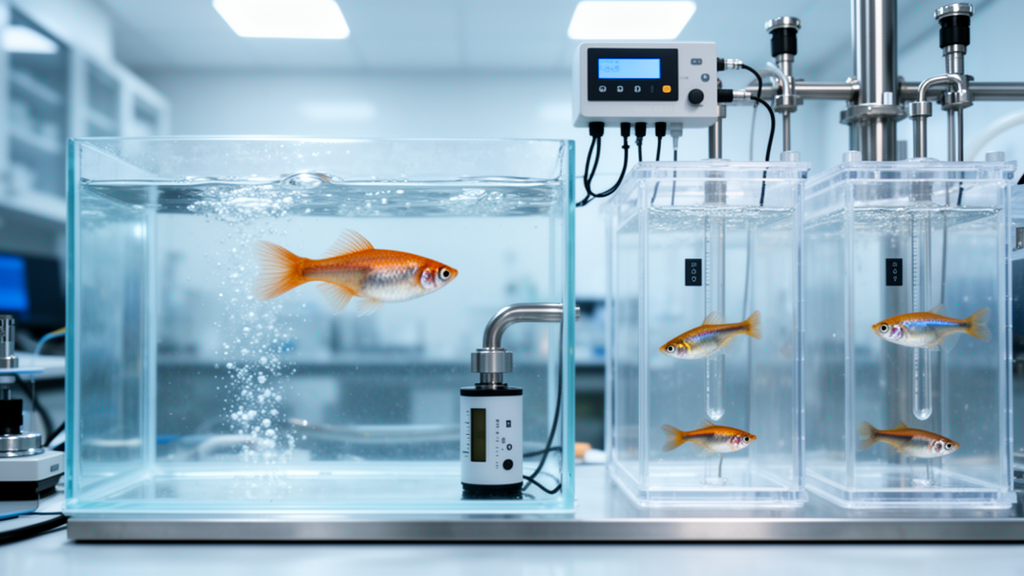
Temperature tolerance has traditionally been assessed by gradually changing the water temperature while recording fish and identifying when an animal can no longer maintain its balance. Researchers have generally determined that point by watching the videos themselves, a process that can introduce observer-dependent variation and require substantial time. The new system first photographs each fish in a separate compartment and automatically identifies the individual in each image. DeepLabCut then follows seven points on the fish’s body: the tip of the nose, the left and right fins, the center of the body, the front and rear portions of the body, and the tail. Movement information from those tracked points is combined with the video to classify the fish’s state and identify loss of equilibrium automatically.
The researchers evaluated the system across 50 individual fish. Its determinations were approximately equal to the variation among determinations made by experienced researchers, supporting the reliability of the automated procedure. Repeated analyses of the same video also produced the same result, indicating that the method offered reproducibility in addition to objectivity. These features could be particularly useful in experiments that generate many videos, because automated analysis may reduce both the labor required for visual scoring and inconsistencies between observers. The study itself was an animal experiment, however, and the results do not establish a direct method for predicting climate-change effects in natural fish populations. Its demonstrated achievement is a repeatable laboratory measure of when temperature stress compromises balance.
Using the system, the team compared tolerance to low and high temperatures among different medaka strains and related Oryzias species. Temperature tolerance varied among strains, and the researchers observed a tendency for species from higher latitudes to be more cold-tolerant. Japanese medaka, Oryzias latipes, displayed the highest cold tolerance in the comparison. The pattern was not universal, however: the Taiwanese medaka relative, Oryzias cabaranensis, a species described in 2025, was more cold-tolerant than its habitat latitude alone would suggest. This exception indicates that geographic location may describe one influence on thermal adaptation without explaining it completely. The study identifies the need for broader comparisons of strains and species rather than treating latitude as a sufficient predictor.
The work demonstrates how two complementary forms of artificial intelligence can convert detailed animal movement into a standardized physiological endpoint. DeepLabCut supplies spatial information by tracking posture, while image classification converts the tracked behavior into a judgment about equilibrium loss. Together, they allow researchers to assess temperature tolerance consistently across many fish and video recordings. The authors expect larger-scale comparisons using the method to clarify how thermal limits differ among populations and species, with potential relevance to understanding and conserving fish exposed to changing climates. That future application remains a research goal: the present study establishes reliable automated detection and documents diversity in temperature tolerance, but it does not yet quantify the method’s ability to forecast ecological outcomes under climate change.
Subject of Research: Automated assessment of temperature tolerance in medaka and related Oryzias fish using deep learning
Article Title: AI innovation measures temperature tolerance in fish
Article References: AI innovation measures temperature tolerance in fish. Original publication (Bibliographic details unavailable.)
Image Credits: AI Generated
DOI: Not provided
Keywords: artificial intelligence, DeepLabCut, ResNet34, temperature tolerance, medaka fish, thermal stress, loss of equilibrium, aquatic conservation, Oryzias species, climate research, innovation, measures
News Source: Blake Davidson. (October 26, 2026). AI system reveals temperature tolerances across medaka fish strains. Scienmag.