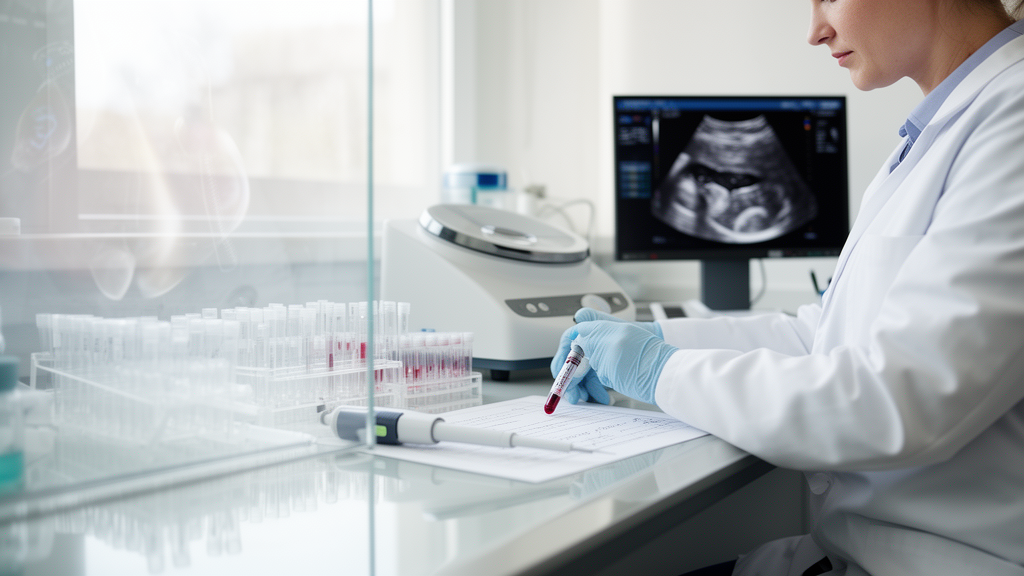
Requests by Australian general practitioners for anti-Müllerian hormone (AMH) tests increased more than 13-fold between 2011 and 2021, even though the blood test cannot predict whether a woman will conceive naturally, when she will conceive or how much reproductive time she has left. A retrospective open-cohort study led by Flinders University analysed health records from almost 1.4 million Australian women. Testing rose most sharply among women aged 30 to 34, with rates increasing almost 20-fold. Published in the Australian and New Zealand Journal of Obstetrics and Gynaecology, the study documents a gap between public expectations, clinical use and the scientific evidence on AMH testing.
AMH is often marketed as a fertility test or “egg count” because it measures ovarian reserve, interpreted as the number of eggs remaining in the ovaries. The study’s lead author, Associate Professor Luke Grzeskowiak, a pharmacist and researcher with the Flinders Health and Medical Research Institute, said women and clinicians may misunderstand what the result can show. “While AMH can measure ovarian reserve, it cannot tell a healthy woman how likely she is to conceive, how quickly, or how much reproductive time she has left,” he said. The researchers said a low AMH result does not mean a woman is infertile, and a normal result does not guarantee future fertility or exclude other fertility problems. Age remains the most important factor affecting fertility.
The study’s results and repeat testing illustrate why one AMH measurement may be insufficient for reproductive planning. Nearly one in five women received a result classified as low. Among women who repeated the test after a low result, however, around one-third later received a result in the normal range. Grzeskowiak said a low result may create psychological pressure to bring forward plans for children, while a normal result may provide false reassurance when other fertility issues are present. The research was observational, so it does not establish that AMH testing caused these psychological or decision-making effects; it instead quantifies testing patterns and result variability in Australian general practice.
Researchers associated the increase in testing with delayed childbearing, growing awareness of fertility issues, social-media messaging and commercial promotion of the test as a simple way to assess reproductive potential, while noting that the observational study cannot determine the contribution of each factor. Use also differed substantially across Australia. Women living in major cities and more advantaged areas were more likely to be tested, whereas concession-card holders were less likely to receive the test. Differences between general practices were substantial: more than one in 10 practices had no patients who received an AMH test during the study period, and around 21% of the variation in testing rates was linked to differences between practices rather than patient characteristics. AMH testing is not covered by Medicare and can cost more than A$100.
The authors said AMH testing can be useful in some specialist fertility settings but should not be mistaken for a test that predicts whether a woman will be able to have a baby. They called for better education for clinicians and the public, including clearer information about what AMH can and cannot reveal, so that people can make informed decisions about reproductive health and family planning. Grzeskowiak said women should receive accurate, evidence-based information and that, particularly for younger women, an AMH result should not be treated as a predictor of their reproductive future. The findings describe patterns in routine general practice across a decade and do not establish individual pregnancy outcomes or the clinical benefit of testing.
Subject of Research: Use and interpretation of anti-Müllerian hormone testing for fertility assessment in Australian general practice
Article Title: Fertility tests are not a reproductive crystal ball
Article References: Fertility tests are not a reproductive crystal ball. Original publication (Bibliographic details unavailable.)
Image Credits: AI Generated
DOI: Not provided
Keywords: anti-Müllerian hormone, AMH testing, ovarian reserve, fertility assessment, natural conception, Australian general practice, reproductive health, health records, observational study, Fertility, tests, reproductive
News Source: Harold Sullivan. (October 26, 2026). AMH testing rose more than 13-fold in Australia but does not predict natural pregnancy. Scienmag.