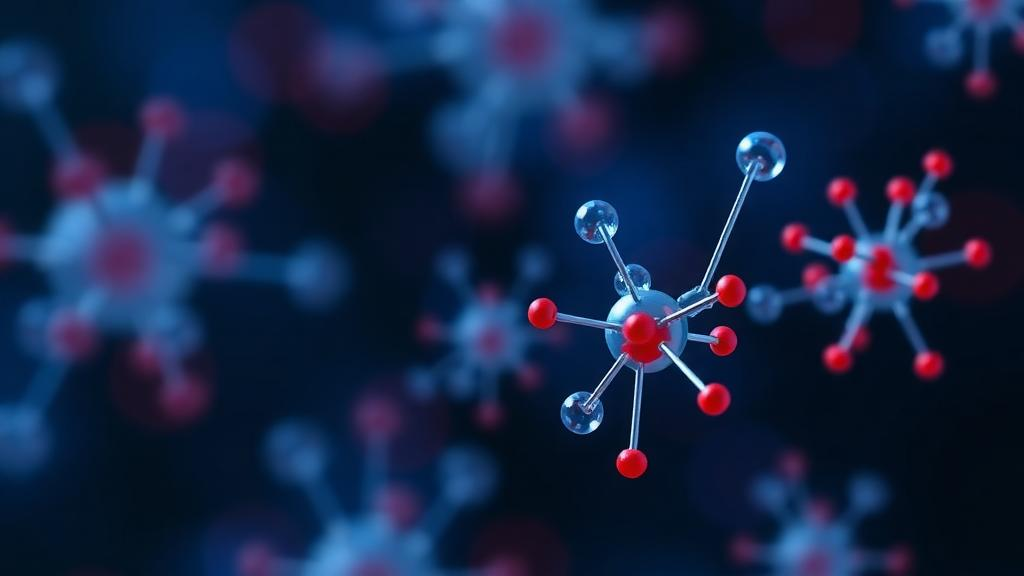
In the crowded interior of a living cell, proteins are constantly being built, folded, and dismantled. For decades, drug developers have focused on the first two of those processes, designing molecules that block the activity of disease-driving proteins. A growing number of researchers, however, are pursuing a more radical strategy: rather than merely inhibiting a harmful protein, they want to eliminate it altogether. The tools for this job are small molecules known as molecular glues, compounds that act as molecular matchmakers, binding a target protein to the cell’s natural waste-disposal machinery so that the machinery destroys the target. Now, a team led by scientists at Baylor College of Medicine reports a new way to find these glues faster, combining large-scale protein analysis with artificial intelligence-based structural prediction, and in doing so has uncovered a promising new class of compounds against a protein implicated in blood cancers and autoimmune disease.
The target of the new study is VAV1, a protein found mainly in immune cells, where it functions as a signaling hub that helps activate T cells and other components of the immune system. When VAV1 signaling runs normally, it supports a healthy immune response. When it goes awry, however, abnormal VAV1 activity can contribute to serious conditions, including T-cell lymphomas and chronic inflammatory disorders. Traditional drugs that inhibit VAV1 would suppress only one of its many functions, leaving the rest of the protein free to cause trouble. Targeted protein degradation, by contrast, removes the entire protein from the cell, which could deliver a more complete therapeutic effect. The challenge has been finding small molecules capable of dragging VAV1 to the cell’s protein-recycling system in the first place.
That challenge is what the Baylor-led team set out to solve. Their strategy, described in a paper published in Nature Communications, began with an unbiased search rather than a targeted one. The researchers screened a library of molecules using high-throughput proteomics, a technology capable of measuring the abundance of thousands of proteins simultaneously. Instead of looking only for a predicted effect on VAV1, they let the data reveal which compounds changed the cellular protein landscape in interesting ways. This unbiased analysis surfaced a series of compounds, including one designated NGT-201-12, that caused VAV1 levels to drop while affecting relatively few other proteins, a selectivity profile that is critical for any future drug candidate.
Follow-up experiments confirmed that the compounds were working through the cell’s natural protein-recycling system and, more specifically, that the degradation depended on cereblon, often abbreviated CRBN. Cereblon is a key component of the CRL4 ubiquitin ligase complex, a molecular machine that tags proteins for destruction by the proteasome. Molecular glues that engage cereblon effectively trick the ligase into recognizing proteins it would normally ignore, gluing the target onto the degradation machinery. Cereblon-recruiting glues have already proven their worth in the clinic through drugs such as lenalidomide, but expanding this approach to new targets like VAV1 has been slow, in large part because scientists rarely understand exactly how a glue molecule brings its target and cereblon together.
Understanding that three-way interaction is the central bottleneck in molecular glue research, and it is where artificial intelligence entered the project. The team developed a computational workflow called GluePlex, which combines AI-driven protein-structure prediction tools with physics-based modeling to predict how VAV1, cereblon, and a molecular glue assemble into a ternary complex. Crucially, GluePlex made its predictions without any experimental structure of the complex to guide it. The model identified a specific region of VAV1, known as the SH3-2 domain, as essential for degradation, and it pinpointed the exact contact point: a small surface loop on VAV1 that serves as a degradation signal, or degron. Laboratory tests subsequently confirmed the prediction, showing that the glue exploits this loop to flag VAV1 for destruction.
The predicted contact point is notable because it does not resemble the degradation signals commonly associated with cereblon-targeting molecular glues. Until recently, most known cereblon-dependent glues were thought to require a structural feature called a G-loop on their target proteins. The Baylor study, together with an independent report from a separate research team that reached a similar conclusion about VAV1 using different experiment-based methods, indicates that cereblon can also recognize an entirely different structure. That finding broadens the range of proteins that may be reachable by cereblon-recruiting degraders in the future, expanding the theoretical target space of this drug modality well beyond what was previously assumed.
Perhaps the most consequential aspect of the work is what it says about the role of AI in early drug discovery. In most medicinal chemistry projects, structural biology comes late: chemists optimize compounds first, and only later do crystallographers or cryo-electron microscopists reveal how the molecules actually work. Here, the computational workflow arrived at a hard-to-anticipate contact point on its own, before any experimental structure existed, and the prediction was subsequently validated in the lab. That means AI-based structural modeling can guide chemists at the very beginning of a project, steering compound optimization toward the interactions that matter, well before expensive experiments reveal the mechanism. A separate research team’s independent confirmation of the VAV1 mechanism strengthens confidence that this predictive approach can be trusted.
With the mechanism in hand, the team turned to medicinal chemistry to improve their lead compounds. They introduced chlorine atoms into the molecular scaffolds, a modification that reduced the molecules’ flexibility and increased degradation efficiency. Rigidifying the compounds appears to have stabilized the three-part complex of VAV1, cereblon, and glue, which is the species that must form for the proteasome to destroy the target. One of the resulting compounds, NGT-201-18, showed substantially improved potency and produced a stronger protein complex required for degradation, demonstrating how even modest chemical refinements can translate structural insight into tangible gains in drug-like performance.
The improved compound was then put to the test in a biologically relevant setting: primary human T cells, the very cells in which VAV1 performs its immune-signaling role. NGT-201-18 successfully reduced VAV1 levels in these cells and suppressed T-cell activation, showing that the degrader could meaningfully alter immune-cell signaling outside of simplified laboratory models. Although considerably more research is needed before such compounds could be considered for patients, the results support the idea that VAV1 degradation could become a viable strategy for treating autoimmune and inflammatory diseases, and potentially T-cell lymphomas as well. The work offers a concrete proof of concept that a signaling protein long considered difficult to drug can be removed from immune cells by a small molecule.
The study also carries a cautionary lesson about the complexity of targeted protein degradation. While VAV1 was the primary target, comprehensive proteomic profiling revealed that some of the compounds also degraded another protein, LIMD1. Such off-target activity is not necessarily disqualifying, but it underscores the need to evaluate both intended and unintended protein targets throughout drug development, particularly for glues whose selectivity depends on subtle features of protein surfaces rather than well-defined binding pockets. Overall, the researchers say, the work introduces a series of VAV1-targeting molecular glues and, just as importantly, demonstrates how artificial intelligence, structural modeling, and proteomics can work together at the earliest stage of a project, when no experimental structure is yet available, to accelerate drug discovery. If the approach generalizes, it may help pave the way toward new treatments for immune-related diseases and cancers that currently lack effective targeted therapies.
Subject of Research: AI-guided discovery of molecular glue degraders targeting the immune signaling protein VAV1
Article Title: AI structure prediction speeds the discovery of ‘molecular glues’ to treat disease
Article References: AI structure prediction speeds the discovery of ‘molecular glues’ to treat disease. (n.d.). Original publication
Image Credits: AI Generated
DOI: Not provided
Keywords: molecular glues, VAV1, targeted protein degradation, cereblon, artificial intelligence, proteomics, drug discovery, T cells, autoimmune disease, blood cancers, GluePlex, medicinal chemistry
News Source: Drew Townsend. (October 5, 2026). AI-Powered Molecular Glue Discovery Offers New Route Against Blood Cancers and Autoimmune Disease. Scienmag.