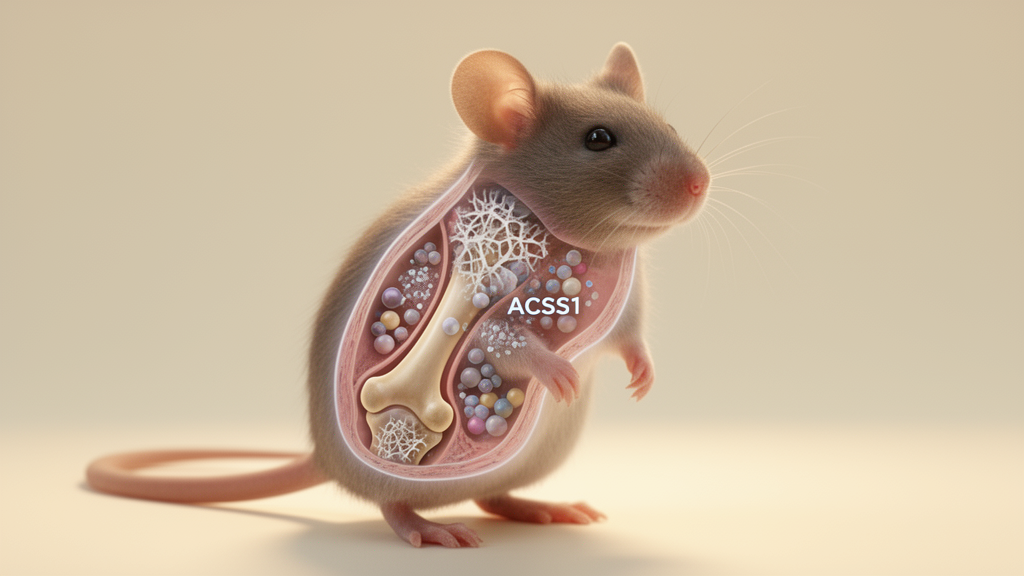
In mouse experiments, nutrient excess caused acetyl-CoA synthetase 1 (ACSS1) to accumulate in bone marrow skeletal stem cells, where it disrupted metabolic flexibility, mitochondrial function and osteogenesis. The study links excess glucose, alcohol or acetate to a stress pathway that reduced bone formation through increased acetyl-CoA production and abnormal protein acetylation. These findings concern mouse models and bone-forming precursor cells, not a demonstrated treatment for human disease.
The researchers found that excess glucose, alcohol or acetate activated a mitochondrial reactive oxygen species signaling pathway, which engaged the integrated stress response and the transcription factor CEBPB. This signaling increased ACSS1, a protein involved in converting acetate into acetyl-CoA. Once accumulated, ACSS1 raised acetyl-CoA production from supplied acetate or from acetate generated internally from glucose or ethanol.
The metabolic rewiring promoted excessive protein acetylation and specifically inactivated malate enzyme 2 (ME2) through acetylation at lysine 94. ME2 inactivation disturbed the malate-aspartate shuttle and, according to the study, created a self-perpetuating cycle of redox imbalance and oxidative stress. That cycle intensified mitochondrial dysfunction and impaired the osteogenic capacity of the affected cells.
The mechanism therefore connected several elements of the stress response: acetate metabolism, acetyl-CoA abundance, protein acetylation, mitochondrial communication and the differentiation of cells that form bone. ACSS1 was identified as a key stress responder that mediated this mitonuclear communication in bone marrow skeletal stem cells. Genetic deletion of Acss1 in male mouse models of type 2 diabetes and chronic alcohol consumption restored mitochondrial resilience, osteogenic capacity and bone formation.
The researchers also used an adeno-associated virus to deliver a non-acetylatable ME2 mutant to osteoprogenitor cells; this approach produced protective effects in the models tested. Deletion of Acss1 protected against osteoporosis or osteonecrosis, while delivery of the ME2 mutant similarly counteracted the bone-forming defects associated with the experimental metabolic stresses. Because the reported experiments were conducted in mice and bone-forming cells, the results establish a mechanism in those systems rather than a clinical benefit in people.
The central finding is that nutrient stress can drive ACSS1-dependent metabolic rewiring, mitochondrial damage and impaired bone formation through a pathway involving ME2 acetylation.
Subject of Research: ACSS1-mediated metabolic stress and impaired bone formation in mouse models
Article Title: Nutrient stress-driven ACSS1 controls metabolic flexibility and bone formation
Article References: Gao, L., Yuan, Z., Huang, T., Li, P., Zhong, Y., Gao, J., Luo, Y., Li, B., Pan, H., Ye, K., & Guan, M. (2026). Nutrient stress-driven ACSS1 controls metabolic flexibility and bone formation. Nature Communications. https://doi.org/10.1038/s41467-026-77684-w
Image Credits: AI Generated
DOI: 10.1038/s41467-026-77684-w
Keywords: ACSS1, nutrient stress, bone formation, bone marrow stem cells, mitochondrial dysfunction, osteogenesis, protein acetylation, ME2, type 2 diabetes, osteoporosis, Nutrient, stress-driven
News Source: Ophelia Keating. (October 20, 2026). ACSS1 links nutrient stress to impaired bone formation in mouse models. Scienmag.