Tennessee researchers help discover pathogen, model its spread
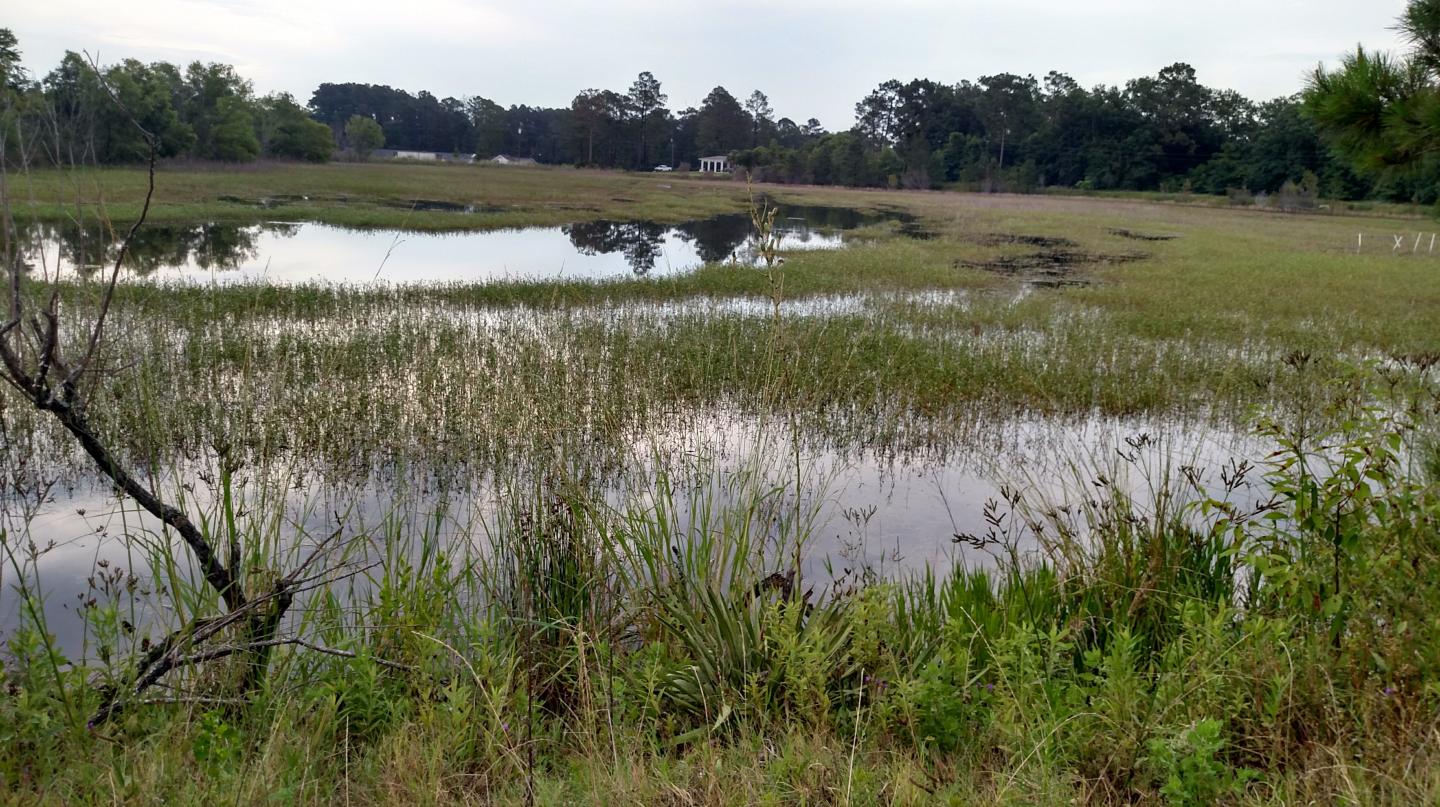
Credit: Photo courtesy UTIA.
KNOXVILLE, Tenn. — Kudzu and emerald ash borer are widely known examples of an invasive plant and an invasive insect, respectively, that cause harm to our native plants. Their impacts are obvious in our landscapes. Not so well known are the invasive pathogens that are quietly decimating small, little noticed but ecologically important amphibians.
In a study published in the October 15 issue of https://www.sciencedirect.com/science/article/pii/S0304380019302856#ack0005E target=”_blank”cological Modelling, a team of University of Tennessee researchers along with a colleague from the University of Florida model how a chimeric Frog virus 3 (FV3)-like ranavirus, also known as RCV-Z2, can spread rapidly throughout a population of North American wood frog (Lithobates sylvaticus) tadpoles.
Ranaviruses are globally emerging pathogens that affect amphibians, reptiles and fish, and they are threatening the diversity of our ecological systems, says Matt Gray, professor in the UT Institute of Agriculture Center for Wildlife Health. Gray is the founding and past director of the Global Ranavirus Consortium – an organization dedicated to creating partnerships to combat the global emergence of ranaviruses. “In our previous work, we found that RCV-Z2 is a recombinant ranavirus that has DNA from a strain in North America and one from Europe and Asia. We think these viruses mixed DNA in a bullfrog farm in southern Georgia – the outcome was a highly virulent hybrid virus! The point of this modeling effort was to demonstrate how this evolved virus with eastern hemisphere DNA can infect and spread in a widely distributed amphibian species,” says Gray. “The news is not good.”
The paper’s title says it all: “A highly invasive chimeric ranavirus can decimate tadpole populations rapidly through multiple transmission pathways.”
Led by two post-doctoral research associates in UT’s National Institute for Mathematical and Biological Synthesis, known as NIMBioS, who teamed with Gray and others from the UTIA Center for Wildlife Health and College of Veterinary Medicine, the study determined that transmission of the RCV-Z2 can occur efficiently through direct contact of hosts, necrophagy (feeding on corpses), and by waterborne transmission.
Their model predicts significant risks to amphibian diversity in North America, which can translate into broader biodiversity issues for other species. Previous studies have already demonstrated that this chimeric ranavirus can be transmitted to mosquitofish, turtles and multiple amphibian species.
In 2019, the Georgia Department of Natural Resources provided funds to UTIA and UF to look for the pathogen in wild amphibian populations near the original outbreak site where RCV-Z2 was isolated. The team collected more than 390 samples during last summer in wetlands in the Alapaha River watershed and are testing them for RCV-Z2. “The goal of this surveillance effort is to determine if RCV-Z2 is in the wild, and if so, if virulence remains high,” Gray indicates.
If RCV-Z2 is detected, the team can use their simulations to direct disease intervention strategies, such as management activities that reduce host contacts or environmental persistence of the pathogen.
It’s depressing to note the authors say that targeting only one transmission pathway is unlikely to thwart an invasion of the ranavirus. Also, no response on the part of wildlife management agencies and others interested in conservation is not an option if the diversity of native amphibians is to be preserved.
Additionally, Gray recommends a clean trade program for amphibians and other wildlife. “Currently, wildlife in trade fly under the radar because health certificates that verify animals are pathogen free are not required unlike livestock. As a consequence, wildlife and their pathogens are being moved around the globe, creating opportunities for genetic mixing in captive facilities and spillover to wild populations.”
###
Through its land-grant mission of research, teaching and extension, the University of Tennessee Institute of Agriculture touches lives and provides Real. Life. Solutions. ag.tennessee.edu.
Media Contact
Patricia McDaniels
[email protected]
615-835-4570
Original Source
https:/
Related Journal Article
http://dx.