• HOME
  • NEWS
  • EXPLORE
    • CAREER
      • Companies
      • Jobs
    • EVENTS
    • iGEM
      • News
      • Team
    • PHOTOS
    • VIDEO
    • WIKI
  • BLOG
  • COMMUNITY
    • FACEBOOK
    • INSTAGRAM
    • TWITTER
Sunday, May 10, 2026
BIOENGINEER.ORG
No Result
View All Result
  • Login
  • HOME
  • NEWS
  • EXPLORE
    • CAREER
      • Companies
      • Jobs
        • Lecturer
        • PhD Studentship
        • Postdoc
        • Research Assistant
    • EVENTS
    • iGEM
      • News
      • Team
    • PHOTOS
    • VIDEO
    • WIKI
  • BLOG
  • COMMUNITY
    • FACEBOOK
    • INSTAGRAM
    • TWITTER
  • HOME
  • NEWS
  • EXPLORE
    • CAREER
      • Companies
      • Jobs
        • Lecturer
        • PhD Studentship
        • Postdoc
        • Research Assistant
    • EVENTS
    • iGEM
      • News
      • Team
    • PHOTOS
    • VIDEO
    • WIKI
  • BLOG
  • COMMUNITY
    • FACEBOOK
    • INSTAGRAM
    • TWITTER
No Result
View All Result
Bioengineer.org
No Result
View All Result
Home NEWS Science News Chemistry

A direct look at OLED films leads to some pretty exciton findings

Bioengineer by Bioengineer
September 6, 2025
in Chemistry
Reading Time: 2 mins read
0
IMAGE
Share on FacebookShare on TwitterShare on LinkedinShare on RedditShare on Telegram

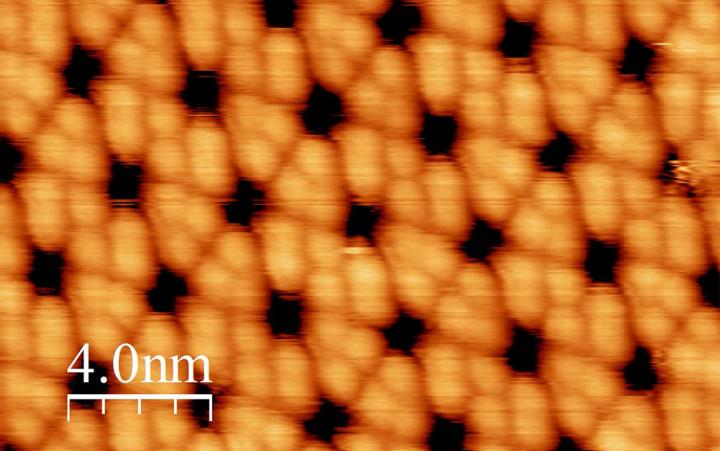
Researchers from the University of Tsukuba use time-resolved photoemission electron microscopy to probe the electron dynamics of solid-state film OLEDs

Tsukuba, Japan – Organic light-emitting diodes (OLEDs) are widely used in display technology and are also being investigated for lighting applications. A comprehensive understanding of these devices is therefore important if their properties are to be harnessed to their full potential. Researchers from the University of Tsukuba have directly observed the photoexcited electron dynamics in an organic film using time-resolved photoelectron emission microscopy. Their findings are published in Advanced Optical Materials .

OLED displays are popular because they are bright, lightweight, and do not consume a lot of power. Their output is generated when an exciton–a combination of an electron and an electron hole–releases its energy. However, this release is not possible for all OLED excitons, which makes their overall efficiency low.

To address this limitation, researchers are focusing on OLEDs that exhibit thermally activated delayed fluorescence (TADF-OLEDs), which show efficiencies of up to 100%.

However, details of the electron dynamics that affect their performance are not fully understood. Attempts to learn more have used poorly defined models, meaning the findings have been difficult to interpret and apply to other systems.

The researchers focused on a single-component, solid-state film of a material known as 4CzIPN and investigated it using time-resolved photoemission electron microscopy (TR-PEEM). They compared their findings with observations made using the more commonly used time-resolved photoluminescence (TR-PL) method to try to establish details of the decay process that were previously unknown.

“Solid-state films are excellent materials for OLEDs because they make the device fabrication process simpler, reduce the degradation that is often seen, and exhibit excellent quantum efficiencies,” explains study corresponding author Professor Yoichi Yamada. “The trouble is that we still don’t fully understand what is happening to the excitons, so there’s the possibility that we could be making them even better.”

The researchers successfully detected the photoexcited electron dynamics of the TADF solid-state film using TR-PEEM. And by comparing with TR-PL results they identified long-lived electrons that they believe were formed by the dissociation of excitons.

They found that up to 4% of the excitons formed may dissociate and become trapped in the film. Very little evidence for this has been noted using other techniques.

“In addition to detecting a feature of exciton decay in TADF-OLEDs that has not been directly observed to date; we also demonstrated the potential of the TR-PEEM method,” Professor Yamada explains. “We believe our findings will make a significant contribution to the development of efficient OLED-based products.”

###

The article, “Direct Observation of Photoexcited Electron Dynamics in Organic Solids Exhibiting Thermally Activated Delayed Fluorescence via Time-resolved Photoelectron Emission Microscopy”, was published in Advanced Optical Materials at DOI: 10.1002/adom.202100619.

Media Contact
Naoko Yamashina
[email protected]

Related Journal Article

http://dx.doi.org/10.1002/adom.202100619

Tags: Atomic/Molecular/Particle PhysicsChemistry/Physics/Materials SciencesIndustrial Engineering/ChemistryMaterialsMolecular PhysicsOpticsSuperconductors/Semiconductors
Share12Tweet8Share2ShareShareShare2

Related Posts

Miniature Sensor Uses Light to Detect Touch — Chemistry

Miniature Sensor Uses Light to Detect Touch

May 8, 2026
Iron Minerals Determine Whether Dissolved Organic Matter Fuels Microbes or Becomes Long-Term Carbon Storage — Chemistry

Iron Minerals Determine Whether Dissolved Organic Matter Fuels Microbes or Becomes Long-Term Carbon Storage

May 8, 2026

Kate Evans Appointed Associate Lab Director for Biological and Environmental Systems Science at ORNL

May 8, 2026

Advancing Multiscale Modeling and Overcoming Operational Challenges in Autothermal COâ‚‚-to-Methanol Reactors

May 8, 2026
Please login to join discussion

POPULAR NEWS

  • Research Indicates Potential Connection Between Prenatal Medication Exposure and Elevated Autism Risk

    840 shares
    Share 336 Tweet 210
  • New Study Reveals Plants Can Detect the Sound of Rain

    727 shares
    Share 290 Tweet 181
  • Scientists Investigate Possible Connection Between COVID-19 and Increased Lung Cancer Risk

    68 shares
    Share 27 Tweet 17
  • Salmonella Haem Blocks Macrophages, Boosts Infection

    61 shares
    Share 24 Tweet 15

About

We bring you the latest biotechnology news from best research centers and universities around the world. Check our website.

Follow us

Recent News

Evaluating Digoxin Use in Patients with Symptomatic Rheumatic Heart Disease

Evaluating the Effectiveness and Safety of Digitalis Glycosides in Treating Heart Failure

Urdu Fall Risk Questionnaire Adapted for Elderly

Subscribe to Blog via Email

Enter your email address to subscribe to this blog and receive notifications of new posts by email.

Join 82 other subscribers
  • Contact Us

Bioengineer.org © Copyright 2023 All Rights Reserved.

Welcome Back!

Login to your account below

Forgotten Password?

Retrieve your password

Please enter your username or email address to reset your password.

Log In
No Result
View All Result
  • Homepages
    • Home Page 1
    • Home Page 2
  • News
  • National
  • Business
  • Health
  • Lifestyle
  • Science

Bioengineer.org © Copyright 2023 All Rights Reserved.