• HOME
  • NEWS
  • EXPLORE
    • CAREER
      • Companies
      • Jobs
    • EVENTS
    • iGEM
      • News
      • Team
    • PHOTOS
    • VIDEO
    • WIKI
  • BLOG
  • COMMUNITY
    • FACEBOOK
    • INSTAGRAM
    • TWITTER
Saturday, February 7, 2026
BIOENGINEER.ORG
No Result
View All Result
  • Login
  • HOME
  • NEWS
  • EXPLORE
    • CAREER
      • Companies
      • Jobs
        • Lecturer
        • PhD Studentship
        • Postdoc
        • Research Assistant
    • EVENTS
    • iGEM
      • News
      • Team
    • PHOTOS
    • VIDEO
    • WIKI
  • BLOG
  • COMMUNITY
    • FACEBOOK
    • INSTAGRAM
    • TWITTER
  • HOME
  • NEWS
  • EXPLORE
    • CAREER
      • Companies
      • Jobs
        • Lecturer
        • PhD Studentship
        • Postdoc
        • Research Assistant
    • EVENTS
    • iGEM
      • News
      • Team
    • PHOTOS
    • VIDEO
    • WIKI
  • BLOG
  • COMMUNITY
    • FACEBOOK
    • INSTAGRAM
    • TWITTER
No Result
View All Result
Bioengineer.org
No Result
View All Result
Home NEWS Science News Biology

Brain-eating amoebae halted by silver nanoparticles

Bioengineer by Bioengineer
October 24, 2018
in Biology
Reading Time: 2 mins read
0
Share on FacebookShare on TwitterShare on LinkedinShare on RedditShare on Telegram

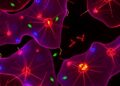
Halloween is just around the corner, and some people will celebrate by watching scary movies about brain-eating zombies. But even more frightening are real-life parasites that feed on the human brain, and they can be harder to kill than their horror-movie counterparts. Now, researchers have developed silver nanoparticles coated with anti-seizure drugs that can kill brain-eating amoebae while sparing human cells. The researchers report their results in ACS Chemical Neuroscience.

Although infections with brain-eating amoebae (Naegleria fowleri) are rare, they are almost always deadly. Most cases result from inhaling warm, dirty water in ponds, hot springs or unchlorinated swimming pools. Another species, Acanthamoeba castellanii, can cause blindness by entering the eyes through dirty contact lenses. Common treatments include antimicrobial drugs, but they often cause severe side effects because of the high doses required for them to enter the brain. Ayaz Anwar and colleagues wondered if three anti-seizure drugs — diazepam, phenobarbitone and phenytoin — could kill amoebae, alone or in combination with silver nanoparticles. The drugs are already approved by the U.S. Food and Drug Administration and are known to cross the blood-brain barrier. The researchers reasoned that they might be more effective when attached to silver nanoparticles, which can improve the delivery of some drugs and also have their own antimicrobial effects.

The team chemically attached the drugs to silver nanoparticles and examined their ability to kill amoebae. They found that each of the three drugs alone could kill N. fowleri and A. castellanii, but they worked much better when bound to silver nanoparticles. The drug-nanoparticle combos protected human cells from the microbes, increasing their survival rate compared with untreated infected human cells. The researchers propose that these repurposed drugs, aided by the nanoparticles, might kill amoebae by binding to protein receptors or ion channels on the single-celled organism's membrane.

###

The authors acknowledge funding from Sunway University in Malaysia.

The abstract that accompanies this study is available here.

The American Chemical Society, the world's largest scientific society, is a not-for-profit organization chartered by the U.S. Congress. ACS is a global leader in providing access to chemistry-related information and research through its multiple databases, peer-reviewed journals and scientific conferences. ACS does not conduct research, but publishes and publicizes peer-reviewed scientific studies. Its main offices are in Washington, D.C., and Columbus, Ohio.

To automatically receive news releases from the American Chemical Society, contact [email protected].

Follow us on Twitter | Facebook

Media Contact

Katie Cottingham
[email protected]
301-775-8455
@ACSpressroom

http://www.acs.org
Share12Tweet8Share2ShareShareShare2

Related Posts

Florida Cane Toad: Complex Spread and Selective Evolution

Florida Cane Toad: Complex Spread and Selective Evolution

February 7, 2026
New Study Uncovers Mechanism Behind Burn Pit Particulate Matter–Induced Lung Inflammation

New Study Uncovers Mechanism Behind Burn Pit Particulate Matter–Induced Lung Inflammation

February 6, 2026

DeepBlastoid: Advancing Automated and Efficient Evaluation of Human Blastoids with Deep Learning

February 6, 2026

Navigating the Gut: The Role of Formic Acid in the Microbiome

February 6, 2026
Please login to join discussion

POPULAR NEWS

  • Robotic Ureteral Reconstruction: A Novel Approach

    Robotic Ureteral Reconstruction: A Novel Approach

    82 shares
    Share 33 Tweet 21
  • Digital Privacy: Health Data Control in Incarceration

    63 shares
    Share 25 Tweet 16
  • Study Reveals Lipid Accumulation in ME/CFS Cells

    57 shares
    Share 23 Tweet 14
  • Breakthrough in RNA Research Accelerates Medical Innovations Timeline

    53 shares
    Share 21 Tweet 13

About

We bring you the latest biotechnology news from best research centers and universities around the world. Check our website.

Follow us

Recent News

Evaluating Pediatric Emergency Care Quality in Ethiopia

TPMT Expression Predictions Linked to Azathioprine Side Effects

Improving Dementia Care with Enhanced Activity Kits

Subscribe to Blog via Email

Enter your email address to subscribe to this blog and receive notifications of new posts by email.

Join 73 other subscribers
  • Contact Us

Bioengineer.org © Copyright 2023 All Rights Reserved.

Welcome Back!

Login to your account below

Forgotten Password?

Retrieve your password

Please enter your username or email address to reset your password.

Log In
No Result
View All Result
  • Homepages
    • Home Page 1
    • Home Page 2
  • News
  • National
  • Business
  • Health
  • Lifestyle
  • Science

Bioengineer.org © Copyright 2023 All Rights Reserved.