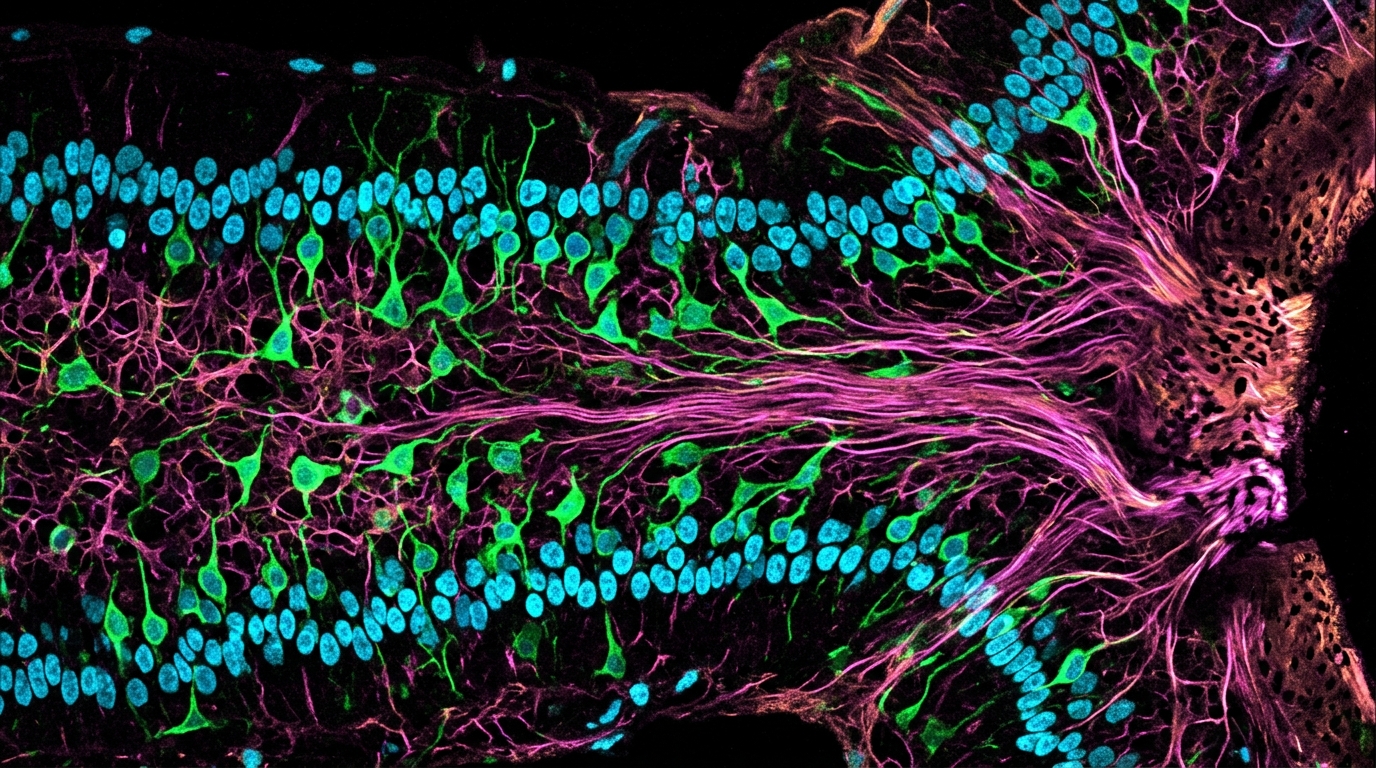
Glaucoma transcriptomics has expanded from early microarray gene expression profiling toward cell-resolved and multi-omic methodologies, according to a bibliometric and thematic study analyzing two decades of scientific literature published between 2006 and July 2026. Glaucoma encompasses a heterogeneous group of progressive optic neuropathies characterized by retinal ganglion cell degeneration and optic nerve damage, standing as a primary cause of irreversible visual impairment worldwide. The global burden was estimated at 64.3 million individuals aged 40 to 80 years in 2013 and is projected to reach 111.8 million by 2040. Although elevated intraocular pressure represents the primary modifiable risk factor, glaucomatous neurodegeneration involves an intricate cascade of interacting biological events, including trabecular meshwork dysfunction, extracellular matrix remodeling, neuroinflammation, metabolic dysfunction, oxidative stress, vascular pathology, and genetic predisposition. To determine how analytical platforms, anatomical compartments, and thematic priorities have evolved to address this complexity, investigators conducted a comprehensive science mapping and bibliometric analysis of the field.
To build the primary research corpus, the investigators screened 391 bibliographic records extracted from the Web of Science Core Collection Science Citation Index Expanded, covering publications indexed between January 1, 2006, and July 22, 2026. Following quality control procedures that removed duplicate entries, non-English publications, and document formats other than original research articles and reviews, a single duplicated publication indexed under two accession numbers sharing a common digital object identifier was resolved. The finalized primary dataset comprised 387 unique publications, consisting of 360 original research articles and 27 review articles distributed across 152 peer-reviewed scientific journals. Across the full analytical corpus, the publications accrued 6,830 citations as recorded at the time of export, achieving an overall h-index of 40 and an average of 17.65 citations per publication. Annual publication volume expanded consistently over the study window, moving from low initial activity to a peak output of 74 publications in 2025, reflecting a calculated linear growth slope of 2.936 publications per year across the 329 complete-year records from 2006 through 2025, while 58 publications were recorded during the partial year of 2026.
Geographic and institutional contributions demonstrated substantial concentration among a small number of national research systems and academic centers. The United States and China accounted for the vast majority of publication volume, authoring 173 and 160 publications, respectively. Publications originating from the United States accrued 4,418 total citations, averaging 25.54 citations per paper with an h-index of 35 and a total link strength of 102, whereas publications from China accrued 1,793 citations, averaging 11.21 citations per paper with an h-index of 24 and a total link strength of 42. England and Germany followed with 21 publications each, while Japan contributed 16, India 11, Canada 10, the Netherlands 10, Australia 8, and Sweden 8. International collaboration was identified in 101 publications, representing 26.1 percent of the total literature. At the organizational level, Sun Yat-sen University led global output with 29 publications, followed closely by Harvard University with 28 publications, Harvard Medical School with 25, Harvard University Medical Affiliates with 25, the University of California System with 25, Central South University with 22, and the Massachusetts Eye and Ear Infirmary with 18.
Because citation metrics can be substantially shaped by domestic citing patterns, the authors implemented an event-based sensitivity analysis evaluating country-level and institution-level self-citations across 5,555 unique citing publications and 7,238 verified citation links retrieved in October 2026. This sensitivity audit demonstrated that 2,226 of the 4,635 raw citation events attributed to the United States were domestic self-citations, yielding an event-based self-citation rate of 48.03 percent and 2,409 adjusted citation events. For China, 1,232 of 1,970 raw citation events were self-citations, representing a self-citation rate of 62.54 percent and leaving 738 adjusted citation events. Australia registered 807 adjusted citation events, placing it second globally behind the United States and ahead of China under this adjusted event metric. At the institutional scale, Massachusetts Eye and Ear Infirmary exhibited an institution-level self-citation rate of 7.97 percent with 704 adjusted events, while the National Institutes of Health recorded a self-citation rate of 7.37 percent with 377 adjusted events. Sun Yat-sen University had a self-citation rate of 9.29 percent with 381 adjusted events, and Central South University showed a 12.89 percent rate with 223 adjusted events.
Analysis of authorship and dissemination channels showed a distributed community of productive investigators published primarily in specialized visual science periodicals. Leading contributors by publication count included Zhuo YH with 13 publications, Zhang JX with 10, Stamer WD with 9, Wang NL with 9, Xia XB with 9, Li J with 8, Willoughby CE with 8, Yan WJ with 8, Guo JH with 7, and John SWM with 7. The primary literature was concentrated within established ophthalmic journals, led prominently by Investigative Ophthalmology & Visual Science and Experimental Eye Research, alongside contributions from multidisciplinary and molecular biology periodicals. A journal dual-map overlay analysis demonstrated that citing articles published in molecular biology, immunology, clinical medicine, and ophthalmology journals primarily established citation trajectories connecting to foundational knowledge domains in molecular biology, genetics, and general medical sciences, illustrating an active reciprocal exchange between specialized ophthalmic investigation and broader basic biomedical disciplines.
To trace the conceptual architecture of the field, the authors performed keyword co-occurrence and citation burst analyses on 291 publications containing author-defined keywords, standardizing 919 unique terms. A network of 49 keywords meeting a minimum threshold of four occurrences revealed six structural clusters capturing aqueous outflow biology, retinal ganglion cell neuroprotection, neuroinflammation, sequencing methodologies, oxidative stress, and molecular biomarkers. Timeline mapping performed in CiteSpace generated a network modularity score of 0.7000 and a weighted mean silhouette value of 0.9044, demonstrating highly cohesive, modular clusters. Temporal prevalence tracking across five chronological periods revealed that early studies frequently utilized microarray terminology, whereas subsequent periods exhibited steep increases in RNA sequencing, single-cell RNA sequencing, apoptosis, and ferroptosis. Citation burst analysis identified 18 prominent burst terms across the timeline, with the most recent bursts centered on optic nerve, extracellular matrix, axon degeneration, and oxidative stress, confirming a pronounced contemporary pivot toward tissue remodeling, axonal degeneration pathways, and cellular stress responses.
The study formally synthesized the normalized keywords into five non-mutually exclusive, manuscript-level research themes across the 291 keyword-bearing publications. The largest thematic domain was trabecular meshwork, aqueous outflow, and molecular profiling, encompassing 122 publications, or 41.9 percent of the subset, with an average publication year of 2022.5 and 80.3 percent appearing between 2021 and 2026. Retinal and optic nerve neuroinflammation formed the second largest theme with 75 publications (25.8 percent; average year 2022.4; 78.7 percent recent), followed by retinal ganglion cell degeneration and neuroprotection with 66 publications (22.7 percent; average year 2022.5; 77.3 percent recent). Transcriptomic biomarkers and integrative analyses comprised 57 publications (19.6 percent; average year 2021.8; 77.2 percent recent). Notably, single-cell-resolved injury and cell-death mechanisms emerged as the most modern domain, comprising 47 publications (16.2 percent) with an average publication year of 2024.1, where 91.5 percent of all related manuscripts were published between 2021 and 2026. Unsupervised k-medoids clustering confirmed mathematical enrichment for the first three themes, though overall cluster separation was modest with a mean silhouette of 0.0305.
To delineate how analytical techniques connect to specific ocular structures and biological problems, the authors classified each of the 291 publications into a mutually exclusive framework matching one dominant technology, one ocular compartment, and one primary research theme. Bulk RNA sequencing predominated across technical categories with 124 publications, followed by other or unspecified transcriptomic approaches with 56, single-cell or single-nucleus RNA sequencing with 46, integrated or multi-omic approaches with 44, microarray profiling with 19, and spatial transcriptomics with only 2 publications. Anatomically, the retina and retinal ganglion cells represented the largest target compartment with 114 publications, followed by the trabecular meshwork and outflow pathways with 62, multiple or systemic compartments with 62, the aqueous humor and anterior segment with 32, and the optic nerve or optic nerve head with 21. Among 63 unique technological, anatomical, and thematic pathways, the single most common configuration was bulk RNA sequencing applied to trabecular meshwork outflow studies investigating outflow molecular profiling (28 publications), followed by bulk RNA sequencing of the retina evaluating neuroprotection (22 publications).
Independent validation across Scopus and PubMed databases confirmed the stability and robustness of the bibliographic trajectories observed in the primary Web of Science corpus. Conceptually harmonized searches conducted for the complete years from 2006 through 2025 identified 617 records in Scopus and 404 in PubMed, alongside the 329 complete-year Web of Science publications. Pairwise comparisons demonstrated strong annual publication count correlations, yielding Pearson correlation coefficients of 0.982 between Web of Science and Scopus, 0.990 between Web of Science and PubMed, and 0.972 between Scopus and PubMed. Analysis of digital object identifiers across 323 complete-year Web of Science records revealed that 286 publications (88.5 percent) were indexed in Scopus, 279 (86.4 percent) were indexed in PubMed, and 277 (85.8 percent) were shared across all three databases. Furthermore, comparison of the top 20 normalized author keywords between Web of Science and Scopus yielded 17 shared terms with a Jaccard similarity index of 0.739, and prevalence across 36 shared keywords correlated tightly with a Pearson r of 0.915, confirming consistent structural terminology across distinct scientific indexes.
Despite these clear macro-level trajectories, the authors emphasized critical methodological limitations, noting that bibliometric mapping provides field-level hypothesis-generating observations rather than direct biological evidence of clinical efficacy or causal disease mechanisms. Because indexing protocols and metadata fields vary across international bibliographic repositories, differences in absolute publication counts persisted across platforms, and the primary dataset was limited to English-language research indexed in the Web of Science Core Collection without coverage of databases such as Embase. Furthermore, spatial transcriptomics remains profoundly underrepresented in the glaucoma literature with only two identified publications, despite its unique capacity to preserve spatial tissue architecture at complex anatomical interfaces such as the optic nerve head. The authors concluded that future advances in glaucoma transcriptomics will rely less on generating isolated candidate gene lists and increasingly on the systematic integration of single-cell and spatial profiling with clinical genetics, functional laboratory validation, and well-characterized human cohorts to achieve true translational reproducibility.
Subject of Research: Bibliometric and thematic evolution of glaucoma transcriptomics literature from 2006 to 2026
Article Title: Evolution of glaucoma transcriptomics across technologies, ocular compartments, and research themes: a bibliometric and thematic analysis, 2006–2026
Article References: Zhao, C., Chen, G., Wang, C., Chen, H., & Shi, J. (2026). Evolution of glaucoma transcriptomics across technologies, ocular compartments, and research themes: a bibliometric and thematic analysis, 2006–2026. Frontiers in Medicine, 13, Article 2029707. https://doi.org/10.3389/fmed.2026.2029707
Image Credits: AI Generated
DOI: 10.3389/fmed.2026.2029707
Keywords: glaucoma, transcriptomics, single-cell RNA sequencing, bulk RNA sequencing, trabecular meshwork, retinal ganglion cells, aqueous outflow, optic nerve, neuroinflammation, neuroprotection, spatial transcriptomics, bibliometric analysis, science mapping, biomarkers, ocular hypertension, cell death mechanisms, extracellular matrix, multi-omics
News Source: Brooke Gardner. (November 28, 2026). Glaucoma Transcriptomics Expands Toward Single-Cell Resolution Across Two Major Anatomical Axes. Scienmag.