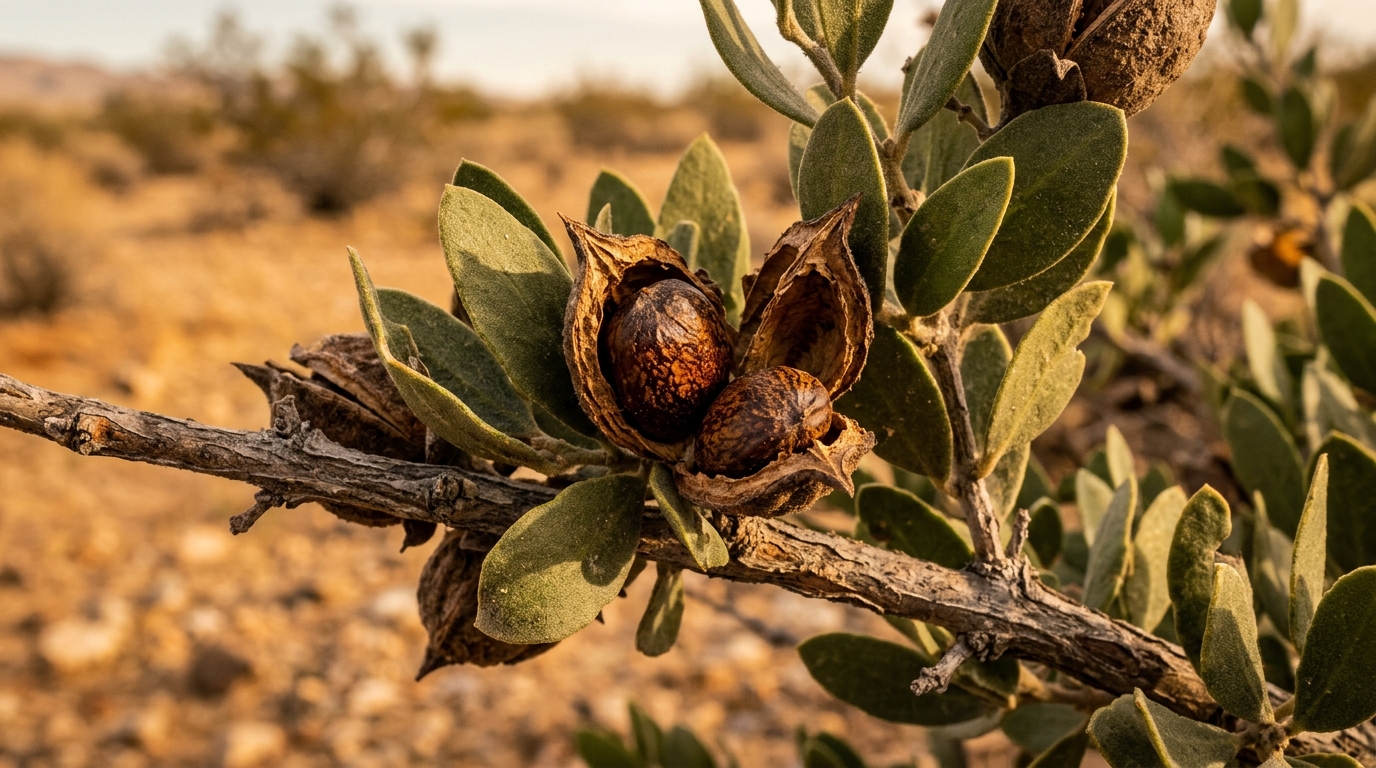
In an experimental investigation into botanical functional interventions for neurodegenerative decline, researchers demonstrated that kernel oil extracted from Nitraria tangutorum Bobr., a deciduous desert shrub endemic to northwestern China, significantly ameliorated spatial learning and memory deficits while protecting hippocampal neuronal architecture in an accelerated-aging mouse model. Through comprehensive behavioral testing, histopathological evaluation, transcriptomic profiling, gut microbiota sequencing, and computational molecular modeling, the investigators observed that NTK treatment suppressed pro-apoptotic stress signaling, alleviated structural damage across hippocampal subfields, promoted mitochondrial quality-control processes, and restored microbial community balance. The study provides systematic preclinical evidence outlining how lipid and phytochemical fractions derived from desert shrub seeds influence molecular and cellular cascades associated with neurodegeneration, while delineating the precise translational boundaries of these findings.
Cognitive disorders such as Alzheimer’s disease represent a mounting global health challenge, currently impacting more than 55 million individuals worldwide, with projections anticipating an escalation to 139 million cases by 2050. Conventional pharmacotherapies, primarily composed of cholinesterase inhibitors and NMDA receptor antagonists, confer modest symptomatic relief but fail to arrest or reverse underlying pathological progression. While emerging biological therapeutics directed against amyloid-beta assemblies and hyperphosphorylated tau proteins continue through clinical evaluation, attention has expanded toward botanical functional foods and naturally occurring secondary metabolites that exhibit complex multi-target bioactivities. Nitraria tangutorum, vernacularly termed the desert cherry and classified within the Apocynaceae family, grows along the arid margins of desert oases across China’s Qaidam Basin, Gansu, Shanxi, and Xinjiang provinces. Although the shrub’s edible sweet-and-sour fruits have been traditionally processed into functional beverages and local tonics rich in flavonoids, anthocyanins, alkaloids, and organic acids, the biological actions of the oil derived from its pulverized kernels remained largely uncharacterized prior to this experimental assessment.
To isolate and characterize the constituent profile of the seed oil, the researchers collected authenticated plant material from the Qaidam Basin, separated the kernels from the fleshy pulp, and subjected the sun-dried, pulverized kernels to petroleum ether reflux extraction at a four-to-one liquid-to-solid ratio across two consecutive two-hour cycles. Qualitative and quantitative chemical profiling using ultra-performance liquid chromatography coupled with quadrupole time-of-flight tandem mass spectrometry, referenced against spectral databases, resolved 54 distinct chemical entities. These constituents comprised 19 fatty acids, 8 alkaloids, 7 amino acids, 7 aromatic compounds, 7 nitrogen-containing heterocyclic compounds, 6 ketones, aldehydes, and organic acids, and 4 carbohydrate derivatives. Subsequent literature screening for neuroprotective and antioxidant activities isolated eight prominent candidate compounds: coniferyl alcohol, harman, phytosphingosine, psoralen, isorhamnetin, scopoletin, harmine, and alpha-tocopherol. Targeted high-performance liquid chromatography quantified the specific flavonoid isorhamnetin within the crude oil at a concentration of 6.4 micrograms per gram of extract.
Dosage calculations were derived from traditional human fruit intake records of 30 to 60 grams daily; accounting for the 4 percent crude extraction yield of NTK and applying body-surface-area allometric scaling with a human-to-mouse conversion factor of 9.1, the researchers determined an equivalent baseline murine intake range of 182 to 364 milligrams per kilogram daily. Consequently, the animals were randomized into five cohorts of 12 mice each: a normal control, an untreated model control, a positive pharmacological control receiving donepezil hydrochloride at 1 milligram per kilogram, a low-dose NTK group receiving 200 milligrams per kilogram, and an exploratory high-exposure NTK group receiving 1000 milligrams per kilogram. With the exception of the normal control, all groups received systemic intraperitoneal injections of D-galactose at 200 milligrams per kilogram daily for 42 consecutive days to establish neurotoxic senescence, while oral treatments were delivered concurrently via once-daily intragastric gavage.
Spatial learning and memory retention were evaluated beginning on the 36th day of intervention using the standardized Morris water maze. Over a five-day acquisition phase across a circular water pool with visual orientation markers, mice were trained in quadrant trials to navigate toward a submerged escape platform. Automated tracking software recorded behavioral trajectories, revealing that model mice exposed to D-galactose exhibited significant spatial navigation deficits, marked by prolonged escape latencies, tortuous search trajectories, diminished target platform crossings, and reduced swimming distances within the target quadrant compared to normal controls. Conversely, daily administration of NTK, particularly at the 1000 milligram per kilogram dosage, produced marked behavioral recovery comparable to donepezil treatment. In spatial probe trials conducted on the sixth day following platform removal, mice treated with high-dose NTK demonstrated direct swim trajectories toward the previous platform site, crossed the target location significantly more frequently, and spent a greater proportion of the allotted 60 seconds exploring the target quadrant, confirming preservation of spatial reference memory.
Histological examinations confirmed that behavioral improvements corresponded to structural preservation within vulnerable brain regions. Hematoxylin and eosin staining of intact hippocampal sections showed severe morphological degradation in D-galactose-treated model mice, characterized by disorganized, sparsely arranged pyramidal neurons, blurred cell boundaries, cytoplasmic vacuolation, and atrophied or missing nuclei within the cornu ammonis 1, cornu ammonis 3, and dentate gyrus regions. Oral administration of NTK mitigated these pathological alterations, preserving neuronal density, restoring regular cellular alignment, and preventing extensive loss of Nissl substance across all three hippocampal zones. Furthermore, transmission microscopic immunohistochemical quantification of phosphorylated tau protein revealed that the conspicuous accumulation of abnormal hyperphosphorylated tau-positive cells observed in untreated model mice was significantly attenuated following NTK treatment, showing lighter staining intensity and markedly reduced immunoreactive counts.
To elucidate the systemic and genomic mechanisms governing these neuroprotective outcomes, the investigators integrated network pharmacology predictions with hippocampal transcriptomic RNA sequencing across normal, model, and high-dose NTK cohorts. Network target mapping identified 66 shared molecular targets intersecting NTK chemical components with established Alzheimer’s disease candidate genes, with protein-protein interaction networks and Gene Ontology classifications highlighting prominent enrichment in JNK and p38 mitogen-activated protein kinase signaling, amyloid-beta cellular responses, glial activation, ATP binding, and axonal structures. Complementary RNA sequencing identified significant transcriptional shifts, with the model cohort exhibiting 33 upregulated and 43 downregulated genes relative to controls, whereas NTK supplementation significantly altered expression profiles, driving the upregulation of 97 genes and the downregulation of 80 genes. Notably, volcano plot analysis demonstrated that NTK administration reversed the pathological suppression of critical immediate-early genes, specifically Arc, Npas4, Fos, and Egr2, which serve as essential transcriptional coordinators of synaptic plasticity, structural remodeling, and long-term memory consolidation.
Molecular validation via quantitative real-time polymerase chain reaction and Western blotting substantiated the involvement of the MAPK cascade and mitochondrial quality-control machinery in mediating hippocampal preservation. Brain tissue from model mice exhibited hyperphosphorylation of pro-apoptotic p38 and JNK kinases alongside a marked reduction in phosphorylated ERK, indicating an active apoptotic trajectory coupled with impaired survival signaling. NTK treatment reversed this phosphorylation balance, restoring p-ERK abundance while suppressing phosphorylated p38 and JNK levels. Concurrently, the study documented severe mitochondrial dysfunction in untreated model mice, characterized by the repression of the canonical PINK1/Parkin mitophagy pathway, decreased mitofusin-2 levels indicating excessive mitochondrial fission and fragmentation, an accumulation of the sequestosome-1 marker p62, and a reduced LC3-II to LC3-I conversion ratio reflecting blocked autophagic flux. Treatment with NTK reestablished autophagic clearance markers, downregulated compensatory alternative mitophagy proteins FUNDC1 and Bnip3, and restored mitochondrial homeostasis, thereby preserving energy supply and cellular viability in hippocampal circuits.
Recognizing the emerging role of the gut-brain axis in metabolic and cognitive health, the researchers characterized fecal microbial communities via 16S ribosomal RNA amplicon sequencing targeting the bacterial V3-V4 hypervariable region. Operational taxonomic unit clustering at 97 percent sequence identity identified distinct compositional structures among the experimental groups, with principal coordinates analysis demonstrating that NTK intervention shifted the overall beta diversity of accelerated-aging mice back toward the clustering space of normal controls.
To identify the specific phytochemical drivers underlying these cellular responses, the researchers performed in silico molecular docking and 100-nanosecond molecular dynamics simulations, which revealed that isorhamnetin possessed the highest binding affinities toward core MAPK and mitophagy receptors, forming stable polar contacts with key residues including Asn-60, Lys-167, and Gln-62 on PINK1, Leu-144, Lys-93, and Ala-91 on JNK, and Met-125 on ERK. Subsequent in vitro validation in murine HT-22 hippocampal cells challenged with neurotoxic amyloid-beta 25-35 peptides confirmed that isorhamnetin, at concentrations of 5 to 20 micromolar, dose-dependently restored cell viability, normalized fusiform cellular morphology, reduced cleaved caspase-3 levels, scavenged reactive oxygen species, and restored mitochondrial membrane potential. Nevertheless, several methodological limitations define the interpretive boundaries of this study. The D-galactose accelerated-aging model does not reproduce human amyloid plaques or neurofibrillary tangles; HT-22 cells lack functional NMDA receptors and primary neuronal complexity; and the measured isorhamnetin content of 6.4 micrograms per gram in crude NTK is substantially lower than the micromolar concentrations required in vitro, leaving the precise in vivo contribution of individual constituents unconfirmed. Furthermore, because microbial metabolites were not quantified and fecal microbiota transplantation was not conducted, a direct causal role for the gut-brain axis cannot yet be established.
Subject of Research: Evaluation of Nitraria tangutorum kernel oil against cognitive impairment, neuronal injury, and mitochondrial dysfunction in mice
Article Title: Nitraria tangutorum Bobr. Kernel Oil Ameliorates D‐Galactose‐Induced Cognitive Impairment and Neuronal Injury in Mice by Inhibiting the JNK/p38 MAPK Pathway and Restoring Mitochondrial Homeostasis
Article References: Zhou, Y.-B., Huang, H.-S., Sun, X.-R., Li, X.-Y., Fu, Y.-N., Cheng, H., Zhang, Z., & Huang, X.-J. (2026). Nitraria tangutorum Bobr. Kernel Oil Ameliorates D‐Galactose‐Induced Cognitive Impairment and Neuronal Injury in Mice by Inhibiting the JNK /p38 MAPK Pathway and Restoring Mitochondrial Homeostasis. Food Science & Nutrition, 14(12), Article e72627. https://doi.org/10.1002/fsn3.72627
Image Credits: AI Generated
DOI: 10.1002/fsn3.72627
Keywords: Nitraria tangutorum, kernel oil, Alzheimer's disease, cognitive impairment, hippocampus, D-galactose, Morris water maze, mitophagy, JNK/p38 MAPK, isorhamnetin, gut microbiota, Ligilactobacillus, HT-22 cells, amyloid-beta, transcriptomics, molecular docking, reactive oxygen species, PINK1-Parkin pathway
News Source: Beatrice Stafford. (November 27, 2026). Desert Shrub Kernel Oil Ameliorates Cognitive Deficits in Aging Mouse Model. Scienmag.