A comprehensive bibliometric mapping of more than three thousand scientific studies has revealed that global research exploring how the human microbiome interacts with cancer immunotherapy expanded at an average annual growth rate of twenty-three percent between 2020 and 2025, culminating in a record seven hundred fifteen papers published during 2025 alone. The investigation, published in the Journal of the Egyptian National Cancer Institute by researcher Wenbin Tan, systematically examined the intellectual structure, international collaboration networks, and thematic evolution of the field across sixteen years of literature indexed in the Web of Science Core Collection. By analyzing three thousand fifty-eight original research articles and reviews published between January 2010 and January 2026, the study traces how an area of investigation that began with a single paper in 2010 has rapidly transformed into a major multidisciplinary enterprise. The dataset captures a pivotal trajectory across three distinct developmental intervals, moving from an exploratory decade between 2010 and 2019 averaging thirty-eight publications annually, through a steady expansion period between 2020 and 2022 averaging three hundred thirty papers per year, to an accelerated phase from 2023 to 2025 generating five hundred fifty-seven publications annually, punctuated by a forty-six point one percent surge in 2025 relative to the prior year.
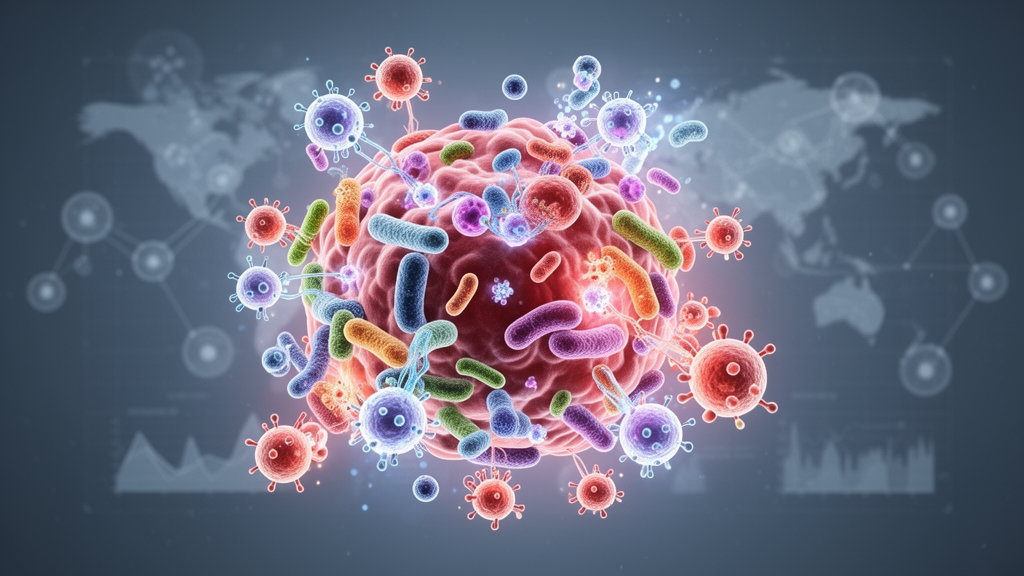
The conceptual framework underpinning this analysis focuses specifically on synergistic effects between microbial communities and therapeutic immune checkpoint inhibitors, encompassing three interrelated functional dimensions. These dimensions examine how commensal microorganisms modulate host antitumor immune pathways to enhance the efficacy of checkpoint blockade, how cancer immunotherapies reciprocally reshape microbial ecosystems through immune-mediated selection pressures, and how bidirectional metabolic and signaling crosstalk between microbes and checkpoint pathways collectively dictates clinical outcomes. While immune checkpoint inhibitors targeting programmed cell death protein 1, programmed death-ligand 1, and cytotoxic T-lymphocyte-associated protein 4 have established standard-of-care status across multiple solid malignancies, clinical registries indicate that only twenty to forty percent of patients achieve long-term therapeutic benefit. Because interindividual variability in treatment response remains a critical therapeutic bottleneck, investigators worldwide have increasingly focused on the gut microbiome as an essential regulator of host immune responsiveness, prompting the need for a rigorous bibliometric synthesis to map how knowledge has accumulated across disparate scientific disciplines.
Methodologically, the bibliometric evaluation integrated three complementary analytical software platforms to minimize the single-tool bias common to earlier literature reviews. The author applied CiteSpace version 6.3.1 to generate author collaboration networks, keyword co-occurrence maps, citation clusters, and temporal keyword emergence lists based on Kleinberg’s burst detection algorithm. Concurrently, VOSviewer version 1.6.19 was utilized to construct country and institutional collaboration networks through association strength normalization, while the bibliometrix package within R version 4.4.1 enabled dual-map journal overlays and knowledge flow tracking, supported by EndNote X9 for deduplication and screening. Following the removal of duplicate records, non-English publications, and unrelated document types such as conference abstracts, letters, and editorials, the quantitative workflow examined publication trends, total link strength, node degree, journal citation distribution, citation clustering, and the historical emergence of specialized research frontiers across eighty-six contributing nations.
Geographic analysis demonstrated an intense concentration of scientific output, with China and the United States together producing sixty point one percent of all global publications in the field. China ranked first in total productivity with one thousand eighty-nine articles, accounting for thirty-five point seven percent of the global volume, followed by the United States with seven hundred forty-nine articles, representing twenty-four point five percent. Italy contributed two hundred sixty-seven papers, Japan generated one hundred ninety-one, and France produced one hundred forty-one, with seven of the top ten publishing nations being developed economies. Although the international collaboration network exhibited a core-periphery architecture characterized by dense bilateral linkages between American, Chinese, and European institutions, cross-border cooperation involving developing regions remained markedly sparse. Furthermore, an evaluation of academic impact highlighted an institutional divergence between overall volume and citation depth: while Chinese institutions accounted for six of the top ten most active organizations, United States research centers maintained higher overall citation influence, reflected in a national H-index of ninety-two for the United States compared to seventy-five for China.
At the institutional and investigator level, MD Anderson Cancer Center in the United States emerged as the leading research center globally, authoring one hundred two papers that accumulated sixteen thousand six hundred ninety-five citations and achieved an institutional H-index of sixty-two. Shanghai Jiao Tong University led all Chinese institutions with seventy-one publications, while Paris-Saclay University in France produced sixty-four papers that generated ten thousand seven hundred seventy-nine citations, with these three organizations acting as central collaboration hubs. Applying Price’s Law to individual author contributions established a productivity threshold of eight papers, identifying one hundred fifty-six core authors who collectively produced two thousand four hundred fifty-six articles, or eighty point three percent of global research output. Among these individuals, Laurence Zitvogel of France authored forty-four papers, Bertrand Routy contributed forty papers, Jennifer A. Wargo generated thirty-seven publications accumulating seven thousand one hundred sixty-six citations, and Chinese investigator Jun Yu authored nineteen papers focusing on gastrointestinal tumor microbiomes.
Co-authorship and keyword co-occurrence clustering further identified three primary academic lineages that govern intellectual development across the domain. The Fundamental Immunological Mechanism group, centered around European investigators including Laurence Zitvogel and Guido Kroemer, has focused predominantly on dissecting how gut microbial species alter the tumor microenvironment and drive host antitumor immunity. A second lineage, the Clinical Translational group associated with Jennifer A. Wargo and Bertrand Routy, concentrates on validating predictive efficacy biomarkers, refining patient stratification metrics, and conducting early clinical evaluations of fecal microbiota transplantation. The third branch, the Cancer-Specific group represented by Chinese scholars such as Jun Yu and Ying Wang, investigates tissue-specific microbiome signatures and therapeutic synergies across colorectal, hepatocellular, and pulmonary carcinomas. However, cross-cluster collaboration among these three distinct teams remains structurally limited, highlighting an ongoing separation between fundamental laboratory discoveries, disease-specific registries, and clinical trial pipelines.
The distribution of publications across scientific journals underscored a high degree of academic selectivity combined with a distinctive interdisciplinary knowledge exchange pattern. More than two hundred academic journals have accepted manuscripts in this domain, led by Frontiers in Immunology with two hundred papers, followed by Cancers with one hundred forty-two articles and the International Journal of Molecular Sciences with eighty. Eight of the top ten publishing journals occupy the first quartile of Journal Citation Reports, representing eight hundred thirty-seven articles or twenty-seven point four percent of the total literature, with Nature Communications achieving the highest average citation rate at ninety-two point one citations per paper. Dual-map overlay visualizations demonstrated that while citing manuscripts are heavily concentrated within molecular biology, immunology, and clinical oncology journals, cited foundational literature spans computational modeling, environmental ecology, general clinical medicine, and bioinformatics, confirming that the specialty draws its concepts from a broad theoretical reservoir.
This interdisciplinary exchange has coalesced into three core knowledge flow pathways that define the prevailing research paradigms of microbiome-informed immunotherapy. The first pathway, tracing knowledge from mathematical modeling to molecular genetics, has established a Systems Immunology paradigm that treats the host-microbiome-immune axis as an integrated computational circuit, generating predictive algorithms to evaluate complex multi-omics datasets. The second pathway, directing insights from clinical medicine into molecular biology, forms a bidirectional Clinical-to-Basic Translational paradigm wherein bedside observations of differential immunotherapy response guide laboratory investigations into bacterial species, which in turn inform clinical trial designs and patient selection. The third pathway, transferring theoretical principles from ecology to molecular biology, embodies a Microbial Ecology paradigm that applies ecological frameworks such as niche differentiation, community assembly, and keystone species dynamics to understand how microbial consortia stabilize or disrupt immune-mediated tumor clearance.
Network mapping of one hundred fifty-six core keywords that appeared twenty or more times identified fourteen major thematic clusters, revealing the central structural role of specific checkpoint targets and bacterial metabolic byproducts. Terms representing programmed cell death protein 1, with three hundred eighty-nine occurrences and a betweenness centrality score of zero point nineteen, programmed death-ligand 1, with two hundred ninety-eight occurrences and a centrality of zero point sixteen, and cytotoxic T-lymphocyte-associated protein 4, with two hundred sixty-seven occurrences and a centrality of zero point fourteen, formed the central nodes of the immunotherapy cluster. Microbial metabolites also demonstrated substantial prominence, exemplified by short-chain fatty acids appearing two hundred five times with a betweenness centrality of zero point thirteen. In addition, terms capturing immune-related adverse events, which accumulated fifty-four occurrences, and tumor-infiltrating lymphocytes, with twenty-eight occurrences, illustrated significant clinical interest in deciphering how microbial ecosystems influence systemic treatment toxicity and immune cell infiltration within malignant tissues.
An analysis of twenty-five burst keywords identified through Kleinberg’s algorithm documented a clear chronological transition across three successive research frontiers. Phase One, spanning from 2013 to 2018, centered on fundamental mechanistic interactions, highlighted by intense citation bursts for dendritic cells, cytotoxic T-lymphocyte-associated protein 4, and programmed cell death protein 1 blockade. Phase Two, extending from 2017 to 2021, reflected initial clinical translation efforts, marked by surging keyword activity for nivolumab and tumor-infiltrating lymphocytes. Phase Three, encompassing 2019 through 2025, signifies an ongoing shift toward targeted and personalized interventions, characterized by emergence bursts for oral microbiota, engineered bacterial platforms such as attenuated Salmonella Typhimurium strains designed for targeted tumor antigen delivery, tyrosine kinase inhibitors, and precision machine-learning response prediction, thereby expanding investigation beyond the gastrointestinal tract into multi-site microbial interactions.
The underlying knowledge base of the discipline rests upon one hundred fifty-six highly cited landmark papers that have each accrued two hundred or more citations, representing five point one percent of the total literature. Seminal 2018 publications by Bertrand Routy and colleagues in Science, with four thousand two hundred eighteen citations, and Vikram Gopalakrishnan and colleagues in Science, with three thousand five hundred ninety-two citations, alongside a 2015 Science study by Marie Vétizou and colleagues with two thousand seven hundred twenty-one citations, provide the foundational evidence demonstrating that gut microbiome composition directly modulates therapeutic response to checkpoint inhibition. Algorithmic clustering of cited references organized the foundational literature into six core knowledge modules: the gut microbiome-PD-1/PD-L1 association, microbial intervention modalities including fecal microbiota transplantation and defined probiotics, tumor microenvironment immunomodulation, cancer-specific microbiome research, multi-omics and bioinformatics applications, and the regulation of immune-related adverse events.
Despite this substantial progress, the bibliometric analysis outlined significant methodological and structural gaps that continue to constrain clinical implementation. The existing literature remains overwhelmingly skewed toward the gut bacteriome, leaving the viral virome and fungal mycobiome severely understudied despite their recognized roles in systemic immune modulation. Furthermore, geographical representation exhibits severe disparity: research teams from Africa, South America, and South Asia collectively authored fewer than three percent of all analyzed publications, raising concerns regarding the generalizability of biomarker findings across genetically and nutritionally diverse global populations. Pediatric malignancies also remain virtually unrepresented within current datasets, and the vast majority of published studies rely on observational or correlational designs rather than randomized interventional clinical trials. The bibliometric review itself was constrained by its exclusive reliance on the Web of Science Core Collection, restriction to English-language literature, reliance on citation indicators that favor older studies, and the inclusion of only partial data from January 2026, which recorded fifty-two publications before the analytical cutoff.
Subject of Research: Bibliometric analysis of global scientific literature on microbiome interactions with cancer immunotherapy
Article Title: Microbiome and cancer immunotherapy: a bibliometric analysis
Article References: Tan, W. (2026). Microbiome and cancer immunotherapy: a bibliometric analysis. Journal of the Egyptian National Cancer Institute, 38(1), Article 38. https://doi.org/10.1186/s43046-026-00376-5
Image Credits: AI Generated
DOI: 10.1186/s43046-026-00376-5
Keywords: microbiome, cancer immunotherapy, bibliometric analysis, immune checkpoint inhibitors, gut microbiota, CiteSpace, VOSviewer, bibliometrix, PD-1, CTLA-4, fecal microbiota transplantation, systems immunology, oral microbiota, engineered bacteria, biomarkers, tumor microenvironment, scientific collaboration
News Source: Nathaniel Bowman. (November 21, 2026). Global Analysis Maps Accelerating Research Linking Human Microbiomes to Cancer Immunotherapy. Scienmag.