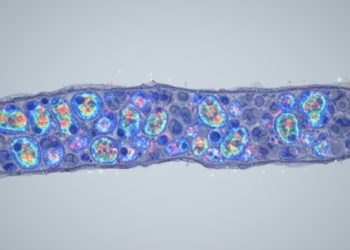
Passive immunotherapy directed against amyloid-beta has emerged as the principal disease-modifying strategy in Alzheimer’s disease clinical practice, yet extensive clearance of parenchymal plaques frequently produces only modest cognitive preservation while triggering vascular complications. In a comprehensive review published in Molecular Neurodegeneration, researchers evaluated clinical and preclinical evidence indicating that therapeutic monoclonal antibodies do not function merely as localized plaque-clearing agents within the extracellular space. Instead, therapeutic antibodies operate within an anatomically organized and coordinated multicellular clearance system that spans neurons, microglia, astrocytes, oligodendrocytes, perivascular macrophages, circulating peripheral immune cells, and meningeal lymphatic outflow pathways. Because antibodies distribute broadly across these distinct compartments rather than remaining confined to fibrillar deposits, interactions among these specialized cell populations shape overall treatment responses. This expanded physiological framework provides a mechanistic foundation for explaining why clinical cognitive benefits vary widely among patients despite robust target engagement, why vascular adverse events consistently arise, and how future molecular engineering can improve overall therapeutic safety.
The clinical development of passive amyloid immunotherapy has progressed through several successive generations of monoclonal antibodies characterized by divergent epitope specificities, biological activities, and pharmacological properties. First-generation humanized antibodies demonstrated direct amyloid binding but failed to yield sustained functional benefits; bapineuzumab lowered amyloid positron emission tomography signals while provoking vasogenic edema, and solanezumab engaged soluble monomers without improving functional outcomes in phase III trials. Second-generation candidates refined conformational targeting, with gantenerumab achieving dose-dependent plaque lowering alongside amyloid-related imaging abnormalities, while ponezumab targeted the C-terminus of amyloid-beta 40 with minimal plaque binding or vascular liabilities. Regulatory approvals for aducanumab, lecanemab, and donanemab firmly validated plaque reduction in early Alzheimer’s disease, although clinical cognitive stabilization remained modest and vascular adverse events occurred frequently. To surmount these limitations, third-generation antibodies emphasize optimized pharmacokinetics and enhanced blood-brain barrier penetrance. Agents such as remternetug target mature pyroglutamate-modified amyloid while exploring subcutaneous administration, and trontinemab fuses a gantenerumab-derived binding moiety with a transferrin receptor 1 BrainShuttle module to facilitate transcytosis across brain capillary endothelial cells, achieving rapid plaque negativity in early clinical evaluations.
A critical constraint highlighted in the review involves the non-uniform anatomical distribution of therapeutic antibodies entering the central nervous system across the blood-brain barrier. Histological examinations of human Alzheimer’s disease brains treated with conventional antibodies like aducanumab demonstrated that plaque removal was most pronounced in superficial cortical layer I, whereas deeper cortical laminae showed substantially more limited clearance. Conventional immunoglobulin G molecules display limited penetrance through the restrictive cerebrovascular endothelium, accumulating preferentially within cerebrospinal fluid pathways and perivascular spaces rather than fully engaging deeper parenchymal structures. To circumvent these physical delivery barriers, experimental platforms utilize antibody transport vehicles engineered to exploit transferrin receptor-mediated transcytosis across capillary endothelial cells. In transgenic mouse models, transferrin receptor-directed delivery facilitated widespread transvascular migration into parenchymal compartments, markedly increasing cerebral exposure and promoting comprehensive plaque engagement throughout deep brain regions, thereby establishing enhanced delivery engineering as an essential component for optimizing antibody distribution.
Beyond extracellular plaque pathology, accumulating evidence indicates that the accumulation of intraneuronal amyloid-beta represents an upstream contributor to synaptic failure and neuronal loss. Human cell models and early Down syndrome autopsies initially detected intracellular amyloid-beta 42 prior to extracellular plaque emergence, an observation corroborated in 3xTg-AD, 5xFAD, and McGill-R-Thy-APP animal models. Spatial transcriptomic and proteomic analyses of the human middle temporal gyrus demonstrated that intracellular amyloid accumulation specifically marks vulnerable neuronal subclasses that degenerate preferentially during disease progression, particularly RORB-positive and GAD1-positive populations. These vulnerable neurons exhibit intrinsic enrichment of genetic programs governing amyloid precursor protein processing, endosomal trafficking, and synaptic activity, which promote intracellular accumulation. Environmental factors such as synaptic activity further modulate these intracellular pools; sensory deprivation induced by unilateral whisker trimming reduces cortical firing while markedly escalating intraneuronal amyloid accumulation, confirming that altered network activity directly influences intracellular peptide dynamics within selectively susceptible circuits.
Therapeutic monoclonal antibodies can directly access and alter these pathogenic intraneuronal pools through dynamic internalization pathways. Experiments using transgenic primary neurons and animal models demonstrated that antibodies such as 6E10, 4G8, and 1560 undergo dynamin-dependent internalization together with cell-surface amyloid precursor protein, trafficking through endosomal-lysosomal compartments to degrade intracellular amyloid and rescue synaptic integrity. In young 3xTg-AD mice, intracerebroventricular delivery of antibody 1560 eliminated 86 percent of hippocampal intraneuronal amyloid and reversed cognitive deficits within seven days, although memory impairments returned once intracellular peptide levels rebounded. Similar internalization and clearance pathways mediated by endosomal routing and intracellular Fc receptors like tripartite motif-containing protein 21 have been documented in tau immunotherapy paradigms. However, no clinical-stage passive amyloid antibodies have been specifically engineered to optimize neuronal internalization or intracellular engagement, representing an overlooked therapeutic dimension because current clinical imaging modalities cannot resolve intraneuronal amyloid dynamics in living patients.
Microglia, the resident immune sentinels of the central nervous system, serve as primary cellular mediators of antibody-driven amyloid removal while simultaneously modulating inflammatory tissue injury. Upon encountering amyloid aggregates, microglia transition into disease-associated transcriptional states characterized by the upregulation of TREM2, ApoE, Cst7, Clec7a, and Itgax. Preclinical investigations by Wilcock and colleagues revealed that antibody-mediated clearance occurs through two temporally distinct phases: an initial rapid phase between 4 and 24 hours that clears diffuse deposits largely independently of microglial activation, followed by a delayed phase from 1 to 3 days wherein compact fibrillar plaques are eliminated through robust microglial recruitment and phagocytosis. Pharmacological suppression of microglial activation with dexamethasone completely abolishes antibody-induced plaque removal, while aducanumab administration markedly enhances microglial gene expression programs linked to complement cascades, antigen presentation, and lysosomal degradation.
The efficacy and inflammatory liability of microglial clearance are governed by antibody Fc domain interactions with cellular Fc gamma receptors. Intact Fc domains are essential for initiating classical microglial phagocytosis of compact plaques, as demonstrated by studies showing that isolated F(ab’)2 fragments or pharmacological receptor blockade fail to stimulate microglial engulfment in primary tissue preparations. Furthermore, the magnitude of microglial engagement depends on antibody isotype; human IgG1 backbones like those of aducanumab and lecanemab strongly engage Fc gamma receptors to stimulate phagocytosis, whereas IgG4 configurations such as crenezumab intentionally limit effector activity to mitigate neurovascular inflammation, albeit at the cost of attenuated plaque removal. Uncontrolled Fc receptor overactivation, however, drives microglia-dependent synapse elimination and cognitive impairment in rodent models. To resolve this functional conflict, engineered platforms incorporating modified Fc regions, such as the cisLALA mutation, preserve transcytosis and plaque removal while suppressing excessive effector-mediated inflammatory cascades, thereby illustrating a refined method for decoupling therapeutic clearance from neurotoxic activation.
Astrocytes and oligodendrocytes represent additional glial participants that critically influence tissue homeostasis and amyloid processing during passive immunotherapy. Astrocytes internalize amyloid-beta protofibrils through low-density lipoprotein receptor-related protein 1 pathways, but frequently store rather than degrade these species; experimental exposure to the protofibril-selective antibody mAb158 limits this intracellular retention, protecting adjacent neurons. Similarly, in vivo studies with antibody 6E10 demonstrate antibody colocalization with reactive GFAP-positive astrocytes surrounding plaques, prompting the development of chimeric antigen receptor astrocytes that successfully augment aggregate uptake in experimental models without inducing excessive microglial-like inflammatory activation. In parallel, oligodendrocytes provide axonal metabolic support and actively produce amyloid-beta, with conditional Bace1 deletion confirming that oligodendrocytes contribute approximately 20 to 30 percent of plaque-forming peptide in specific cortical and hippocampal regions. Because therapeutic antibodies localize within oligodendrocytes containing intracellular amyloid, antibody engagement may alter glial metabolic support, myelin stability, and non-neuronal peptide production as disease advances.
Perivascular macrophages residing within penetrating vascular spaces occupy a strategic anatomical checkpoint that directly influences clearance efficiency and vascular integrity. Preclinical depletion experiments utilizing liposome-encapsulated clodronate revealed that eliminating perivascular macrophages severely exacerbates cerebral amyloid angiopathy and accelerates parenchymal plaque accumulation. During passive immunotherapy, antibodies bind vascular amyloid deposits, triggering perivascular macrophage activation and recruiting circulating inflammatory monocytes. These structural alterations underlie amyloid-related imaging abnormalities, manifesting clinically as vasogenic edema or microhemorrhages across diverse trial populations, including 41 percent of high-dose aducanumab recipients in the EMERGE and ENGAGE trials and 12.6 percent of lecanemab participants. The observation that TREM2-directed antibodies can provoke imaging abnormalities without reducing amyloid plaques further corroborates that neurovascular immune activation independently drives vessel instability.
Meningeal lymphatic vessels and circulating peripheral monocytes constitute vital outflow and systemic clearance channels that govern antibody transit and whole-body amyloid equilibrium. Meningeal lymphatics drain interstitial fluids, macromolecules, and immune complexes into deep cervical lymph nodes; experimental surgical or chemical ablation of these vessels diminishes parenchymal antibody delivery, exacerbates neuritic dystrophy, and impairs lecanemab-mediated plaque removal. Conversely, enhancing lymphatic outflow via vascular endothelial growth factor C co-administration augments antibody penetrance and restorative efficacy. Simultaneously, circulating monocyte subsets modulate systemic peptide turnover, as approximately 40 to 60 percent of central amyloid enters peripheral circulation. Inflammatory CCR2-positive monocytes migrate across the disrupted blood-brain barrier to participate in plaque-associated inflammation, whereas CD14-positive, CD16-positive, and CD18-positive monocyte subsets mediate systemic aggregate binding and peripheral degradation, supporting the classical peripheral sink mechanism whereby vascular antibody binding shifts transvascular equilibrium toward peripheral clearance.
In conclusion, the therapeutic trajectory of passive amyloid immunotherapy depends on an integrated, multicellular clearance network rather than isolated plaque dissolution. Extracellular plaque reductions alone do not fully explain clinical cognitive stabilization, underscoring the functional significance of unaddressed intraneuronal amyloid pools, glial metabolic transitions, and perivascular neurovascular reactions. Achieving enhanced clinical efficacy while reducing adverse vascular liabilities requires multi-pronged therapeutic designs that advance beyond single-target monoclonal delivery. Such strategies include utilizing transferrin receptor BrainShuttle platforms to achieve uniform tissue penetrance, engineering Fc domains to uncouple phagocytic clearance from neurodestructive inflammation, enhancing meningeal lymphatic drainage, and combining amyloid-targeting biologics with tau-directed agents in platform trials. By systematically targeting both intracellular and extracellular peptide dynamics across the complete neurovascular-glial network, next-generation immunotherapies can optimize disease modification while safeguarding cerebrovascular integrity.
Subject of Research: Multicellular clearance mechanisms and vascular dynamics of passive amyloid-beta immunotherapy in Alzheimer's disease
Article Title: Passive amyloid-β immunotherapy in Alzheimer’s disease: a multicellular clearance system beyond plaque removal
Article References: Zhan, X., Liu, C., Yu, C., Lindblom, N., Deierborg, T., Kobro-Flatmoen, A., Gouras, G. K., & Wen, G. (2026). Passive amyloid-β immunotherapy in Alzheimer’s disease: a multicellular clearance system beyond plaque removal. Molecular Neurodegeneration, 21(1), Article 37. https://doi.org/10.1186/s13024-026-00972-y
Image Credits: AI Generated
DOI: 10.1186/s13024-026-00972-y
Keywords: Alzheimer's disease, passive immunotherapy, amyloid-beta, monoclonal antibodies, microglia, astrocytes, oligodendrocytes, perivascular macrophages, meningeal lymphatic vessels, intraneuronal amyloid, ARIA, blood-brain barrier, transferrin receptor, lecanemab, donanemab, aducanumab, trontinemab, remternetug
News Source: Cassandra Pierce. (November 20, 2026). Passive Amyloid Immunotherapy Operates Through Multicellular Brain Clearance Beyond Plaque Removal. Scienmag.