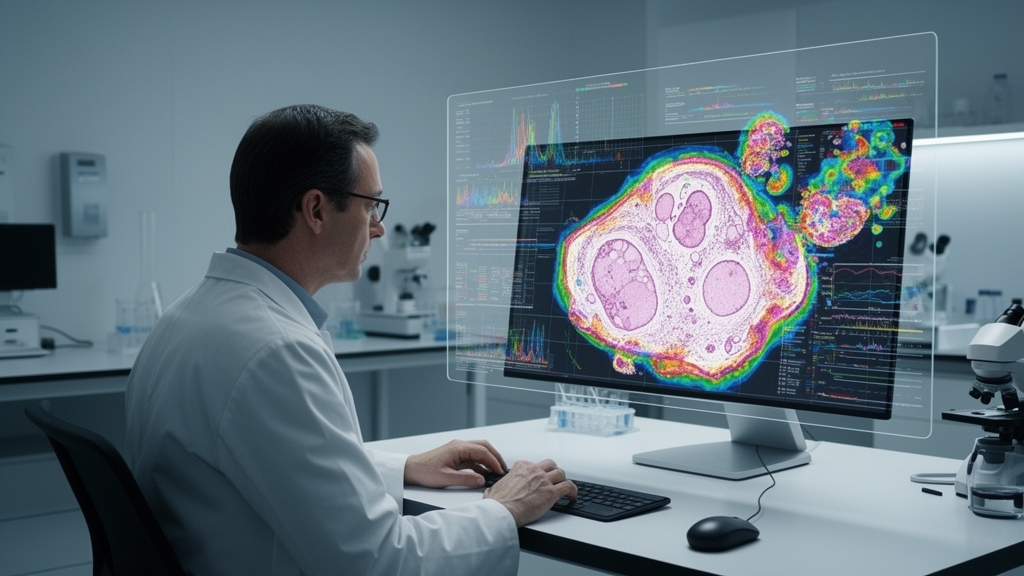
Machine learning has emerged as an indispensable computational methodology across the cancer care continuum, offering tools capable of handling complex, high-dimensional datasets spanning genomics, transcriptomics, proteomics, digital imaging, and electronic health records. According to a narrative review published in the Journal of the Egyptian National Cancer Institute by Kanishk Yadav and Taneesha Gupta, computational techniques show substantial potential to enhance cancer detection, refine risk stratification, and personalize therapeutic regimens. However, the authors emphasize that methodological advancements have significantly outpaced clinical translation, noting that most medical artificial intelligence evidence remains heavily concentrated in retrospective and preclinical stages rather than prospective clinical trials.
Cancer remains a leading global cause of death, accounting for nearly 10 million deaths in 2020. The disease is defined by intricate biological heterogeneity across tumor types, among individual patients, and even within separate microenvironments of a single tumor. The rapid development of next-generation sequencing, high-throughput proteomics, and digital pathology has generated unprecedented volumes of biological data. Traditional statistical methods, which typically rely on predefined hypotheses, frequently struggle to capture the complex nonlinear interactions inherent in modern multi-modal datasets. In contrast, machine learning algorithms learn directly from data patterns to generate predictions and classifications, providing scalable frameworks to extract clinically meaningful insights from multifaceted oncology repositories.
To synthesize contemporary progress, the investigators conducted a targeted literature search spanning January 1, 2015, through March 31, 2026, across PubMed, Scopus, Web of Science, and Google Scholar. The review categorized machine learning paradigms in cancer into supervised, unsupervised, and reinforcement learning. Supervised learning, trained on labeled outcomes such as tumor classification, survival duration, or therapeutic response, increasingly incorporates deep learning and foundation models. In computational pathology, foundation frameworks like CHIEF and self-supervised architectures trained on millions of unlabeled images learn transferable slide representations that adapt to diagnostic classification and survival prediction endpoints across diverse malignancies.
Unsupervised learning functions without predefined outcome labels, discovering hidden structure and biological patterns within unannotated datasets. This paradigm serves an essential role in exploratory cancer analysis, patient stratification, and molecular subtype identification. Contemporary workflows have evolved beyond traditional principal component analysis and hierarchical clustering toward deep clustering architectures, contractive autoencoders, and graph convolutional networks. These models capture nonlinear relationships across multi-omics layers, establishing shared latent spaces that reveal distinct tumor subcategories. Concurrently, reinforcement learning models sequential decision-making through dynamic environment interactions, which researchers are actively exploring to optimize radiation fractionation schedules and adapt closed-loop chemotherapy dosing over extended therapeutic timelines.
In screening and early diagnostic workflows, artificial intelligence has exhibited notable performance gains in both imaging and molecular biomarker assessment. Convolutional neural networks trained on mammograms have matched or exceeded expert radiologist evaluations by lowering false positive and false negative rates, while three-dimensional networks applied to low-dose computed tomography enhance pulmonary nodule sensitivity. Beyond radiological imaging, liquid biopsy methodologies leverage machine learning to analyze cell-free DNA signals. Algorithmic classifiers evaluating cell-free DNA methylation profiles and fragmentation patterns can successfully distinguish tumor-associated aberrations from healthy background signals, advancing minimally invasive pan-cancer screening opportunities.
Digital pathology workflows have similarly transitioned from conventional optical microscopy to automated whole-slide image analysis. Deep learning architectures, including ResNet and Inception, achieve expert-level performance in classifying histopathological whole slides, while weakly supervised methods applied across cohorts exceeding 44,000 slides reliably detect prostate, breast, and skin malignancies. Beyond direct tumor identification, computational pathology algorithms quantify tumor-infiltrating lymphocytes, stromal architecture, and spatial cellular relationships, generating cost-effective prognostic markers associated with patient survival and immunotherapy response.
Multi-omics integration represents another critical domain, combining genomics, transcriptomics, epigenomics, and proteomics through early-fusion, late-fusion, and graph-based strategies. By simultaneously analyzing molecular profiles and digital histology, multimodal models consistently outperform unimodal single-omics baselines when estimating overall survival. Concurrently, machine learning applied to pharmacogenomic repositories, such as the Genomics of Drug Sensitivity in Cancer and the Cancer Cell Line Encyclopedia, enables drug response prediction and candidate therapeutic prioritization, mapping molecular characteristics to projected dose-response curves and identifying synergistic combination regimens.
Despite these technological successes, the authors emphasize that substantial translational barriers impede routine clinical deployment. Biomedical data quality is frequently degraded by batch effects, platform variations, incomplete documentation, and demographic sampling imbalances that favor specific ethnic or urban populations. Furthermore, complex deep learning models frequently function as opaque black boxes. Although post hoc interpretability techniques like SHAP, LIME, and attention heatmaps can highlight influential features, they provide mathematical approximations rather than rigorous guarantees of internal reasoning, necessitating verifiable, intrinsically interpretable architectures and comprehensive auditing protocols.
Crucially, the review highlights an acute disparity between algorithmic accuracy and rigorous clinical evaluation. Citing a 2026 scoping review of 4,667 primary medical artificial intelligence studies, the authors point out that 88.2 percent of investigated studies were preclinical, and only 2.4 percent represented randomized controlled trials. Furthermore, while neoplasms accounted for 32.5 percent of all published artificial intelligence literature, oncology represented merely 10.6 percent of the randomized controlled trials. Relying exclusively on discrimination metrics such as the area under the receiver operating characteristic curve risks obscuring asymmetric clinical error trade-offs and calibration deficits, which can lead to miscalculated intervention thresholds and unmeasured patient harm.
The review concludes that advancing machine learning from experimental proof-of-concept benchmarks to impactful clinical oncology requires strict adherence to standardized reporting and evaluation frameworks, including DECIDE-AI, SPIRIT-AI, and CONSORT-AI. Future implementations must prioritize multicenter external validation, prospective observational testing, and interventional clinical trials that evaluate authentic patient-centered endpoints, such as stage shift, reduced toxicity, and overall survival benefit. Only through transparent governance, proactive mitigation of demographic bias, and verified calibration can computational models establish the reliability and trust essential for real-world cancer care.
Beyond broad modeling classifications, the review outlines the rigorous end-to-end engineering pipeline required to build oncology models. The workflow begins with multi-institutional data acquisition from repositories like the International Cancer Genome Consortium, followed by harmonization to resolve platform disparities. Preprocessing tackles missing values, technical batch effects, and image augmentations, while feature selection deploys statistical filters, domain knowledge, and pathway scores to distill high-dimensional inputs. Optimization strategies, including Bayesian search and grid tuning, refine model architectures before generalizability is evaluated across independent validation cohorts. To illustrate this progression, the authors highlight an end-to-end breast cancer survival study utilizing the Cancer Genome Atlas. By combining clinical records with digital histology and multiple molecular layers, including somatic mutations, messenger RNA expression, copy number variations, and microRNA, the investigation demonstrated that late-fusion deep learning frameworks outperform single-modality baselines in patient risk stratification.
The synthesis also underscores the critical necessity of selecting evaluation metrics that reflect asymmetric clinical consequences. In diagnostic screening, where overlooking a malignancy produces catastrophic outcomes, high recall is paramount, whereas precision must be prioritized when false positives trigger unnecessary interventions. Because standard discrimination measures like receiver operating characteristic curves can mask poor probability calibration, the authors emphasize reporting complementary calibration metrics. These include the Brier score, which calculates mean squared error between predictions and observed events, the Integrated Calibration Index alongside its median and ninetieth percentile summaries, and Expected Calibration Error. Furthermore, decision curve analysis assesses clinical net benefit across practical threshold probabilities, as demonstrated in prostate cancer modeling. For time-to-event survival outcomes, the concordance index and time-dependent area under the curve quantify longitudinal discrimination across dynamic follow-up horizons, while regression metrics like root mean square error heavily penalize extreme deviations in continuous measurements such as tumor dimensions.
Across specialized oncologic applications, targeted machine learning architectures address distinct biological and procedural hurdles. In screening, real-time colonoscopy systems deploying object detection networks like YOLO and Faster R-CNN have successfully increased adenoma detection rates during endoscopic procedures. For molecular biomarker discovery, regularized regression using LASSO and recursive feature elimination identify compact gene panels that forecast recurrence more effectively than broad expression signatures. Machine learning applied to proteomic data has similarly established early detection profiles for ovarian, pancreatic, and lung malignancies, while radiomic algorithms transform computed tomography and magnetic resonance imaging scans into quantitative markers of tumor grade and mutation status. In clinical interpretability audits, tile-level attention heatmaps highlight specific tissue regions to confirm model validity when predicting microsatellite instability from routine colorectal histology slides, and SHAP analyses have verified that immune microenvironment and mutation metrics drive anti-PD-1 immunotherapy response predictions in melanoma.
Translational progress is further constrained by infrastructure demands and dataset vulnerabilities across widely used research repositories. Consortia such as the Cancer Genome Atlas and the UK Biobank frequently exhibit ancestral and geographic skew, while cell-line databases like the Genomics of Drug Sensitivity in Cancer lack authentic in vivo biological fidelity, and real-world registries such as Flatiron, SEER, and MIMIC-III present substantial missingness and coding inconsistencies. Adhering to findable, accessible, interoperable, and reusable data principles is essential to mitigate these systematic biases. Concurrently, deep learning architectures demand extensive high-performance computing hardware, including multiple graphics processing units that remain scarce in community hospitals and resource-limited regions. To address computational bottlenecks, developers are exploring model quantization, distillation, and cloud-based resources, alongside federated learning frameworks that facilitate collaborative distributed training across institutions without sharing sensitive patient records. Finally, the authors note that a 2024 systematic review identified only sixty-five randomized controlled trials evaluating clinical artificial intelligence, with most concentrated in gastroenterology and radiology rather than cancer pathways, alongside persistent deficits in reporting algorithm versions and protocol accessibility.
Subject of Research: Machine learning and artificial intelligence applications and translational challenges in oncology
Article Title: Machine learning and AI for cancer research and care: a review of applications, limitations, and future directions
Article References: Yadav, K., & Gupta, T. (2026). Machine learning and AI for cancer research and care: a review of applications, limitations, and future directions. Journal of the Egyptian National Cancer Institute, 38(1), Article 60. https://doi.org/10.1186/s43046-026-00399-y
Image Credits: AI Generated
DOI: 10.1186/s43046-026-00399-y
Keywords: Machine Learning, Artificial Intelligence, Oncology, Cancer Research, Precision Oncology, Computational Pathology, Multi-Omics Integration, Liquid Biopsy, Clinical Decision Support, Pharmacogenomics, Supervised Learning, Unsupervised Learning, Reinforcement Learning, Explainable AI, Prospective Validation, Randomized Controlled Trials
News Source: Nathaniel Bowman. (November 20, 2026). Oncology Machine Learning Advances Face Critical Translation and Prospective Evaluation Gaps. Scienmag.