Food scientists and materials researchers have demonstrated that electrospraying can effectively encapsulate phenolic-rich blackberry extract into modified starch microparticles, establishing a protective delivery matrix that maintains sustained antioxidant activity without triggering cell toxicity. The investigation focused on overcoming the inherent instability of crude extract obtained from the Cainguá blackberry cultivar, a Brazilian fruit known for high productivity and rich concentrations of bioactives such as anthocyanins, which typically suffer rapid degradation when exposed to oxygen, light, fluctuations in pH, and elevated processing temperatures. By applying an electrohydrodynamic atomization technique under ambient conditions, the research team successfully integrated the extract into octenyl succinic anhydride-modified starch without requiring thermal treatment, generating stable particulate structures that preserved the functional integrity of labile phytochemicals.
The experimental work began with the collection and phytochemical characterization of fresh blackberries harvested by the Brazilian Agricultural Research Corporation in Pelotas, Rio Grande do Sul. To isolate the target functional constituents, frozen unprocessed fruits underwent ultrasonic-assisted extraction in methanol, followed by filtration, solvent evaporation under reduced pressure, and freeze-drying. Gravimetric analysis established a dry extraction yield of 10.68 ± 0.95 grams of dry extract per 100 grams of fresh fruit. Quantitative assessments demonstrated a robust total phenolic content of 259.39 ± 0.61 milligrams of gallic acid equivalents per gram of dry extract, an accumulation attributed to the environmental pressures characteristic of Southern Brazil’s temperate climate, where thermal amplitudes and ultraviolet radiation stimulate secondary metabolic pathways in plants. High-performance liquid chromatography coupled with diode array detection identified cyanidin-3-O-glucoside as the principal quantified anthocyanin marker, recording a concentration of 85.85 ± 0.22 milligrams per gram of dried extract.
To formulate the protective delivery vehicles, the researchers dissolved octenyl succinic anhydride-modified starch at 40 percent weight-per-volume in a 20 percent ethanol aqueous solution before introducing the crude blackberry extract at concentrations of 10, 15, and 20 percent relative to polymer weight. Measurements of the precursor solutions showed that incorporating the extract caused distinct changes in physical properties that directly influenced fluid processing behavior. The electrical conductivity increased proportionally with higher extract additions, rising from baseline values because of the ionizable species, organic acids, phenolic acids, and mineral ions abundant in the blackberry matrix. Concurrently, apparent viscosity measured at 25 degrees Celsius rose from 45.9 ± 0.10 millipascal-seconds in the pristine polymer solution to 52.63 ± 0.21 millipascal-seconds at 10 percent extract, before reaching a plateau near 53 millipascal-seconds across the higher loading levels.
This rheological and electrical behavior proved essential for processing stability during electrospraying operations conducted within an environmentally regulated chamber maintained at 20 degrees Celsius and 40 percent relative humidity. Operating under a 28-kilovolt potential difference, a needle-to-collector working distance of 20 centimeters, and a constant liquid feed rate of 0.6 milliliters per hour, the elevated electrical conductivity enhanced droplet surface charge density at the capillary tip. These electrostatic repulsive forces effectively balanced liquid surface tension, stabilizing the Taylor cone and promoting continuous jet emission. Meanwhile, the modest viscosity increase provided sufficient cohesive resistance to prevent droplet breakup irregularities, while low-molecular-weight sugars and organic acids acted as molecular lubricants that mitigated polymer chain entanglement and maintained solution processability.
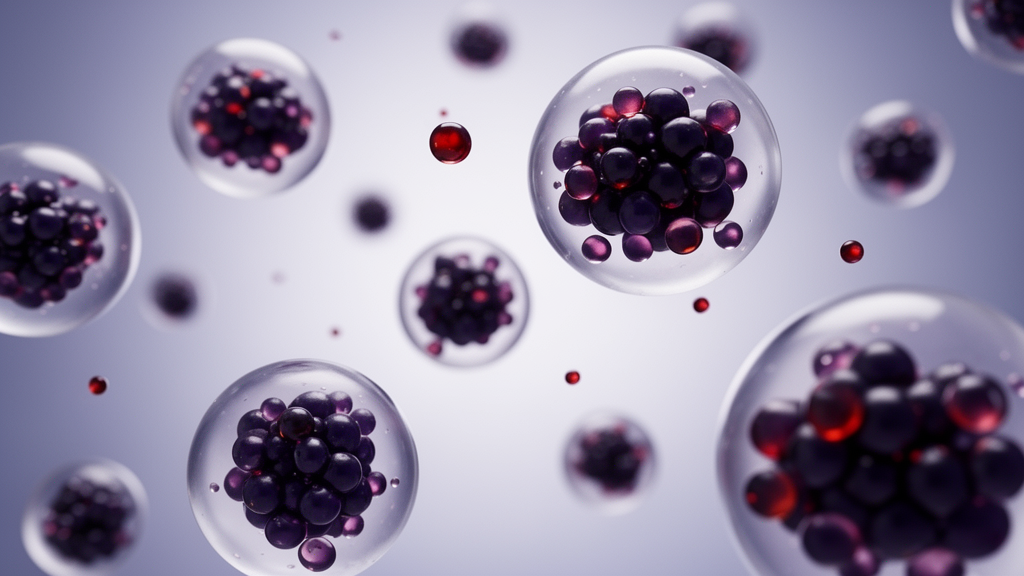
Morphological inspection using scanning electron microscopy revealed that all electrosprayed formulations, including the unfortified starch control, adopted a uniform biconcave disc shape resembling red blood cells rather than conventional spherical geometries. Image analysis of one hundred particles per preparation showed mean particle diameters ranging tightly between 1.01 ± 0.38 micrometers for the 20 percent formulation and 1.11 ± 0.38 micrometers for the 10 percent formulation, alongside 1.09 ± 0.38 micrometers for the neat starch control, confirming that increasing extract content caused no statistically significant variation in particle dimensions. Authors attributed this distinctive collapsed shape to a high Péclet number regime, in which solvent evaporation at the droplet boundary outpaces polymer chain diffusion toward the core, forming a rigidified exterior shell that undergoes symmetric inward collapse as internal pressures subside during final drying.
Chemical interactions between the botanical extract and the carbohydrate carrier were tracked using attenuated total reflection Fourier transform infrared spectroscopy. The spectrum of the raw blackberry extract exhibited characteristic hydroxyl stretching bands between 3200 and 3400 inverse centimeters, along with aromatic ring carbon-carbon stretching vibrations at 1606 inverse centimeters and carbonyl features at 1733 inverse centimeters. In the composite microparticles, increasing the extract proportion produced clear, concentration-dependent increases in the absorption bands associated with hydroxyl and aromatic structures. Although spectral adjustments appeared in the carbonyl and carboxylate regions between 1780 and 1697 inverse centimeters following atomization, the researchers noted that these profile changes reflected altered physical environments and extensive hydrogen bonding across polymer chains rather than the formation of irreversible covalent bonds.
Quantitative assessment of encapsulation efficiency confirmed the matrix’s capacity to securely trap the botanical compounds during electrohydrodynamic atomization. Spectrophotometric analysis of completely disrupted particles indicated retention values of 73.20 ± 3.88 percent for the 10 percent extract formulation and 74.50 ± 2.59 percent for the 15 percent preparation, with the 20 percent formulation recording 67.96 ± 1.18 percent. Statistical evaluation revealed no significant difference across the different incorporation levels, demonstrating that the amphiphilic octenyl succinic anhydride-modified starch retained substantial quantities of blackberry phenolics even under higher core loading burdens. This efficiency ensured that the encapsulated phytochemical fractions remained structurally shielded within the biopolymer network from ambient oxidative factors.
The functional performance of the microparticles was monitored over 72 hours of storage through complementary DPPH and ABTS radical scavenging assays to trace time- and concentration-dependent antioxidant capacity. In DPPH testing, while neat starch microparticles exhibited no baseline radical scavenging activity, the extract-loaded microparticles generated progressive inhibition that intensified with both extract concentration and incubation duration, contrasting with the free extract which displayed steady inhibition above 91 percent throughout the trial. Parallel observations occurred in the ABTS assay, where the 20 percent extract formulation delivered the highest overall inhibition at the 72-hour mark, reflecting a continuous, sustained release of protected phenolic constituents from the starch matrix into the testing environment over prolonged periods.
To confirm biological safety and ensure suitability for prospective functional applications, the cytocompatibility of the delivery system was evaluated in vitro using cultured L929 mouse fibroblast cells via the MTT cell viability assay. Fibroblasts exposed to a standardized product concentration of 400 micrograms per milliliter of free extract, control carrier particles, and extract-loaded microparticles for 72 hours exhibited cell metabolic activity comparable to untreated negative control cultures, with no statistically significant decline in cell viability detected. These findings confirmed that the modified starch carrier, the crude botanical extract, and the finished electrosprayed microparticles exerted no cytotoxic effects under the assessed parameters, verifying the cytocompatibility profile required for sensitive biomedical and nutritional delivery applications.
Collectively, the study establishes electrospraying with octenyl succinic anhydride-modified starch as an effective, non-thermal stabilization pathway for preserving fragile bioactive molecules derived from Rubus fruits. By translating crude botanical matter into uniform, sub-two-micrometer biconcave particles, the system addresses the operational vulnerabilities of natural pigments and phenolics without compromising bioactivity or cellular compatibility. While the reported observations remain bounded to in vitro conditions, cell cultures, and laboratory storage models, the resulting particles present a functional vehicle for controlled delivery architectures capable of protecting delicate natural antioxidants across pharmaceutical and food science settings.
Beyond the structural retention observed in the formulations, methodological comparisons highlighted distinct processing benefits associated with electrohydrodynamic atomization. Conventional thermal drying approaches like spray drying regularly subject labile polyphenols to elevated operating temperatures that accelerate the breakdown of heat-sensitive compounds. By contrast, generating delivery capsules through room-temperature electrostatic repulsion averted thermal degradation while circumventing the complex variations in pH and ionic strength that frequently compromise wet coacervation methods. The resulting microparticles averaged roughly one micrometer in diameter, placing them at the lower boundary of the standard 0.6 to 5 micrometer range documented for electrosprayed polymer particles and confirming exceptionally fine atomization control.
The physical characterization of the precursor polymer matrices also provided mechanistic insights into why the particles remained exceptionally stable during preparation. Octenyl succinic anhydride modification replaces a portion of the starch’s hydrophilic hydroxyl groups with hydrophobic octenyl succinate segments, imparting an amphiphilic structure that enhances emulsification performance. While the raw fruit extract introduced a complex array of non-phenolic solutes including natural sugars and organic acids, these low-molecular-weight constituents acted as molecular spacers within the polymeric network. This behavior prevented excessive chain entanglement at elevated extract concentrations, keeping solution viscosity steady at higher loadings while mobile ionic species maintained strong droplet surface charges.
The authors underscored several boundary conditions governing the interpretation of these experimental outcomes. While cell culture evaluations confirmed that exposure to 400 micrograms per milliliter of the formulations produced no cytotoxic effects in cultured L929 fibroblasts, these findings reflect preliminary in vitro cytocompatibility rather than verified clinical behavior in human physiological models. Furthermore, infrared spectroscopic alterations observed following electrohydrodynamic spraying signaled physical rearrangements and intermolecular hydrogen bonding rather than new covalent bonding. Further testing remains necessary to establish how these microparticles perform across varied food processing environments and complex biological storage settings over extended shelf-life durations.
Subject of Research: Encapsulation of blackberry bioactive extract using electrosprayed OSA-starch microparticles
Article Title: Electrosprayed OSA-starch microparticles for blackberry extract stabilization: structural characterization, antioxidant potential, and cytocompatibility
Article References: da Silveira, L. M., Pedra, N. S., da Silva, J. A., de Mello, J. E., Pires, J. B., de Souza, E. J. D., da Rosa Zavareze, E., Spanevello, R. M., de Aguiar, M. S. S., & Stefanello, F. M. (2027). Electrosprayed OSA-starch microparticles for blackberry extract stabilization: structural characterization, antioxidant potential, and cytocompatibility. Polymer Bulletin, 84(1), Article 46. https://doi.org/10.1007/s00289-026-06811-w
Image Credits: AI Generated
DOI: 10.1007/s00289-026-06811-w
Keywords: blackberry extract, electrospraying, OSA-starch, microparticles, cyanidin-3-O-glucoside, antioxidant activity, DPPH assay, ABTS assay, cytocompatibility, L929 fibroblasts, phenolic compounds, biopolymers, encapsulation efficiency, biconcave morphology, anthocyanins, food science
News Source: Bethany Barker. (November 20, 2026). Electrosprayed Starch Microparticles Stabilize Blackberry Extract and Protect Bioactive Antioxidants. Scienmag.