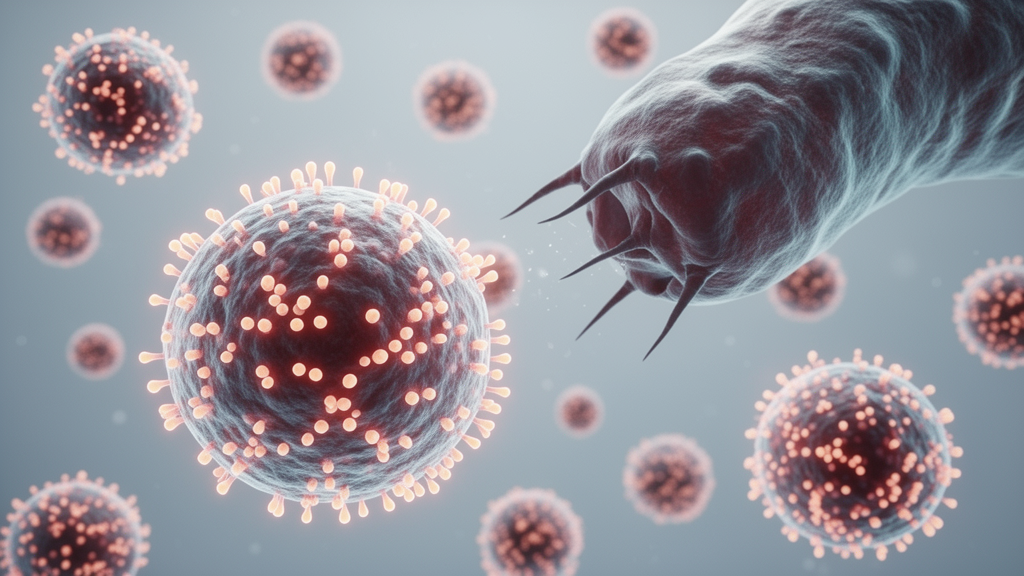
Circulating extracellular vesicles carrying CD47 suppress macrophage phagocytosis in diffuse large B-cell lymphoma, shielding malignant cells from immune clearance. A study published in BMC Medicine evaluated how these tumor-derived vesicles drive immune evasion and tested an engineered vesicle platform to counteract the mechanism. The findings provide biological insight into the interpatient variability observed with systemic anti-CD47 antibody therapies, where objective response rates reported in recent clinical investigations have ranged between 33 percent and 52 percent.
Although anti-CD47 monoclonal antibodies have shown clear clinical activity, therapeutic heterogeneity remains a major challenge. Extracellular vesicles released by malignant cells are capable of modulating immune cell behavior throughout the body. In the current study, researchers set out to clarify the precise mechanisms underlying vesicle-mediated immune evasion and to formulate a dedicated vesicle-based strategy to restore host antitumor defenses.
To investigate the distribution of the antiphagocytic marker, the researchers isolated extracellular vesicles from the plasma of patients with diffuse large B-cell lymphoma as well as healthy control donors. Laboratory evaluations demonstrated that a substantial proportion of circulating CD47 was directly associated with plasma extracellular vesicles, with overall CD47 concentrations dropping sharply following vesicle depletion. Both vesicle-associated CD47 and whole-plasma CD47 levels were significantly elevated in lymphoma patients compared to healthy individuals, indicating that circulating CD47 may serve as an accessible non-invasive biomarker.
Functional in vitro assays revealed that extracellular vesicles derived from diffuse large B-cell lymphoma strongly suppressed macrophage-mediated phagocytosis. Mechanistically, vesicle-associated CD47 promoted physical binding between the vesicles and macrophages, inhibiting phagocytic activity through specific engagement with macrophage SIRPα receptors. When the investigators carried out antibody-mediated blockade or genetic depletion of CD47 on the vesicles, vesicle-macrophage interactions were markedly diminished, and the phagocytic capacity of the macrophages was partially restored in cell culture conditions.
The investigators next evaluated the pathophysiological consequences of these interactions in vivo using an immunocompetent murine lymphoma model. Administration of CD47-positive lymphoma extracellular vesicles accelerated tumor growth in the immunocompetent mice, verifying that vesicle-bound CD47 actively drives tumor expansion by compromising immune cell function. Conversely, antibody-mediated blockade of CD47 attenuated this tumor-promoting effect, showing that neutralizing vesicle-associated CD47 reduces the immunosuppressive protection that lymphoma vesicles provide to growing tumors.
To counteract this immunosuppressive axis, the research team investigated extracellular vesicles derived from proinflammatory M1 macrophages, which naturally express SIRPα. These SIRPα-positive vesicles acted as natural antagonists against CD47-mediated immune evasion. The investigators genetically engineered M1 macrophages to express an anti-CD19 chimeric receptor to direct the vesicles specifically toward malignant B cells. The resulting anti-CD19 M1 macrophage vesicles significantly enhanced macrophage-mediated phagocytosis of tumor cells in laboratory assays, establishing their ability to restore innate immune recognition.
In animal testing, the engineered anti-CD19 M1 macrophage vesicles showed enhanced tumor accumulation and exerted robust antitumor activity in immunocompetent mice bearing lymphoma. Crucially, genetic depletion of SIRPα on these engineered vesicles attenuated their therapeutic efficacy, proving that surface SIRPα is essential for counteracting CD47. The authors concluded that vesicle-associated CD47 is a critical regulator of macrophage evasion in diffuse large B-cell lymphoma, while engineered tumor-targeting macrophage vesicles offer a viable therapeutic approach to restore phagocytic activity.
Subject of Research: Extracellular vesicle CD47 and macrophage immune evasion in lymphoma
Article Title: Extracellular vesicle CD47 drives macrophage immune evasion and is counteracted by SIRPα-positive vesicles in DLBCL
Article References: Fan, G., Li, Q., Zhang, W., Wang, Z., Xie, L., Peng, X., Li, B., & Zhuang, W. (2026). Extracellular vesicle CD47 drives macrophage immune evasion and is counteracted by SIRPα-positive vesicles in DLBCL. BMC Medicine. https://doi.org/10.1186/s12916-026-05420-8
Image Credits: AI Generated
DOI: 10.1186/s12916-026-05420-8
Keywords: diffuse large B-cell lymphoma, extracellular vesicles, CD47, macrophage phagocytosis, immune evasion, SIRPα, immunotherapy, anti-CD47 antibody therapy, plasma biomarkers, M1 macrophages, anti-CD19, engineered vesicles, murine lymphoma model, tumor microenvironment, phagocytic checkpoint, cancer immunology
News Source: Nathaniel Bowman. (November 16, 2026). Extracellular Vesicle CD47 Promotes Immune Evasion in Diffuse Large B-Cell Lymphoma. Scienmag.