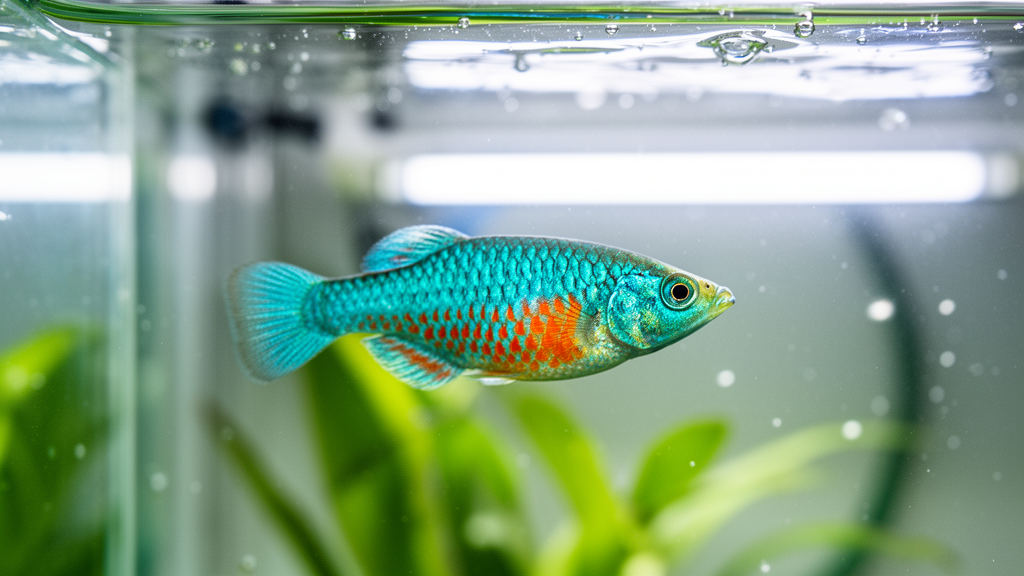
Knocking out the central innate immune sensor cyclic GMP-AMP synthase in the short-lived African turquoise killifish suppresses cellular senescence and blunts age-associated molecular signatures in tissues, yet it ultimately fails to extend organismal lifespan. A research team investigated whether targeting this critical driver of chronic inflammation could preserve late-life physiological integrity and prolong survival in Nothobranchius furzeri, an established vertebrate model that completes its natural lifecycle within four to eight months while recapitulating major hallmarks of mammalian aging. By generating a definitive loss-of-function mutation using CRISPR-Cas9 genome editing, the investigators demonstrated that although the absence of cGAS relieved radiation-induced senescent arrest and dampened transcriptomic aging profiles in the kidney, it did not alter median or maximum longevity across large cohorts of male and female fish.
While indispensable for immune defense against viral pathogens, chronic low-grade activation of this pathway increasingly fuels inflammaging, a state of unresolved sterile inflammation that disrupts tissue homeostasis and accelerates degenerative conditions spanning cardiovascular disorders, neurodegeneration, and metabolic decline. Furthermore, sustained cGAS activity helps enforce cellular senescence, whereby irreversibly arrested cells secrete matrix-degrading enzymes and inflammatory cytokines termed the senescence-associated secretory phenotype.
To explore this biology in an organism whose short natural lifespan permits direct genetic testing of longevity, the researchers interrogated the turquoise killifish reference genome. Sequence comparisons revealed two distinct paralogs homologous to human cGAS, designated as kcGASa and kcGASb. Structural homology modeling using AlphaFold 3 indicated that kcGASa closely mirrored human cGAS, sharing substantial catalytic domain architecture including the nucleotidyltransferase core and the DNA-binding Mab21 domain, while demonstrating a root-mean-square deviation of 0.944 angstroms against human crystal structures. In contrast, kcGASb lacked key hydrogen-bonding residues essential for cyclic nucleotide coordination. When expressed in cGAS-deficient human embryonic kidney cells, only kcGASa generated measurable intracellular cGAMP and robustly stimulated downstream innate immune gene expression, establishing kcGASa as the genuine functional ortholog responsible for cytosolic DNA sensing in the teleost.
Using targeted CRISPR-Cas9 mutagenesis in single-cell killifish embryos, the investigators directed an engineered guide RNA against kcGASa, yielding a 34-base-pair tandem duplication that introduced a premature termination codon. This genetic disruption triggered nonsense-mediated mRNA decay across multiple primary organs and produced a functional null state characterized by the complete absence of detectable cGAMP in homozygous knockout specimens. When expressed in cGAS-deficient human THP1 monocytes, wild-type killifish cGAS generated higher concentrations of cGAMP than human cGAS, mirroring the elevated intrinsic enzymatic activity previously documented in murine homologs. This heightened catalytic potency coincided with lower plasmid transfection efficiencies due to vigorous innate immune triggering. Meanwhile, the mutated knockout construct produced no measurable cyclic dinucleotide and failed to induce interferon transcription, confirming complete enzymatic ablation in the experimental line.
The investigators then examined the cell-autonomous consequences of cGAS deficiency by deriving primary fin fibroblasts from adult wild-type and knockout fish and exposing them to 10 Gray of ionizing gamma radiation. Nine days following genotoxic exposure, wild-type fibroblasts underwent profound senescent transformation, displaying marked cellular hypertrophy, flattened morphology, and high senescence-associated beta-galactosidase enzymatic activity. Conversely, cGAS-deficient fibroblasts largely maintained an elongated, spindle-like morphology, exhibited significantly fewer enlarged cells measuring over 3000 square micrometers, and showed reduced senescence-associated beta-galactosidase staining. Intriguingly, analysis of phosphorylated histone gamma-H2AX puncta revealed that cGAS-deficient cells carried higher baseline levels of DNA damage even without radiation. Following irradiation, gamma-H2AX foci peaked higher in knockout fibroblasts at two hours and persisted longer, indicating that killifish cGAS normally protects against genomic damage, yet its absence permitted continuous proliferation measured by 5-ethynyl-2-prime-deoxyuridine incorporation.
Transcriptomic profiling of these cultured fibroblasts corroborated the morphological and biochemical rescue observed in vitro. Gene-by-treatment interaction models revealed that cGAS deficiency blunted the expression of hundreds of transcripts normally stimulated by ionizing radiation in wild-type cells. Upregulation of key cell cycle arrest regulators such as Cdkn2b and Cdkn1a, structural senescence components like Lmna, and inflammatory genes including matrix metalloproteinase Mmp12 and interferon regulatory factors was significantly attenuated in knockout cultures. Pathway enrichment analyses demonstrated that gene sets governing cellular senescence, apoptosis, and type I interferon signaling were selectively suppressed in irradiated knockout fibroblasts, whereas programs supporting active protein synthesis, ribosomal biogenesis, cell-cell adhesion, and developmental Notch and Wnt cascades remained active, underscoring a persistent commitment to cell cycle progression despite unresolved double-strand DNA breaks.
Moving to whole-organism physiology, the researchers performed bulk RNA sequencing on kidneys harvested from healthy young adult fish aged eight weeks. The teleost kidney was selected because it serves as the primary hematopoietic and lymphoid organ analogous to mammalian bone marrow, highly expresses cGAS, and is intensely vulnerable to age-associated inflammatory deterioration. At baseline under unstressed conditions, young wild-type and cGAS knockout kidneys exhibited nearly identical global transcriptomes, with principal component analysis showing no segregation between genotypes. However, gene set enrichment analysis detected coordinated compensatory elevations in alternative innate immune pathways, including Rig-I-like receptor, Toll-like receptor, and Nod-like receptor cascades, alongside moderate increases in downstream pathway intermediates such as Sting1, Tbk1, Nfkb1, Rela, Tnfa, and Traf6, demonstrating mild baseline compensation that maintained overall organ function without overt baseline inflammation.
To test whether cGAS dictates in vivo stress responses, the authors subjected young eight-week-old killifish to 15 Gray of whole-body gamma radiation and evaluated kidney transcriptomes five days later. While irradiation prompted widespread genomic remodeling across both cohorts, linear regression analysis demonstrated an overall regression slope of 0.7789 comparing cGAS knockout responses to wild-type changes, proving that cGAS deficiency markedly compressed the amplitude of radiation-induced transcriptional shifts. Gene set enrichment analysis highlighted substantial dampening of acute inflammatory programs, complement cascades, and extracellular matrix remodeling in knockout kidneys. Crucially, curated senescence indices, including the SenMayo gene set and cellular senescence gene ontology processes, were blunted, displaying significantly lower induction of classic secretory mediators such as macrophage migration inhibitory factor Mif, chemokine Cxcl12b, and matrix metalloproteinases Mmp2 and Mmp9.
The study subsequently tracked how cGAS influence evolves across the natural lifespan by contrasting young eight-week-old adults with aged eighteen-week-old cohorts. Liquid chromatography-tandem mass spectrometry revealed that cGAMP concentrations increased substantially with age in wild-type kidneys, accompanied by rising Cgas transcript abundance. By contrast, gut tissues showed neither an age-dependent rise in cGAMP levels nor increased Cgas expression, establishing distinct tissue-specific regulatory regimes. Kidney transcriptomes from old animals exhibited extensive dysregulation, but the aged knockout profile deviated substantially from wild-type age-matched controls.
Frozen sections of kidneys from nineteen-week-old killifish stained for senescence-associated beta-galactosidase revealed a marked reduction in senescent cell burden in knockout animals compared to age-matched controls, with reductions concentrated within tubular epithelial structures rather than the proliferative kidney marrow. Furthermore, evaluation of cellular replication via in vivo EdU incorporation and Proliferating Cell Nuclear Antigen immunofluorescence demonstrated significantly heightened proliferative indices in aged knockout kidneys, confirming that cGAS ablation sustains tissue regenerative potential into late life. Parallel assessments in intestinal tissue revealed less dramatic differences, where high endogenous baseline beta-galactosidase staining and variable turnover obscured genotype distinctions, further emphasizing organ-specific dependencies on cGAS signaling.
Given the significant amelioration of cellular senescence, reduced inflammaging signatures, and enhanced proliferative reserve in the kidney, the researchers evaluated whether cGAS ablation ultimately extended organismal longevity. In an extensively controlled lifespan assay monitoring seventy cGAS knockout fish and seventy-nine wild-type controls backcrossed for at least four generations, survival was tracked from sexual maturity through natural death under standardized housing and feeding regimens. Strikingly, cGAS knockout animals displayed survival trajectories that were statistically indistinguishable from wild-type controls, with Kaplan-Meier curves yielding non-significant log-rank p-values. Wild-type fish achieved a median lifespan of 143 days and a maximum of 213 days, whereas cGAS knockout fish reached a median lifespan of 150.5 days and a maximum of 215 days, with similar equivalence documented when stratifying cohorts by sex.
To establish potential causes of death and identify occult pathological trade-offs, a certified veterinary pathologist performed systematic post-mortem necropsies across twelve tissues from sixty wild-type and forty-seven knockout animals. The analysis revealed a complete absence of neoplastic tumors under laboratory conditions, distinguishing killifish from conventional rodent models. Multivariate logistic regression adjusting for age and sex indicated that overall frequencies of degenerative, non-infectious inflammatory, and proliferative lesions were comparable between genotypes. Interestingly, knockout males exhibited a statistically significant reduction in spontaneous mycobacteriosis, an endemic infectious lesion containing acid-fast rod-shaped bacteria. This counterintuitive protection against bacterial pathology suggests that compensatory immune mechanisms preserved host defense. Ultimately, the work proves that while cGAS directly promotes cellular senescence and tissue inflammaging, mitigating these cellular signatures is insufficient to prolong vertebrate lifespan, indicating that organismal mortality is bounded by independent physiological constraints.
Subject of Research: Impact of cGAS deficiency on cellular senescence and organismal longevity in killifish
Article Title: Loss of killifish cGAS attenuates age-related signatures but does not affect organismal life span
Article References: Ballhysa, E., Ripa, R., Hochhard, N., Nguyen, T. T. M., Brazzell, J., Park, Y., Ferreri, B., Hoffmann, E., Laboy, R., Steiner, J. D., & Antebi, A. (2026). Loss of killifish cGAS attenuates age-related signatures but does not affect organismal life span. EMBO Reports, 27(20), 5723-5751. https://doi.org/10.1038/s44319-026-00917-y
Image Credits: AI Generated
DOI: 10.1038/s44319-026-00917-y
Keywords: cGAS, STING pathway, turquoise killifish, Nothobranchius furzeri, cellular senescence, lifespan, DNA damage, inflammaging, gamma-H2AX, cGAMP, SA-beta-galactosidase, kidney transcriptomics, innate immunity, SASP, mycobacteriosis, CRISPR-Cas9, cell proliferation
News Source: Beatrice Stafford. (November 14, 2026). Killifish cGAS Knockout Blunts Cellular Senescence Without Extending Overall Lifespan. Scienmag.