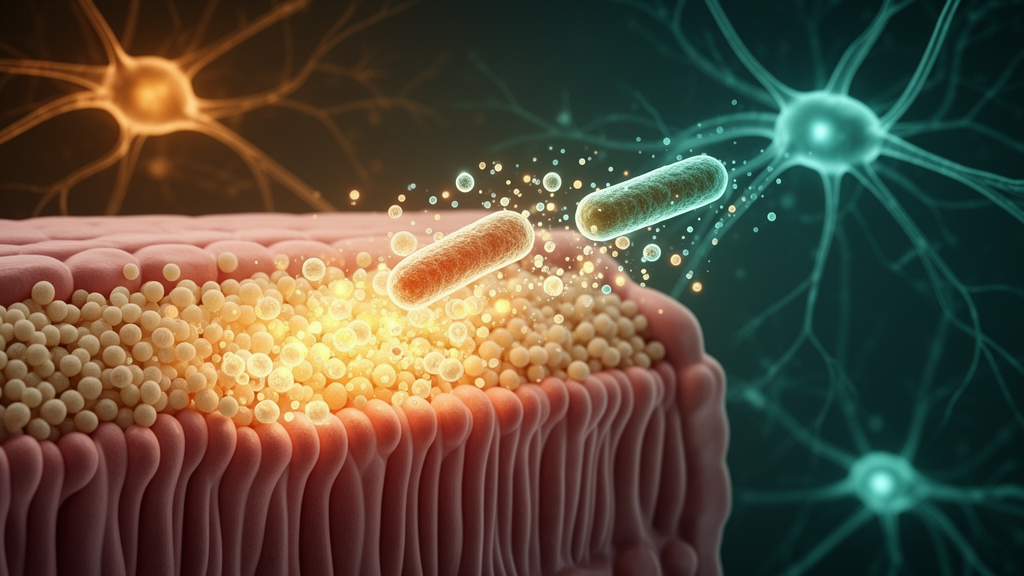
A comprehensive narrative review published in Frontiers in Nutrition evaluates whether dietary resistant starch can influence the gut-brain axis to address diabetes-associated cognitive dysfunction. Led by Linping Wang and colleagues from Shandong First Medical University, the analysis emphasizes that while resistant starch represents a controllable nutritional platform for modulating microbial fermentation, its clinical efficacy for improving cognitive outcomes in patients with diabetes remains unestablished. Cognitive dysfunction in diabetes affects essential domains including memory, attention, executive function, and information processing speed, significantly complicating daily disease self-management. Rather than presenting resistant starch as an established clinical therapy, the authors construct a rigorous, structure-dependent framework examining how the physical and chemical properties of non-digestible starches govern bacterial metabolite production and downstream neural pathways.
The review underscores that diabetes-associated cognitive dysfunction stems from a multifaceted pathological cascade rather than elevated blood glucose alone. The underlying disease process involves peripheral metabolic disruption, chronic low-grade inflammation, systemic insulin resistance, cerebral microvascular damage, blood-brain barrier impairment, neuroinflammation, and mitochondrial and synaptic dysfunction within the hippocampus. Structural damage to hippocampal circuits explains prominent deficits in spatial and episodic memory, whereas neuroimaging and neuropsychological findings connect microvascular injuries, compromised white matter integrity, and prefrontal-subcortical disruptions to slowed information processing, impaired executive control, and reduced attentional focus. Because these interacting metabolic, immune, and vascular disturbances compromise the central nervous system over extended periods, effective interventions must target systemic homeostasis and neural preservation concurrently rather than focusing exclusively on short-term glycemic management.
Human observational investigations examining the intestinal microbiome in diabetes-associated cognitive impairment demonstrate considerable community heterogeneity rather than a single identifiable microbial signature. For instance, an observational cohort of 154 older adults with type 2 diabetes identified that the 81 participants exhibiting cognitive impairment possessed significantly lower relative abundances of Tenericutes, Bifidobacterium, unranked RF39, Veillonella, and Pediococcus, alongside elevated proportions of Peptococcus and unranked Leuconostocaceae, compared to 73 cognitively intact peers. Conversely, an independent investigation comparing 30 cognitively impaired diabetic patients with 30 cognitively normal diabetic individuals revealed higher relative proportions of Bifidobacterium, Gemmiger, Bacteroides, Roseburia, and Prevotella, coupled with reduced Escherichia and Akkermansia, lower circulating short-chain fatty acids, and elevated inflammatory cytokines including tumor necrosis factor-alpha and interleukin-8. These discordant taxonomic outcomes, particularly regarding Bifidobacterium, underscore that gut microbiome profiles in diabetes are heavily confounded by patient age, geographical background, dietary patterns, and pharmaceutical regimens.
Beyond taxonomic discrepancies, clinical and preclinical investigations highlight circulating short-chain fatty acid concentrations and mucosal barrier integrity as critical functional intermediates. A clinical case-control study involving 180 older adults established that diminished serum acetate levels were independently associated with diabetic cognitive impairment relative to type 2 diabetes alone, whereas circulating propionate and butyrate did not demonstrate independent statistical associations. Preclinical findings illustrate that intestinal epithelial barrier breakdown allows microbial constituents such as lipopolysaccharide to enter systemic circulation, aggravating endothelial injury and disrupting the blood-brain barrier. In diabetic murine experiments, a 28-day intermittent fasting regimen remodeled gut microbial communities and their associated metabolites, enhancing hippocampal metabolic pathways and cognitive performance; these beneficial cognitive adaptations were diminished by broad-spectrum antibiotic depletion and partially reproduced through direct mixed short-chain fatty acid administration, providing proof-of-concept for metabolic gut-brain signaling.
Additional preclinical evidence demonstrates that non-digestible dietary carbohydrates can influence neurological phenotypes in metabolic models. In rodents subjected to diet-induced obesity, the administration of microbiota-accessible carbohydrates or beta-glucan preserved intestinal mucosal integrity, reduced systemic inflammatory markers, dampened hippocampal microglial activation, and enhanced spatial learning, recognition memory, and synaptic plasticity markers. Complementary experiments in diabetic animal models showed that fecal microbiota transplantation and the targeted administration of Akkermansia muciniphila mitigated memory impairments while improving metabolic and inflammatory indices. The review notes that because these animal models modify diverse bacterial taxa and endogenous metabolite pools simultaneously, their primary scientific value is establishing that microbial fermentation, mucosal barrier integrity, systemic inflammation, and neural plasticity operate as interconnected and modifiable biological targets for structured dietary interventions.
Resistant starches are categorised into five distinct structural classes that bypass enzymatic breakdown in the small intestine to undergo bacterial fermentation within the colon. Class RS1 comprises physically entrapped starch encased within unbroken plant cell walls in whole grains, seeds, and legumes, where accessibility depends on mechanical mastication, milling, and cooking rather than pure starch chemistry. Class RS2 consists of native granular starches exhibiting B-type or C-type crystalline architecture found in raw potatoes, green bananas, and high-amylose maize. Class RS3 encompasses retrograded amylose and amylopectin produced through heating and subsequent cooling in pasta, rice, and potatoes, forming crystalline polymorphs that modulate digestion rates. Class RS4 comprises starches chemically modified through etherification, esterification, or phosphate cross-linking. Class RS5 consists of helical amylose-lipid complexes formed with fatty acids or monoglycerides. The authors emphasize that botanical source, supramolecular organization, processing methods, and surrounding food matrices fundamentally dictate bacterial accessibility and fermentation kinetics across all five classes.
Microbial degradation of resistant starch within the colonic environment relies on coordinated enzymatic networks governed by primary degraders and secondary cross-feeding bacteria. Specialized primary degraders such as Ruminococcus bromii and Bifidobacterium adolescentis initially adhere to and disassemble complex starch granules, releasing metabolic intermediates and acetate into the surrounding lumen. Secondary fermenters, including Faecalibacterium, Roseburia, Agathobacter, Anaerostipes, and Eubacterium rectale, utilize these released carbohydrates and exogenous acetate via the butyryl-CoA:acetate CoA-transferase pathway to synthesize butyrate. Interindividual variation significantly dictates metabolic output: in a controlled human trial providing approximately 24 grams daily of potato RS2 to 20 healthy adults, fecal butyrate concentrations rose by 67 percent in 11 individuals, remained consistently high in three, and failed to increase in six participants. These metabolic disparities directly reflected baseline microbial composition, as primary degraders expanded from approximately 2 percent to 9 percent in responsive individuals but remained stagnant at 1.5 percent in low responders.
Controlled human dietary trials evaluating metabolic and cognitive outcomes from resistant starch interventions demonstrate heterogeneous and frequently neutral findings. In the STARCH randomized trial, 68 adults with prediabetes consumed 45 grams per day of high-amylose maize RS2 or a digestible amylopectin control for 12 weeks; although RS2 significantly lowered circulating tumor necrosis factor-alpha concentrations and resting heart rate, it produced no meaningful improvements in glycemic control, ectopic fat accumulation, resting energy expenditure, or standard cardiovascular markers. Furthermore, a systematic meta-analysis of 22 randomized controlled trials encompassing 670 participants revealed no aggregate benefits of RS2 supplementation on fasting plasma glucose, glycated hemoglobin, insulin resistance, or lipid profiles. In a trial of 38 healthy middle-aged adults, consuming RS2-enriched whole-grain rye bread for three days elevated circulating short-chain fatty acids and improved acute metabolic measures, yet produced no detectable enhancement on standardized cognitive performance assessments.
Preclinical neurocognitive investigations similarly demonstrate that behavioral and cognitive outcomes depend heavily on the specific botanical source, formulation, and animal model utilized. In aged mice harboring human gut microbiota from older adult donors, dietary supplementation with lentil-derived resistant starch significantly improved selected memory and behavioral readouts, whereas resistant starch derived from black-eyed peas yielded no detectable behavioral benefits. Other rodent feeding trials revealed that distinct resistant starch preparations altered cecal microbiome profiles but simultaneously caused unwanted physiological consequences, including reduced weight gain or elevated anxiety-like behaviors. Although chemically butyrylated starch enhanced cognitive metrics compared to sodium butyrate or unmodified high-amylose maize in d-galactose-induced aging mice, the authors caution that single-preparation rodent findings cannot demonstrate generalized clinical efficacy or superiority across diverse human dietary contexts.
At the physiological level, colonic fermentation products execute compartmentalized functions across intestinal, vascular, and central nervous tissues. Butyrate primarily supplies metabolic fuel to colonic epithelial cells, maintains mucosal physiological hypoxia, reinforces epithelial tight junctions, modulates mucosal immune activity, and acts as an endogenous histone deacetylase inhibitor. Circulating propionate interacts with free fatty acid receptors FFAR2 and FFAR3 and undergoes hepatic metabolism, whereas systemically distributed acetate supports cellular energy and microbial cross-feeding. In experimental models, short-chain fatty acids support blood-brain barrier tight junction proteins, modulate microglial maturation, and improve mitochondrial homeostasis and mitophagy pathways, such as hippocampal PINK1/Parkin-mediated mitophagy. However, because exogenous administration of pure short-chain fatty acids differs fundamentally in kinetics, tissue exposure, and metabolite proportions from colonic fermentation, direct extrapolations to resistant starch diets remain unverified.
To advance research beyond cross-sectional associations and animal models, the review proposes a rigorous, biomarker-stratified proof-of-concept trial in patients with type 2 diabetes and objectively diagnosed cognitive impairment. Such prospective human studies must evaluate a chemically and physically verified resistant starch against an analytically matched digestible-starch control, while rigorously tracking background diet, baseline gut degrader abundance, gastrointestinal tolerance, and concurrent metformin usage. Core assessment protocols should capture longitudinal changes in microbial metagenomic capacity, fecal and circulating short-chain fatty acid concentrations, intestinal permeability markers, systemic endothelial inflammation, and validated multidomain cognitive batteries evaluating memory, executive function, attention, and processing speed. Until well-controlled clinical trials determine whether reproducible microbial metabolite shifts can directly modify neural pathways and prevent cognitive decline, resistant starch should be treated as an experimental framework rather than a proven clinical treatment.
Subject of Research: Structure-dependent resistant starch fermentation and gut-brain mechanisms in diabetes-associated cognitive dysfunction
Article Title: Resistant starch and diabetes-associated cognitive dysfunction: structure-dependent fermentation and gut-brain framework
Article References: Wang, L., Fan, Y., Nie, S., Liu, B., Geng, W., & Liu, Y. (2026). Resistant starch and diabetes-associated cognitive dysfunction: structure-dependent fermentation and gut-brain framework. Frontiers in Nutrition, 13, Article 1917298. https://doi.org/10.3389/fnut.2026.1917298
Image Credits: AI Generated
DOI: 10.3389/fnut.2026.1917298
Keywords: resistant starch, diabetes-associated cognitive dysfunction, type 2 diabetes, gut-brain axis, short-chain fatty acids, butyrate, acetate, propionate, microbiome dysbiosis, Ruminococcus bromii, Bifidobacterium adolescentis, blood-brain barrier, neuroinflammation, hippocampal function, metabolic regulation, dietary fiber, fermentation kinetics, cognitive decline
News Source: Cassandra Pierce. (November 14, 2026). Resistant Starch Offers Experimental Gut-Brain Framework for Diabetes-Related Cognitive Dysfunction. Scienmag.