• HOME
  • NEWS
  • EXPLORE
    • CAREER
      • Companies
      • Jobs
    • EVENTS
    • iGEM
      • News
      • Team
    • PHOTOS
    • VIDEO
    • WIKI
  • BLOG
  • COMMUNITY
    • FACEBOOK
    • INSTAGRAM
    • TWITTER
Sunday, November 8, 2026
BIOENGINEER.ORG
No Result
View All Result
  • Login
  • HOME
  • NEWS
  • EXPLORE
    • CAREER
      • Companies
      • Jobs
        • Lecturer
        • PhD Studentship
        • Postdoc
        • Research Assistant
    • EVENTS
    • iGEM
      • News
      • Team
    • PHOTOS
    • VIDEO
    • WIKI
  • BLOG
  • COMMUNITY
    • FACEBOOK
    • INSTAGRAM
    • TWITTER
No Result
View All Result
Bioengineer.org
No Result
View All Result
Home NEWS Science News Biology

SWIMR Improves Spatial Transcriptomics Cell Type Deconvolution

by
November 8, 2026
in Biology
Reading Time: 2 mins read
0
SWIMR Improves Spatial Transcriptomics Cell Type Deconvolution

SWIMR Improves Spatial Transcriptomics Cell Type Deconvolution

Share on FacebookShare on TwitterShare on LinkedinShare on RedditShare on Telegram

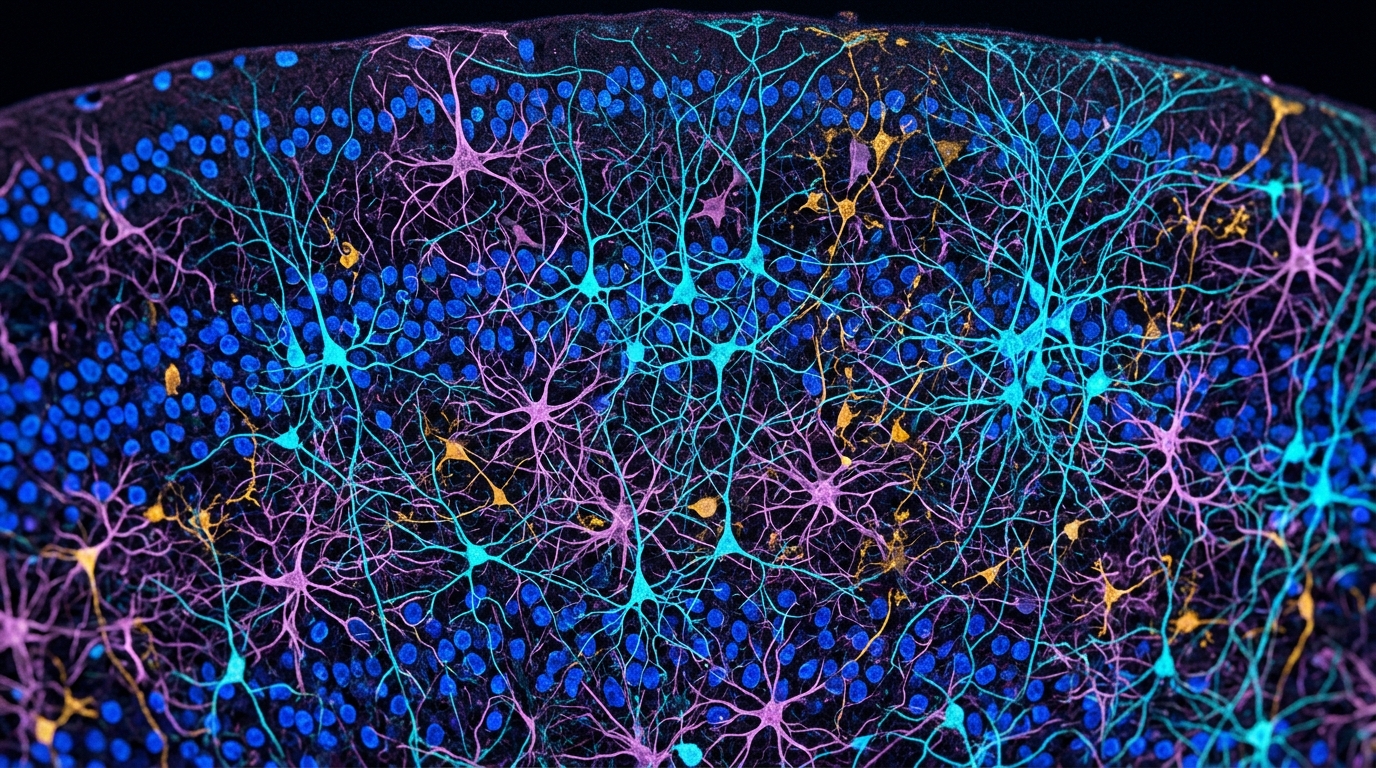
Spatial transcriptomics technology captures gene expression data while preserving the spatial context of cells within tissues. However, the resolution of these assays often means that a single spatial location contains multiple cells, making it difficult to determine the specific cell types present. To address this, researchers Peiyao Zhao, Justin A. Colacino, Ying Ma, and Xiang Zhou introduced a statistical framework named SWIMR, which stands for Spatially Weighted Integration for Multi-Reference deconvolution. The primary goal of this framework is to integrate multiple single-cell RNA sequencing references while accounting for spatial correlations, thereby enhancing the accuracy of cell-type proportion estimation in complex tissues.

Existing methods for deconvolving cell-type proportions in spatial transcriptomics typically rely on a single single-cell RNA sequencing reference. This approach can limit accuracy, particularly when the reference data are incomplete or mismatched with the tissue being analyzed. The development of SWIMR addresses these limitations by modeling each spatial location as a weighted combination of multiple references. In this model, both the cell-type proportions and the reference weights are allowed to vary across different tissue locations, leveraging spatial information to improve deconvolution results.

The researchers evaluated SWIMR across comprehensive simulations and diverse spatial transcriptomics datasets to assess its performance. The results indicated that SWIMR consistently outperformed single-reference approaches in these tests. In developing human heart tissue, the framework recovered ground-truth cell-type compositions with the highest accuracy among the methods compared. This suggests that the integration of multiple references provides a significant advantage in resolving cell-type identities in tissues where single references may be insufficient.

Applications of SWIMR in human lung and breast cancer datasets demonstrated its utility in delineating tumor, stromal, and immune compartments. The framework uncovered tumor-adjacent populations and detected cell type-specific spatially variable genes that were missed by other methods. These findings highlight the capability of SWIMR to identify subtle spatial patterns and specific gene expression variations associated with distinct cell types in cancerous tissues.

Further applications in mouse embryo and liver cancer datasets showed that SWIMR could leverage context-specific references to resolve organ-specific cell types. The framework also increased sensitivity for biologically relevant pathways in these models. By incorporating multiple references, SWIMR established itself as a robust framework for multi-reference deconvolution in spatial transcriptomics, offering a more accurate tool for analyzing complex tissue architectures.

Subject of Research: Development of SWIMR for multi-reference deconvolution in spatial transcriptomics

Article Title: Enhancing cell type deconvolution in spatial transcriptomics through incorporating multiple reference panels

Article References: Zhao, P., Colacino, J. A., Ma, Y., & Zhou, X. (2026). Enhancing cell type deconvolution in spatial transcriptomics through incorporating multiple reference panels. PLOS Genetics, 22(11), e1012345. https://doi.org/10.1371/journal.pgen.1012345

Image Credits: AI Generated

DOI: 10.1371/journal.pgen.1012345

Keywords: spatial transcriptomics, cell type deconvolution, SWIMR, single-cell RNA sequencing, statistical framework, tumor microenvironment, gene expression, bioinformatics, Enhancing, cell, type, deconvolution

News Source: Brooke Gardner. (November 8, 2026). SWIMR Improves Spatial Transcriptomics Cell Type Deconvolution. Scienmag.


Tags: Bioinformaticscellcell type deconvolutiondeconvolutionEnhancinggene expressionsingle-cell RNA sequencingSpatial transcriptomicsstatistical frameworkSWIMRtumor microenvironmenttype
Share12Tweet7Share2ShareShareShare1

Related Posts

When the Brain and Immune System Fail Together: Scientists Map the Shared Machinery of Neurological Disease

When the Brain and Immune System Fail Together: Scientists Map the Shared Machinery of Neurological Disease

November 8, 2026
Research report: Conditioned medium from Sanhuang Decoction-pretreated MDA-MB-231 cells attenuates endothelial inflammation and barrier dysfunction

Research report: Conditioned medium from Sanhuang Decoction-pretreated MDA-MB-231 cells attenuates endothelial inflammation and barrier dysfunction

November 8, 2026

Novel Linear-Time Metric Accurately Compares Complex Reconciled Gene Trees

November 8, 2026

Climate Change Threatens Suitable Habitats of Sensitive Macroinvertebrates in Ethiopian Highlands

November 8, 2026

POPULAR NEWS

  • When the Brain and Immune System Fail Together: Scientists Map the Shared Machinery of Neurological Disease

    When the Brain and Immune System Fail Together: Scientists Map the Shared Machinery of Neurological Disease

    29 shares
    Share 12 Tweet 7
  • Research report: Synthesis, anticancer properties, and biological profiling of synthetic glycan analogs of proscillaridin A

    29 shares
    Share 12 Tweet 7
  • Research report: Conditioned medium from Sanhuang Decoction-pretreated MDA-MB-231 cells attenuates endothelial inflammation and barrier dysfunction

    29 shares
    Share 12 Tweet 7
  • Novel Linear-Time Metric Accurately Compares Complex Reconciled Gene Trees

    29 shares
    Share 12 Tweet 7

About

We bring you the latest biotechnology news from best research centers and universities around the world. Check our website.

Follow us

Recent News

New Mass Spectrometer Enhances Nanoparticle Analysis

Mindfulness trial for brain health enrolls 60 older adults at elevated dementia risk

Six-Factor Nomogram Predicts Early Neurological Deterioration in Minor Acute Ischemic Stroke

Subscribe to Blog via Email

Enter your email address to subscribe to this blog and receive notifications of new posts by email.

Join 86 other subscribers
  • Contact Us

Bioengineer.org © Copyright 2023 All Rights Reserved.

Welcome Back!

Login to your account below

Forgotten Password?

Retrieve your password

Please enter your username or email address to reset your password.

Log In
No Result
View All Result
  • Homepages
    • Home Page 1
    • Home Page 2
  • News
  • National
  • Business
  • Health
  • Lifestyle
  • Science

Bioengineer.org © Copyright 2023 All Rights Reserved.