Researchers have profiled tiny membrane sacs released by brain cells into the bloodstream to track the molecular changes that accompany Alzheimer’s disease in people with Down syndrome. The study, published in Alzheimer’s Research & Therapy, used an ultrasensitive multiplex protein assay to characterize neuron-derived and astrocyte-derived extracellular vesicles isolated from plasma, and found signatures of neurodegeneration, inflammation, and vascular and metabolic stress across the Down syndrome-associated Alzheimer’s disease continuum.
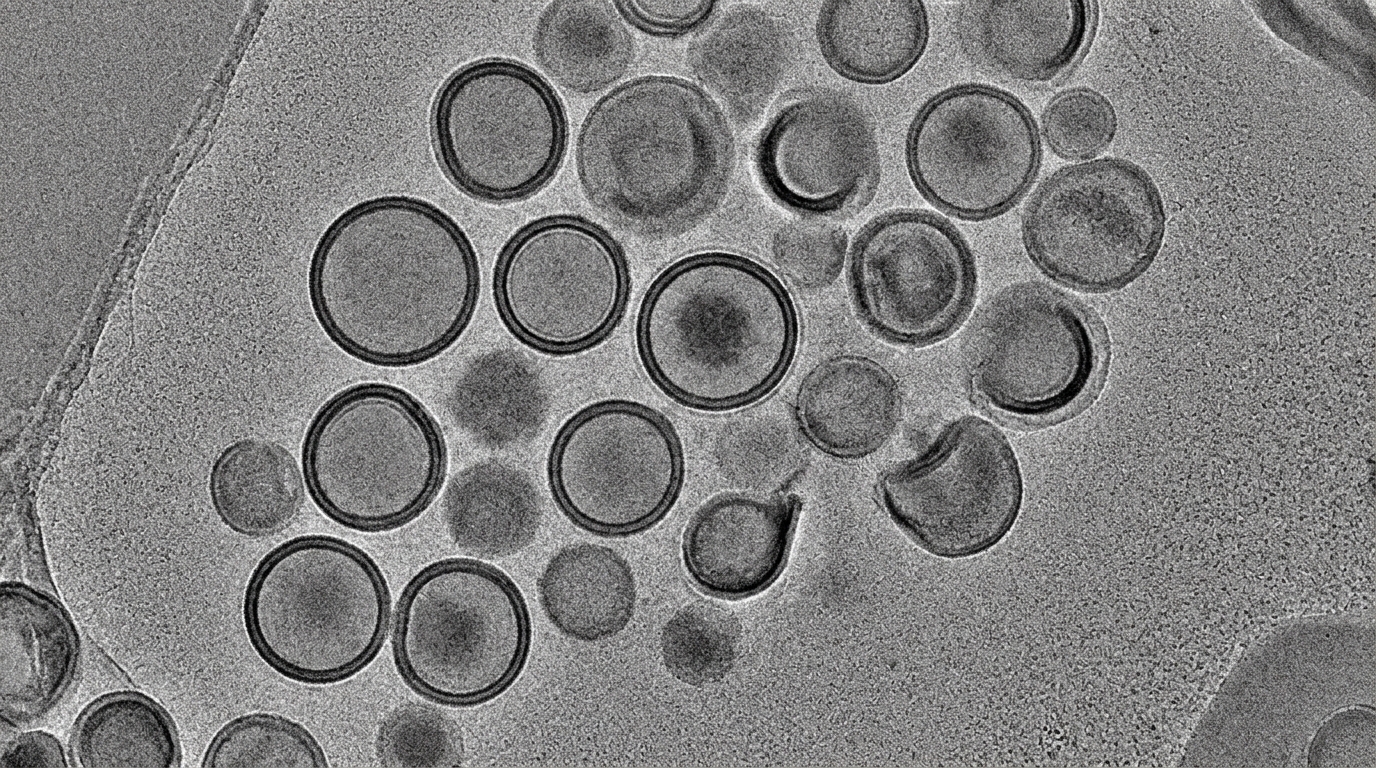
Brain-derived extracellular vesicles are sub-microscopic particles shed by cells of the central nervous system that cross into the blood, carrying proteins and other molecules that reflect the biology of their cells of origin. Because they can be collected through a simple blood draw, they offer a non-invasive window into central nervous system pathology that has previously been difficult to access. Until now, their molecular characterization across the Down syndrome-associated Alzheimer’s disease continuum had remained unexplored, despite the fact that virtually all people with Down syndrome develop Alzheimer’s pathology as they age.
The research team, led by Natalia Valle-Tamayo, Laia Montoliu-Gaya and Juan Fortea, with Oriol Dols-Icardo as co-senior author, enriched plasma neuron-derived extracellular vesicles, known as NDEVs, and astrocyte-derived extracellular vesicles, known as ADEVs, from 57 individuals. The cohort comprised 14 controls and 43 individuals with Down syndrome, of whom 20 were asymptomatic and 23 were symptomatic for Alzheimer’s disease. The investigators applied the ultrasensitive 127-plex CNS-NULISAseq panel to profile these brain-derived vesicle subpopulations, allowing simultaneous measurement of a large set of central nervous system proteins in each sample.
A key part of the work was a benchmarking exercise. The researchers compared the analytical sensitivity of NULISAseq against the Olink platform in astrocyte-derived vesicles. NULISAseq demonstrated superior analyte detectability in ADEVs, reaching 87.4 percent, compared with the 11.9 percent observed in a previous Olink-based study that used the same ADEV isolation protocol in an independent cohort. This substantial difference in the proportion of analytes detectable in the vesicle preparations indicates that the newer platform can capture far more of the proteomic information carried by these brain-derived particles.
The characterization of the vesicles revealed protein signatures pointing to several pathological processes. The team identified markers of neurodegeneration, inflammation, and vascular and metabolic stress in the brain-derived vesicle populations. Among the most notable findings, the receptor FLT1 measured in astrocyte-derived vesicles, and the proteins CXCL10, NEFH, PGK1 and NPY measured in neuron-derived vesicles, were elevated in individuals with Down syndrome. Each of these markers also correlated significantly with established plasma Alzheimer’s disease biomarkers, including pTau217, NfL and GFAP, which the researchers used as reference measures.
Group comparisons across the clinical stages added a further dimension to the results. The analysis revealed stage-associated increases in the neuron-derived vesicle markers CXCL10, NEFH, PGK1 and NPY across the Down syndrome-associated Alzheimer’s disease continuum. In other words, the levels of these proteins in neuron-derived vesicles rose in association with progression from the asymptomatic stage to symptomatic Alzheimer’s disease within the Down syndrome cohort, suggesting that the vesicle measurements track the clinical phase of the disease.
The biological identities of the individual markers offer clues to the processes involved. FLT1, a vascular endothelial growth factor receptor, appearing in astrocyte-derived vesicles, fits with the vascular stress signals detected in the profiling. CXCL10 is a chemokine associated with inflammatory signaling, while NEFH, a heavy neurofilament subunit, is a recognized indicator of axonal injury. PGK1 is a glycolytic enzyme that speaks to metabolic activity, and NPY is a neuropeptide with roles in neuronal signaling. Their concurrent elevation in neuron-derived vesicles, and their correlation with plasma pTau217, NfL and GFAP, links the vesicle readout to pathways already known to be disturbed in Alzheimer’s disease.
The authors conclude that the study supports multiplex profiling of brain-derived extracellular vesicles as a non-invasive window into central nervous system biology. According to their findings, this approach provides biological information that complements current plasma biomarkers and offers novel insights into the molecular mechanisms driving Down syndrome-associated Alzheimer’s disease. Because the vesicle analysis can be performed on plasma, it could in principle be integrated into research and monitoring frameworks that already rely on blood-based testing, adding cell-type-specific information that whole-plasma measurements alone do not provide.
The work arrives as a shared early-access version, posted to provide faster access to peer-reviewed, accepted research, citable under a permanent DOI, with the final version of record to follow. For the Down syndrome community, where the risk of Alzheimer’s disease is near-universal with age, the demonstration that neuron- and astrocyte-derived vesicles carry measurable, stage-linked molecular signatures marks a step toward blood-based tools that reflect distinct brain cell populations. The study was published in Alzheimer’s Research & Therapy on 4 November 2026.
Subject of Research: Proteomic profiling of brain-derived extracellular vesicles in Down syndrome-associated Alzheimer's disease
Article Title: Brain-derived extracellular vesicle profiling in Down syndrome-associated Alzheimer’s disease
Article References: Valle-Tamayo, N., Muñoz, L., Torres, S., Belbin, O., Álvarez-Sánchez, E., Carmona-Iragui, M., Barroeta, I., Zhu, N., Arranz, J., Cervera-Carles, L., Videla, L., Benejam, B., Sanjuan, A., Alcolea, D., Zetterberg, H., Lleó, A., Benedet, A. L., Montoliu-Gaya, L., Fortea, J., & Dols-Icardo, O. (2026). Brain-derived extracellular vesicle profiling in Down syndrome-associated Alzheimer’s disease. Alzheimer's Research & Therapy. https://doi.org/10.1186/s13195-026-02090-9
Image Credits: AI Generated
DOI: 10.1186/s13195-026-02090-9
Keywords: brain-derived extracellular vesicles, Down syndrome, Alzheimer's disease, NULISAseq, plasma biomarkers, neurodegeneration, inflammation, astrocytes, neurons, pTau217, neurofilament light chain, GFAP
News Source: Cassandra Pierce. (November 6, 2026). Brain-derived vesicle profiling opens non-invasive window on Alzheimer’s in Down syndrome. Scienmag.