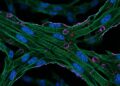
High-grade serous ovarian carcinoma often responds impressively to platinum-based chemotherapy at first, with initial response rates of 70 to 80 percent, yet most patients eventually relapse with drug-resistant disease. A new study published in Experimental & Molecular Medicine points to a surprising contributor to that trajectory: not the tumor cells themselves, but a specific state of the fibroblasts that surround them. The researchers identified a stromal protein, apolipoprotein L4 (APOL4), as a marker of platinum sensitivity, and showed that it defines a cancer-associated fibroblast subtype that appears to organize a chemotherapy-friendly niche within the tumor.
The team, led by Si On Lim, Junyong Park and Jin-Ku Lee, combined patient-derived ex vivo carboplatin screening with bulk and single-cell transcriptomics, functional perturbation in cancer-associated fibroblasts, and high-resolution spatial transcriptomics. Tumor specimens came from 25 patients with epithelial ovarian cancer undergoing primary debulking surgery at Samsung Medical Center and Seoul National University Hospital, of whom 20 underwent ex vivo drug-sensitivity screening. In those assays, 5,000 viable cells were seeded in Matrigel domes on micropillar plates, stabilized for three days, and then treated with carboplatin at six concentrations for seven days before viability was quantified.
The ex vivo classification showed directional concordance with clinical platinum response, defined by a platinum-free interval longer than six months. Across all 20 patients, 59 percent of clinical responders and none of the non-responders were classified as ex vivo responders, and the agreement was stronger in the eight patients who received platinum therapy without PARP inhibitor maintenance, at 71 percent versus zero percent. Differential expression analysis identified 11 genes with distinct expression patterns between responders and non-responders, and among five candidates significantly negatively correlated with the area under the carboplatin dose-response curve, only APOL4 was significantly higher in platinum responders in The Cancer Genome Atlas Ovarian Cancer validation cohort of 416 patients.
APOL4 expression also carried prognostic weight. Among 414 patients with complete survival data in the TCGA-OV cohort, those with high APOL4 expression (275 patients) showed significantly longer overall survival than those with low expression (139 patients), with a median of 4.1 years versus 3.2 years, five-year survival of 37 percent versus 24 percent, and a log-rank P value of 2.58 × 10⁻³. Progression-free survival followed the same pattern, with a median of 18 months versus 15 months. The survival advantage was independently reproduced in the GSE17260 and GSE32062 datasets, and in multivariable Cox models adjusting for FIGO stage and residual disease status, higher APOL4 expression remained independently associated with longer overall survival in TCGA-OV (hazard ratio 0.86) and GSE32062 (hazard ratio 0.67), with a concordant but non-significant trend in the smaller GSE17260 cohort.
Importantly, the association did not simply reflect known determinants of platinum sensitivity. APOL4 expression did not differ significantly by BRCA1/2 mutation status and showed no significant correlation with homologous recombination deficiency score or with HRD status dichotomized at the established cut-off of 42. In a multivariable Cox model additionally adjusting for BRCA mutation status and HRD score, APOL4 expression remained independently associated with improved progression-free survival (hazard ratio 0.82, 95 percent confidence interval 0.70 to 0.96, P = 1.32 × 10⁻²), indicating that its prognostic value is not attributable to these genomic factors. Immunohistochemistry on original patient tissues added a spatial dimension: the percentage of APOL4-positive cells was significantly higher in the stromal regions of responders than of non-responders (P = 5.67 × 10⁻³), whereas no significant difference appeared in the tumor epithelial compartment, and co-staining confirmed that APOL4 expression in fibroblasts was substantially higher in responders.
Single-cell analysis revealed what stromal APOL4 actually marks. In a public dataset of 51,786 cells from 11 patients with high-grade serous ovarian carcinoma, APOL4 specifically labeled a transcriptionally distinct fibroblast subtype the authors call CAF-1, which extended beyond the canonical inflammatory, myofibroblastic and antigen-presenting CAF states. CAF-1 cells showed high expression of matrix metalloproteinases including MMP1, MMP3, MMP9 and MMP13, along with immune-activating cytokines such as CXCL10 and CXCL11, whereas CAF-2 expressed inflammatory and immunosuppressive genes and CAF-3 exhibited myofibroblast markers. Histology reinforced the matrix story: APOL4-low regions showed high collagen content and low α-smooth muscle actin expression, while APOL4-high regions displayed reduced collagen and increased α-SMA, suggesting altered extracellular matrix composition in APOL4-expressing tumors.
To test whether APOL4 is merely a marker or an active participant, the researchers performed loss-of-function experiments in a patient-derived CAF line. Two independent short hairpin RNAs achieved efficient knockdown, and a 27-gene APOL4-CAF signature was defined from genes consistently downregulated in both conditions. APOL4 knockdown significantly reduced CAF-1 signature scores, and pathway activity changes between knockdown and control fibroblasts were strongly inversely correlated with those between CAF-1 and other CAFs across five gene set collections, meaning the programs enriched in CAF-1 were precisely those suppressed when APOL4 was depleted. The authors note that not every highlighted gene behaved uniformly: MMP1 and MMP13 showed discordant direction between the two constructs, supporting APOL4 as a contributor to, rather than the sole determinant of, this transcriptional program.
The functional test used a high-throughput three-dimensional co-culture platform in which luciferase-expressing ovarian cancer cells were grown alongside control or APOL4-knockdown fibroblasts and treated with carboplatin. Across a panel of 14 ovarian cancer cell lines, 12 exhibited increased area-under-the-curve values when co-cultured with APOL4-knockdown CAFs, an effect reproducible with both shRNAs, establishing that loss of stromal APOL4 is sufficient to confer carboplatin resistance in a tumor cell-extrinsic manner. The reciprocal experiment supported sufficiency: in six cell lines co-cultured with APOL4-overexpressing CAFs, five showed AUC ratios below one, and the mean AUC fell significantly from 447.3 under control conditions to 393.1 with APOL4 overexpression (P = 0.0037). Consistent with a stress-related mechanism, cancer cells co-cultured with APOL4-knockdown fibroblasts showed significantly increased CellROX Deep Red fluorescence per cell, a readout of intracellular oxidative stress, in all three lines tested. Notably, APOL4 knockdown or overexpression in the cancer cell lines themselves did not alter carboplatin sensitivity, underscoring the stromal nature of the effect.
Communication analysis added a layer of asymmetry. NicheNet modeling showed that CAF-1-derived ligands had significantly higher predicted activity toward non-stressed than stressed cancer cells, with median corrected AUPR values of 0.043 versus 0.003, whereas ligands from other CAFs preferentially engaged stressed, drug-tolerant cancer cells, with medians of 0.151 versus −0.005. In an independent cohort of 29 omental metastases, epithelial clusters with strong CAF-1 interactions were reduced after neoadjuvant chemotherapy, from 9.24 percent to 7.74 percent, while CAF-1-interaction-low clusters held steady, hinting that cells in close conversation with CAF-1 are the ones chemotherapy eliminates.
High-resolution Xenium spatial transcriptomics of a human ovarian cancer tissue section then translated these molecular findings into tissue architecture. Tumor cells within 100 micrometers of a CAF-1 cell had significantly lower stress scores than more distant cells, and within 50 micrometers, cells adjacent to CAF-1 had lower stress scores than those adjacent to other CAFs, although the authors emphasize that the absolute magnitude of the difference was modest. CAF-1 specifically dominated the neighborhoods of stress-low cancer cells and occupied heterogeneous, immune-rich microenvironments, while regions enriched for other CAFs were populated predominantly by stress-high cancer cells with minimal immune presence. In the TCGA-OV cohort, CAF-1-high tumors showed enrichment of T cell cytotoxicity signatures, the infiltrated immune phenotype was significantly more prevalent in CAF-1-high tumors, and CAF-1-high patients had significantly improved progression-free survival, with a median of 27 months versus 18 months. The authors caution that the immune-rich niche is a correlative feature inferred from patient tumors, since their co-culture assays contained no immune cells, and that APOL4 activation was observed in only a subset of fibroblasts and patients. Even so, the convergence of biomarker, causal and spatial evidence makes stromal APOL4, assessable by routine immunohistochemistry, a candidate predictive biomarker for platinum-based chemotherapy in this disease.
Subject of Research: Stromal APOL4 as a biomarker and functional contributor to platinum sensitivity in high-grade serous ovarian carcinoma through a distinct cancer-associated fibroblast state
Article Title: Stromal APOL4 defines a cancer-associated fibroblast state that organizes a chemosensitive niche in ovarian cancer
Article References: Lim, S. O., Park, J., Lee, K., Kim, M., Lee, J., Lee, J.-W., Lee, D. W., Kang, H. J., & Lee, J.-K. (2026). Stromal APOL4 defines a cancer-associated fibroblast state that organizes a chemosensitive niche in ovarian cancer. Experimental & Molecular Medicine. https://doi.org/10.1038/s12276-026-01879-w
Image Credits: AI Generated
DOI: 10.1038/s12276-026-01879-w
Keywords: ovarian cancer, APOL4, cancer-associated fibroblasts, platinum chemotherapy, carboplatin, tumor microenvironment, spatial transcriptomics, single-cell RNA sequencing, matrix remodeling, biomarker, chemosensitivity, immune infiltration
News Source: Nathaniel Bowman. (November 6, 2026). Fibroblast protein APOL4 flags platinum-sensitive ovarian tumors. Scienmag.