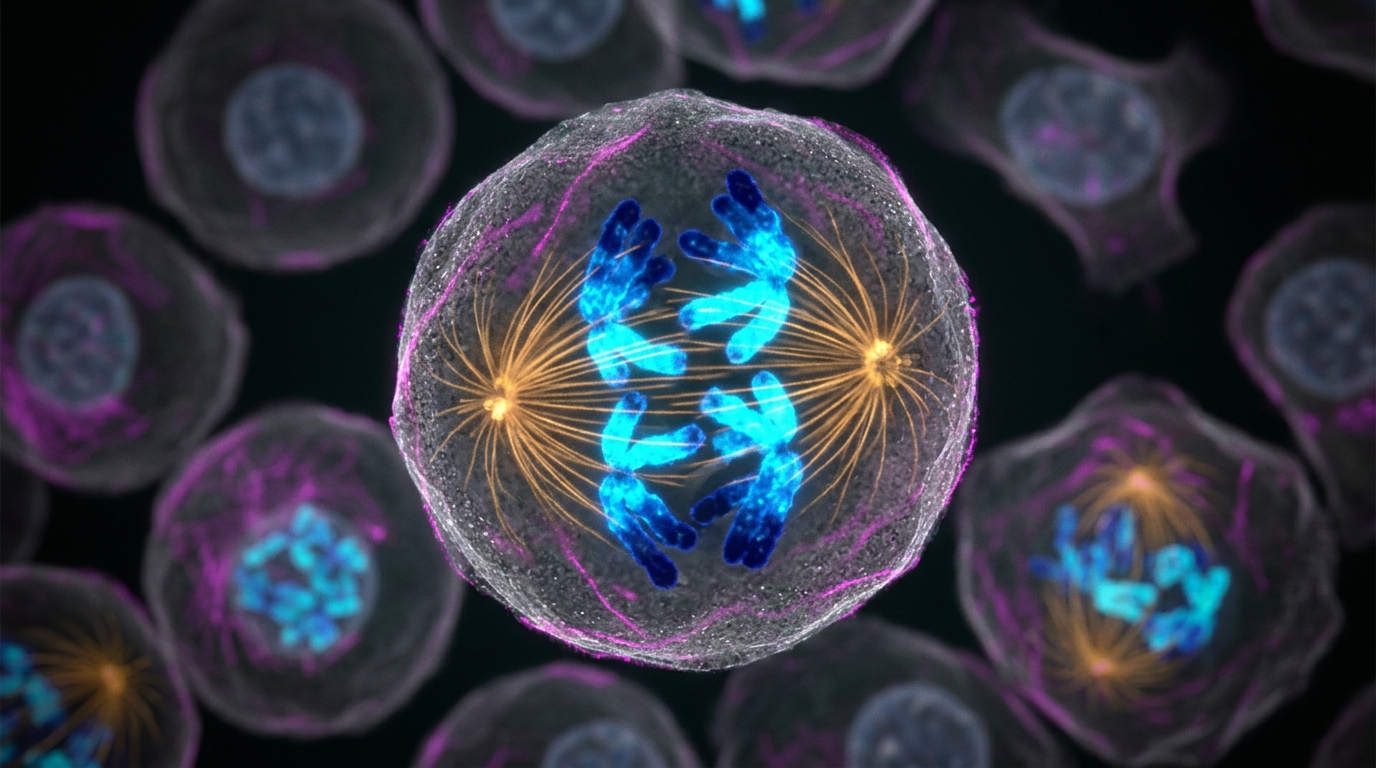
Aurora B operates as a sensor of glycolytic activity that is activated through lactate-dependent signalling to govern tumour cell division, according to research published in Nature Metabolism. While Aurora B is essential for mitotic progression, whether its activity is regulated by tumour metabolism had previously remained unclear. The study demonstrates that lactate production driven by aerobic glycolysis promotes Aurora B activation and cell cycle progression. In laboratory models, elevated glucose and lactate levels induce KAT2A to mediate lactylation of phosphoglycerate kinase 1 (PGK1) at residue K131, establishing a direct functional connection between glycolytic flux and cell division.
Mechanistically, lactylated PGK1 acts as a protein kinase that phosphorylates Aurora B at threonine 232 (T232). This PGK1-mediated phosphorylation stimulates Aurora B activation, promoting error-free cell division and mitotic progression in cancer cells. In addition to driving the cell cycle, PGK1-mediated Aurora B activation suppresses activation of the cGAS–STING pathway during both mitosis and interphase, linking elevated glycolytic metabolism directly to the suppression of innate immune surveillance.
Disrupting this biochemical cascade confirmed its role in tumour proliferation and immune evasion. Expressing either a lactylation-deficient PGK1 K131R mutant or a PGK1 variant defective in Aurora B binding resulted in mitotic defects and cGAS–STING activation. In mouse models, these molecular disruptions suppressed tumour cell proliferation and inhibited tumour growth. The authors also found that PGK1 K131 lactylation-mediated Aurora B activation is associated with hepatocellular carcinoma progression.
Targeting the interaction between PGK1 and Aurora B demonstrated preclinical therapeutic efficacy when combined with immunotherapy. Administering a peptide that disrupts the PGK1–Aurora B interaction alongside anti-PD-1 checkpoint therapy enhanced CD8+ T-cell infiltration into tumours and generated synergistic anti-tumour responses in mice. These findings reveal a central regulatory role for glycolysis in tumour cell division and suggest potential strategies for overcoming tumour immune evasion.
Subject of Research: Regulation of cancer cell division by glycolytic lactylation
Article Title: Lactylation couples glycolysis with cell cycle progression in cancer cells
Article References: Zhu, R., Li, H., Nie, D., Liu, G., Wu, Q., Lv, W., Wang, Y., Wu, Y., Meng, Y., Guo, D., Chai, L., Luo, S., Li, S., Tian, X., Wang, Z., Xiao, L., He, X., Yang, X., Feng, Y., … Lu, Z. (2026). Lactylation couples glycolysis with cell cycle progression in cancer cells. Nature Metabolism. https://doi.org/10.1038/s42255-026-01650-5
Image Credits: AI Generated
DOI: 10.1038/s42255-026-01650-5
Keywords: cancer metabolism, glycolysis, lactylation, Aurora B, PGK1, cell cycle, cGAS-STING, immunotherapy, couples, cell, cycle, progression
News Source: Nathaniel Bowman. (November 6, 2026). Lactylation Links Glycolysis to Cancer Cell Division in Preclinical Study. Scienmag.