In a theoretical position paper published in the journal AI Perspectives, roboticist Frank Kirchner reexamines the foundational work of Alan Turing to address the transition from contemporary narrow artificial intelligence toward integrative systems. Kirchner argues that theoretical principles articulated during the early twentieth century remain deeply relevant for overcoming the architectural limitations of modern computational models. Turing established the mathematical boundaries of effective computation through the universal Turing machine, identifying phenomena that can be systematically calculated while simultaneously raising the question of non-computational processes embodied by human or natural intelligence. In his foundational writings on intelligent machinery, Turing anticipated modern artificial neural networks by introducing unorganised machines composed of simple processing units that derive their primary computational power from the structural complexity of their interconnected networks. Kirchner suggests that revisiting Turing’s early insights provides researchers with an essential framework for moving beyond isolated functional applications toward unified artificial cognitive architectures.
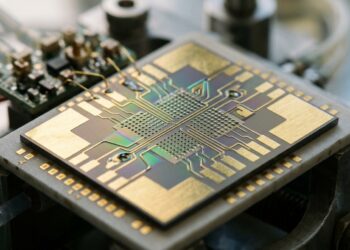
During the formative decades of artificial intelligence research, theoretical progress unfolded amid severe resource constraints, as early investigators lacked the computational power, storage volume, communication bandwidth, and vast datasets necessary to construct physical neural machines. Turing acknowledged these practical limitations, advocating that researchers initially concentrate on less resource-demanding domains, including computational logic, speech recognition, cryptography, and game playing such as chess. The subsequent development of inference engines allowed formal languages and computational logic to exploit growing processing capabilities, later enabling statistical methodologies to shift from abstract conceptualizations into functional implementations. Today, advanced processing chips and ubiquitous internet data facilitate real-time online learning, powering autonomous museum tour robots, security checkpoint facial recognition systems, and medical diagnostics capable of detecting cancer tissue in magnetic resonance scans with higher precision than experienced physicians. However, Kirchner emphasizes that these successful applications reflect isolated solutions that do not yet achieve general cognitive integration.
Kirchner categorizes modern high-performance implementations as functional artificial intelligence, or island talents, noting that their remarkable speed and precision remain confined to strictly demarcated problem domains. A prominent historical illustration occurred when an autonomous algorithm defeated the human world champion in the game of Go by three games to zero, followed by an upgraded iteration that won all one hundred matches against its predecessor without inspecting human game records, learning exclusively through basic rules and continuous self-play. Despite this demonstration of strategic superiority within an enclosed framework, Kirchner points out that such specialized programs cannot play beginner-level chess or simple poker without entirely separate training regimens. Real-world physical environments lack fixed, rigid boundaries, meaning that mastery of isolated challenges does not signify general machine superiority. Consequently, the research community faces the integration problem, which demands structural frameworks that enable diverse computational techniques, such as perception, planning, and formal reasoning, to operate concurrently and synergistically within single systems.
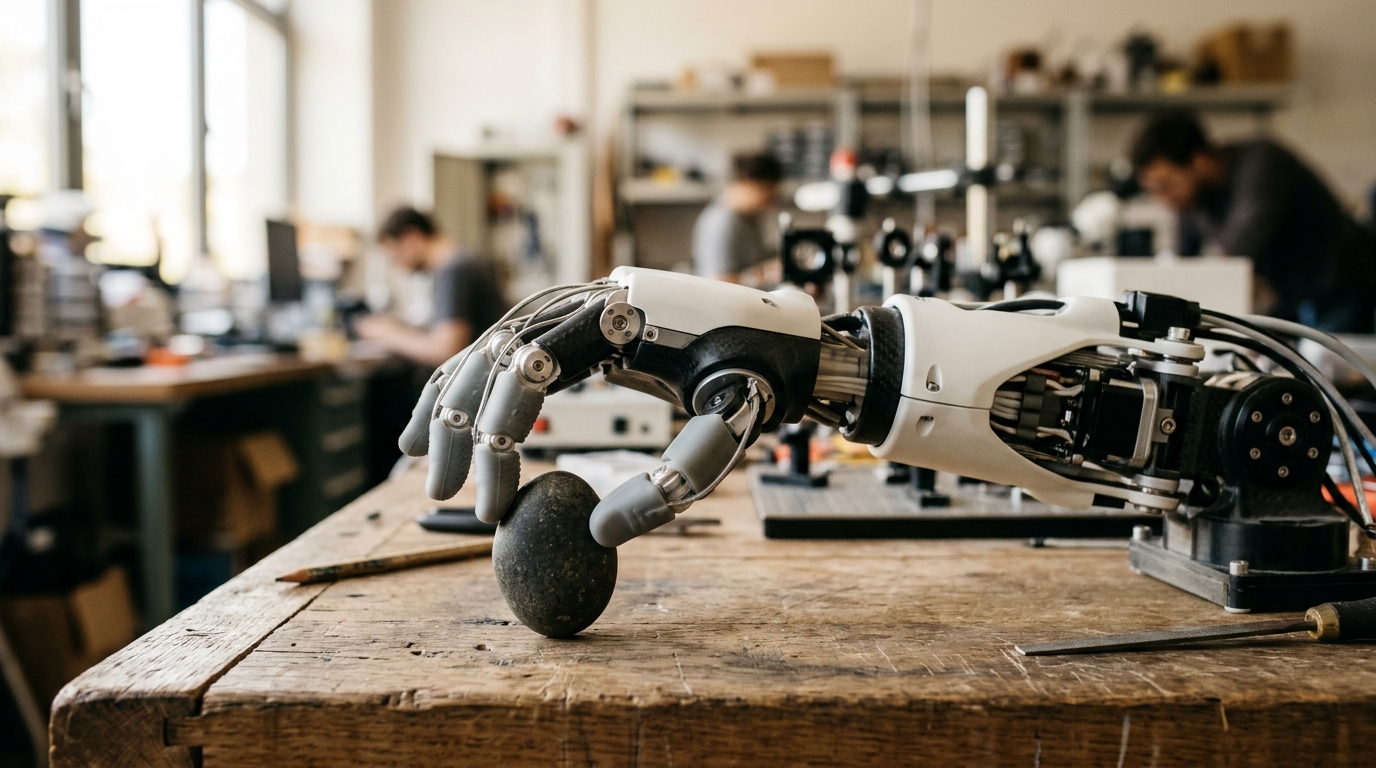
To solve the integration challenge, Kirchner champions what he designates as the Turing option, which posits that genuine artificial intelligence requires embedding computational engines within complex physical bodies. In early reports, Turing suggested that machines could be built to imitate portions of human anatomy, emphasizing the education of machinery rather than passive programming. Turing envisioned autonomous mechanical systems roaming the open English countryside to learn directly from unstructured environmental interactions, dynamically unifying sensory perception, logical reasoning, forward planning, and physical action execution over extended periods. Although Turing recognized that machines built during his era would be hopelessly impractical and collapse under their own physical mass, his conceptual formulation established that intelligence cannot be pre-compiled in a factory-new state. Instead, artificial agents must possess kinematically complex physical shells, equipped with arms, legs, or manipulators, enabling them to actively sample, navigate, and alter physical surroundings to acquire knowledge iteratively.
Kirchner contrasts Turing’s embodied developmental approach with current machine learning methodologies that depend upon brute-force statistical training over millions of discrete data points. Modern computational paradigms consume extraordinary electrical power and storage capacity to identify statistical correlations across massive training corpora, representing an unsustainable and biologically implausible approach to cognitive development. To illustrate this disparity, Kirchner cites an observation from a colleague studying amphibian neurology: a biological frog utilizes a brain weighing merely seven grams and consuming only a few watts of power to accurately capture moving flies, whereas artificial robotic systems require kilowatts of power and millions of training samples merely to recognize insect shapes. True integrative artificial intelligence must therefore move beyond passive correlation mining, organizing acquired information into persistent, structured meta-knowledge. Such organizational structures would permit autonomous machines to combine data-driven learning with classical reasoning, enabling sample-efficient few-shot or single-shot adaptation when encountering unfamiliar environmental situations.
Tracing three decades of embodiment studies, Kirchner examines how roboticists historically utilized mechanical morphology to replace cumbersome mathematical models of environmental interaction. Landmark research demonstrated that structural features could directly govern behavioral control, allowing simple eight-bit microcontrollers executing minimal software lines to achieve wall-following navigation without formal sense-plan-act architectures. Nevertheless, as exponential advances in computer processing power made complex software execution easier, researchers increasingly relied on sophisticated algorithms running on powerful microprocessors to compensate for structurally crude hardware designs, effectively modeling hardware pitfalls away mathematically. Reflecting on past sewer navigation projects that utilized sensor-equipped radio-controlled vehicles and neural networks executing probabilistic belief-state navigation, Kirchner questions whether prioritizing algorithmic fixes over kinematic intelligence hindered deeper exploration of morphology. Kinematic intelligence embeds behavioral capacities directly into mechanical structures, such as passive dynamic walkers, freeing valuable computational bandwidth for higher-level cognitive planning rather than exhausting processing power on basic dynamic stabilization.
To balance mechanical morphology and algorithmic processing, Kirchner introduces the concept of generation thinking, adapting principles observed in biological evolution to robotic hardware-software co-design. Over evolutionary timescales, biological organisms gradually transfer computationally expensive behavioral processes into physical morphology and specialized neuro-functional ensembles, as seen when frogs evolved elongated tongues alongside linked visual-motor brain regions to automate prey capture without conscious deliberation. Similarly, successive generations of autonomous robotic systems should systematically externalize stable, computationally intensive knowledge directly into structural hardware, specialized sensor interfaces, and modular computing fabrics. Drawing a parallel to the automotive sector, where standardized vehicle platforms and industry consortia reduced physical mechanical complexity to prioritize internal computing before electric mobility fundamentally simplified overall vehicle design, generation thinking would allow artificial intelligence systems to cross initial structural complexity thresholds before consolidating operational stability into standardized, less computationally demanding mechanical platforms.
Kirchner provides a set-theoretic argument to demonstrate that integrative artificial intelligence must not be misconstrued as strong artificial intelligence or superhuman intellect. Defining the problem space rigorously, he characterizes functional artificial intelligence as the class of problems solvable by a single specialized algorithm, which establishes that functional artificial intelligence is a strict subset of complexity class P, the set of problems efficiently solvable in polynomial time. Integrative artificial intelligence represents the Cartesian cross product of multiple functional algorithms operating concurrently to resolve complex tasks; however, Kirchner emphasizes that combining polynomial-time algorithms through functional composition does not transcend polynomial bounds, confirming that integrative artificial intelligence remains entirely within class P. Because strong artificial intelligence is presumed to reside within non-deterministic polynomial time, labeled NP, integrative artificial intelligence cannot equal strong artificial intelligence, proving that robotic integration expands multi-purpose functional scope without solving theoretically non-computable problems.
The operational shift toward multi-purpose integrative systems requires engineers to adopt an entirely different design philosophy regarding machine error and performance predictability. While narrow functional applications permit rigorous formal verification and deterministic benchmarks, complex integrative robots interacting with open natural environments cannot operate deterministically, because real-world physics cannot be perfectly modeled or pre-compiled. In complex environments, unpredictable physical turbulence and environmental resistance demand fault-tolerant control frameworks that accept operational mistakes as unavoidable elements of continuous learning and machine education. Kirchner observes that while classical engineering disciplines, such as aeronautics, eliminate hazardous unmodeled dynamics through preventative measures like aircraft de-icing, artificial intelligence researchers must construct architectures that actively manage inherent non-determinism. Transforming errors from fatal operational failures into informative signals for ongoing behavioral adaptation serves as a fundamental benchmark distinguishing genuinely intelligent machines from deterministic automatons executing rigid programmatic routines.
Looking toward future computational horizons, Kirchner examines how theoretical developments in quantum computing might intersect with the escalating complexity of integrative artificial intelligence. Operating at the Planck scale of 1.6 times ten to the negative thirty-fifth meters, quantum systems harness superposition and entanglement, exponentially doubling processing capacity with every added qubit up to fifty-qubit thresholds that surpass classical supercomputers. However, severe physical challenges, including environmental decoherence and rising error rates within bounded-error quantum polynomial time, necessitate near absolute-zero operating temperatures and fundamental programming shifts from discrete register operations to continuous wave-function modulation using pulsed frequencies, amplitudes, and durations. While quantum supremacy remains an evolving benchmark, advanced quantum processors could eventually perform intricate molecular and physical simulations that classical hardware cannot compute. Kirchner concludes that researchers must balance these technological frontiers with societal communication and ethical responsibility, systematically pursuing embodied physical interaction to realize Turing’s vision of adaptable machines.
Subject of Research: Architectural principles for integrative artificial intelligence through physical robotic embodiment and Turing's theories
Article Title: AI-perspectives: the Turing option
Article References: Kirchner, F. (2020). AI-perspectives: the Turing option. AI Perspectives, 2(1), Article 2. https://doi.org/10.1186/s42467-020-00006-3
Image Credits: AI Generated
DOI: 10.1186/s42467-020-00006-3
Keywords: Artificial Intelligence, Robotics, Alan Turing, Embodied Cognition, Kinematic Intelligence, Machine Learning, Quantum Computing, Computational Complexity, AI-perspectives, Turing, option, scientific research
News Source: Denise Maddox. (November 6, 2026). Embodied Robotics and Turing’s Blueprint for General Artificial Intelligence Systems. Scienmag.