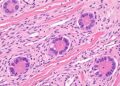
Fibrosis contributes to clinically distinct diseases across anatomical sites, but their convergence on shared molecular pathways remains unclear. A genome-wide meta-analysis across five cohorts now reports genetic evidence that fibrotic diseases share a genetic predisposition, converging on extracellular matrix remodeling, immune regulation, and developmental signaling.
Researchers conducted genome-wide meta-analyses across five large cohorts: the Copenhagen Hospital Biobank, the Danish Blood Donor Study, UK Biobank, FinnGen, and the Million Veteran Program. The analysis covered 18 selected fibrosis-relevant traits, including nine prototypical fibrotic diseases, five organ diseases with partial fibrotic components, and four imaging-derived fibrotic phenotypes. Case sample sizes ranged from 4,559 to 126,358 individuals.
The team identified 654 genome-wide significant associations between genetic variants and fibrotic traits. Of these, 139 represent previously unreported associations for their respective traits, expanding the catalog of known genetic risk factors for fibrotic conditions. The findings identify novel genetic associations and support a shared genetic predisposition for fibrosis.
To probe how these diseases relate at the genetic level, the researchers assessed genetic overlaps using genetic correlations and investigated locus-wide overlaps through colocalization and clustering analyses. Clustering broadly distinguished three groups: organ diseases with partial fibrotic components, prototypical fibrotic diseases, and imaging-derived fibrotic phenotypes. The clustering broadly distinguished organ diseases with partial fibrotic components, prototypical fibrotic diseases, and imaging-derived fibrotic phenotypes.
The strongest genetic correlation emerged between carpal tunnel syndrome and trigger finger, two conditions involving fibrotic changes in tendons and connective tissue. The correlation coefficient was 0.60, with a P value of 1.25×10−63, indicating an exceptionally strong statistical relationship. The strongest correlation was between carpal tunnel syndrome and trigger finger (rg = 0.60, P = 1.25×10−63).
Colocalization analysis identified 38 loci where the same genetic variants appear to influence multiple fibrotic traits. Notably, 11 of these loci overlap with three or more diseases, suggesting these genomic regions harbor variants with broad effects across fibrotic conditions. The study identified 38 colocalizing loci, of which 11 overlap with three or more diseases.
Candidate genes at these loci implicate gene families with established roles in fibrosis biology. Candidate genes implicate gene families with established roles in fibrosis, including Wnt signaling genes WNT7B, TCF7L2, and WNT2. Extracellular matrix genes including COL11A1, MMP14, and P4HA2 point directly to the machinery that builds and remodels connective tissue. Fibroblast growth factor genes FGFR2 and FGF21, and inflammation-related genes IRF5, STAT3, and TNFAIP3, further link fibrotic risk to immune signaling and tissue repair responses.
These findings support a shared genetic predisposition for fibrosis, converging on extracellular matrix remodeling, immune regulation, and developmental signaling. Clustering broadly distinguished organ diseases with partial fibrotic components, prototypical fibrotic diseases, and imaging-derived fibrotic phenotypes.
The study, published in Nature Communications, is presented as an open-access article sharing peer-reviewed, accepted research with a permanent DOI. The authors note that this early version is subject to further edits and will be replaced by the final Version of Record. The meta-analyses included the Copenhagen Hospital Biobank, Danish Blood Donor Study, UK Biobank, FinnGen, and Million Veteran Program.
The study identified 654 genome-wide significant associations, of which 139 represent previously unreported associations for their respective traits. The identification of specific candidate genes also provides concrete molecular targets for experimental follow-up.
Subject of Research: Genetic architecture of fibrotic diseases across multiple organs
Article Title: Shared genetic architecture across fibrotic diseases
Article References: Bundgaard, J. S., Rand, S. A., Bentsen, M., Pedersen, O. B. V., Sørensen, E., Erikstrup, C., Bruun, M. T., Aagaard, B., Larsen, O. H., Dyrskjøt, L., Jacobsen, S., Hager, H., Stender, S., Vejlstrup, N., Small, A. M., Bundgaard, H., DBDS Genomic Consortium, Astrup, M., Banasik, K., … Ghouse, J. (2026). Shared genetic architecture across fibrotic diseases. Nature Communications. https://doi.org/10.1038/s41467-026-79052-0
Image Credits: AI Generated
DOI: 10.1038/s41467-026-79052-0
Keywords: fibrosis, genetics, genome-wide association study, extracellular matrix, colocalization, genetic correlation, Wnt signaling, inflammation, Nature Communications, biobank, Shared, genetic
News Source: Juliet Wilcox. (November 5, 2026). Genome study reveals shared genetic roots of fibrotic diseases. Scienmag.