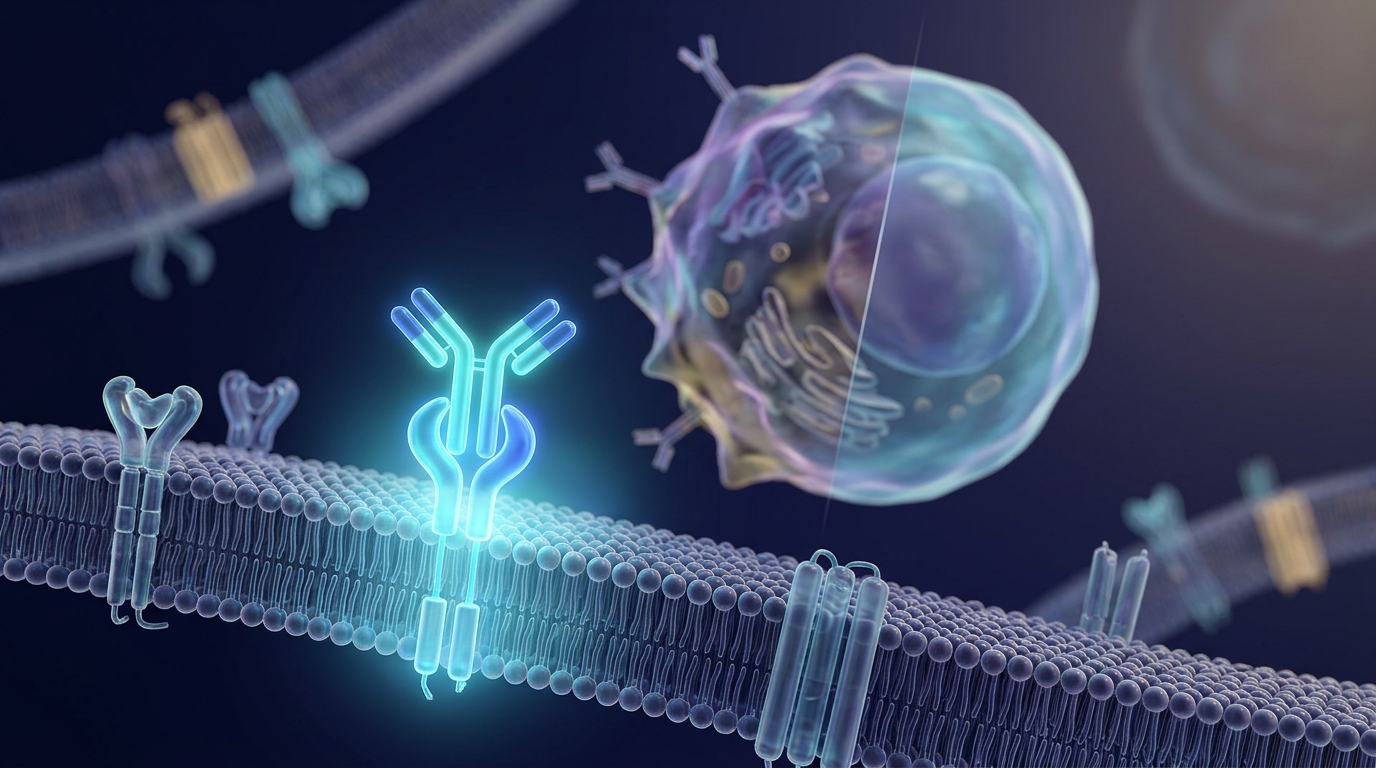
Scientists at City of Hope and collaborating institutions report that immune cells in systemic lupus erythematosus (SLE) carry a splicing defect in the prolactin receptor, and that correcting this defect with an experimental splice-modulating oligomer reduced a broad set of pathogenic immune features in patient cells and averted early kidney damage in lupus-prone mice. The study, published in Experimental & Molecular Medicine, identifies the long isoform of the prolactin receptor (LFPRLR) as a driver of lupus immunopathology and proposes its knockdown as a candidate treatment strategy that merits further investigation.
Prolactin is best known as a pituitary hormone, but it also acts as a cytokine on immune cells, and elevated circulating prolactin has long been correlated with increased SLE disease activity. The receptor for prolactin exists in several splice variants generated from a single pre-mRNA: a long isoform (LF), an intermediate isoform described only in pathological specimens, and two to three short isoforms (SF). All variants share the same extracellular and transmembrane domains but differ in their intracellular signaling domains. The long isoform, which contains exon 10, is the more potent activator of STAT signaling proteins, whereas the short isoforms counteract long-isoform signaling. In several diseases other than SLE, a relative excess of the long isoform promotes cell proliferation and survival, while increased short-isoform expression favors differentiation and apoptosis.
The research team first asked whether this isoform balance is disturbed in lupus. Bulk RNA sequencing of peripheral blood mononuclear cells from 20 patients with SLE and 10 healthy donors showed increased total PRLR expression in lupus, driven specifically by the long isoform, while prolactin mRNA itself remained low and similar between groups. Single-cell RNA sequencing of more than 700,000 cells from 34 patients and 12 healthy donors confirmed that individual PRLR-positive cells expressed more receptor in lupus rather than there simply being more receptor-expressing cells. Monocytes, particularly classical monocytes, showed the highest PRLR expression, and the long isoform dominated. Gene set enrichment analysis found that transcripts involved in alternative splicing via the spliceosome were reduced only in the PRLR-positive cells of lupus patients, a change consistent with the skewing toward long-isoform production. In spleens of NZB/W-F1 lupus-prone mice, the long isoform was also predominant and increased with disease progression, while brain and kidney showed no such increase, suggesting an immune-biased alteration.
To test whether this imbalance is causal rather than a bystander change, the investigators used a splice-modulating oligomer (SMO), a 25-base morpholino DNA oligonucleotide linked to an octa-guanidine dendrimer that blocks inclusion of exon 10 during pre-mRNA splicing. Blocking exon 10 reduces the long isoform and, in many cells including human peripheral blood mononuclear cells, promotes expression of the short isoforms, tilting the LF:SF balance toward the counteractive variants. Exon-junction quantitative PCR confirmed that the oligomer reduced the proportion of the long isoform within total PRLR transcripts in both healthy and lupus donor cells.
High-dimensional flow cytometry then revealed what the splice correction does to immune cell populations. After 72 hours of ex vivo treatment, the oligomer had no effect on the viability of cells from either patients or healthy donors. In lupus samples, however, it increased the ratio of more differentiated intermediate and non-classical monocytes to less differentiated classical monocytes, and increased the ratio of mature CD56-positive CD16-positive natural killer cells to their poorly cytotoxic, cytokine-producing early counterparts, in each case shifting the distribution closer to that seen in healthy donors. It also significantly reduced CD69 expression, an activation marker, on total and non-class-switched IgD-positive B cells in patient samples, with no significant effect on healthy donor cells. An exploratory analysis of one patient with multiple autoimmune conditions additionally showed reductions in several pathogenic populations, including atypical B cells, plasmablast-like cells, inflammatory T helper phenotypes, proliferating cytotoxic T cells, interferon-producing dendritic cells, and proliferating NK cells, changes not induced in matched healthy cells.
The treatment also suppressed type I interferon-stimulated genes, a transcriptional program central to lupus activity. In peripheral blood mononuclear cells from three patients with moderately active disease, 24 hours of LFPRLR knockdown significantly reduced the expression of at least six of ten measured interferon-stimulated genes, including MX1 and IRF1 in all three samples, and others such as MX2, IRF7, OAS1, IFI35, IFI44, IFITM3, STAT1, and STAT2 in at least two. These genes are associated with increased disease activity, organ damage, spontaneous germinal center responses, and plasma cell generation in SLE, and several are designated biomarkers or therapeutic targets. The authors note that the ex vivo experiments were conducted without adding exogenous prolactin, implying that autocrine or paracrine prolactin within the mixed cell population, or a constitutively active form of the long receptor produced by aberrant splicing, may be sufficient to drive the signaling that knockdown interrupts.
Importantly for safety, the knockdown did not impair normal humoral immunity. When the major mature human B cell subsets were expanded and differentiated in vitro from healthy donor cells, with or without added prolactin mimicking the elevated circulating levels seen in roughly 30 percent of SLE patients, 48 hours of LFPRLR knockdown did not affect the viability or phenotype of activated, memory, or plasma B cell subsets. The authors interpret this as evidence that the approach does not broadly immunosuppress, as steroids and other immunomodulatory treatments do, and does not disturb humoral homeostasis, as B cell- or plasma cell-depleting therapies do.
In vivo, the mouse version of the oligomer was delivered for 8 weeks via subcutaneous minipumps at 100 pmol per hour to six-week-old female MRL-lpr mice, a primary lupus-prone model in which a Fas mutation causes systemic autoimmunity by 17 to 22 weeks. Single-cell RNA sequencing of splenic leukocytes showed that the proportion of PRLR-positive cells and receptor expression within them were both elevated in lupus mice compared with healthy C57BL/6J controls, and knockdown reduced the PRLR-positive fraction toward healthy levels. Gene ontology analysis identified JAK-STAT and type I interferon signaling pathways, along with natural killer cell activation, among the most differentially regulated pathways after treatment, altered in both PRLR-positive and PRLR-negative fractions. Phospho-flow cytometry showed that knockdown reduced the proportion of STAT1-phosphorylated splenic leukocytes while leaving STAT3 and STAT5 phosphorylation unaffected, and reduced IRF1 mRNA, supporting successful dampening of long-isoform-driven signaling. Transcripts of Toll-like receptor 4, its downstream signaling molecules, and the B cell activation marker CD69 were reduced in splenic B cell subsets.
The knockdown also reshaped the antibody-producing compartment. It significantly reduced the absolute numbers of both PRLR-positive and PRLR-negative splenic plasma cells and reduced Ki67-positive proliferating plasma cells, without changing apoptotic gene signatures, indicating reduced proliferation and generation rather than induced cell death. Follicular B cell frequency decreased while marginal zone B cells increased, and the proportion of germinal center-like cells fell. Using an immunoglobulin sequencing approach, the team found that knockdown shortened the complementarity determining region 3 of B cell receptors in total, naive, and memory B cells, and increased the proportion of plasma cells producing non-class-switched antibodies, features associated with reduced autoreactive potential. In humans, antibodies with long CDR3 regions and particular amino acid compositions are more likely to be autoreactive, and the treated mice showed shifts away from these signatures, although amino acid composition itself was not changed.
Finally, the treatment averted early kidney pathology. Kidneys examined at 14 weeks of age, after 8 weeks of treatment, showed that knockdown prevented the development of glomerular hypercellularity, keeping glomerular size and cellularity at levels previously observed in healthy mice. In lupus, glomerular tufts aberrantly increase in size, cellularity, and cellular density due partly to immune cell infiltration and partly to mesangial cell proliferation, and mesangial hyperplasia precedes sclerosis and significant immunoglobulin deposition. Because no PRLR is expressed by mesangial cells, podocytes, or glomerular endothelium, the authors suggest the kidney benefit occurs indirectly through changes in immune parameters. Three control-treated mice developed significant proteinuria during treatment, whereas no outliers appeared in the treated group, and urinary calcium excretion was reduced though not significantly. The authors caution that PRLR isoforms could only be measured at the transcript level because reliable protein-level quantification remains technically challenging, that treatment-naive patient samples were unavailable so prior therapy may have contributed to response variability, and that only female adult samples were studied even though lupus also occurs in males and children, often more severely. They conclude that the long-isoform-targeting oligomer, which showed no detectable toxicity in healthy mice treated for up to 18 months in prior work, represents a potential treatment strategy for SLE whose further preclinical and clinical development seems justified.
Subject of Research: Prolactin receptor splice isoform imbalance in systemic lupus erythematosus and its targeting with a splice-modulating oligomer
Article Title: Knockdown of the long isoform of the prolactin receptor selectively targets pathogenic immune cells in systemic lupus erythematosus and averts glomerular pathology
Article References: Rodrigues Lima-Junior, J., Hu, Z., Hamane, K., Kumar, A., Taghi Khani, A., Sanchez Ortiz, A., Guo, X., Jung, D. H., Qin, H., Tao, S., Sanz, I., Meffre, E., Marzan, K., Koff, J. L., Lorenson, M. Y., Gu, Z., Wu, X., Walker, A. M., & Swaminathan, S. (2026). Knockdown of the long isoform of the prolactin receptor selectively targets pathogenic immune cells in systemic lupus erythematosus and averts glomerular pathology. Experimental & Molecular Medicine. https://doi.org/10.1038/s12276-026-01881-2
Image Credits: AI Generated
DOI: 10.1038/s12276-026-01881-2
Keywords: systemic lupus erythematosus, prolactin receptor, splice-modulating oligomer, type I interferon, autoreactive B cells, plasma cells, glomerular pathology, STAT1 signaling, single-cell RNA sequencing, MRL-lpr mice, immunotherapy, alternative splicing
News Source: Drew Townsend. (November 4, 2026). Blocking One Prolactin Receptor Isoform Selectively Disarms Lupus Immune Cells. Scienmag.