


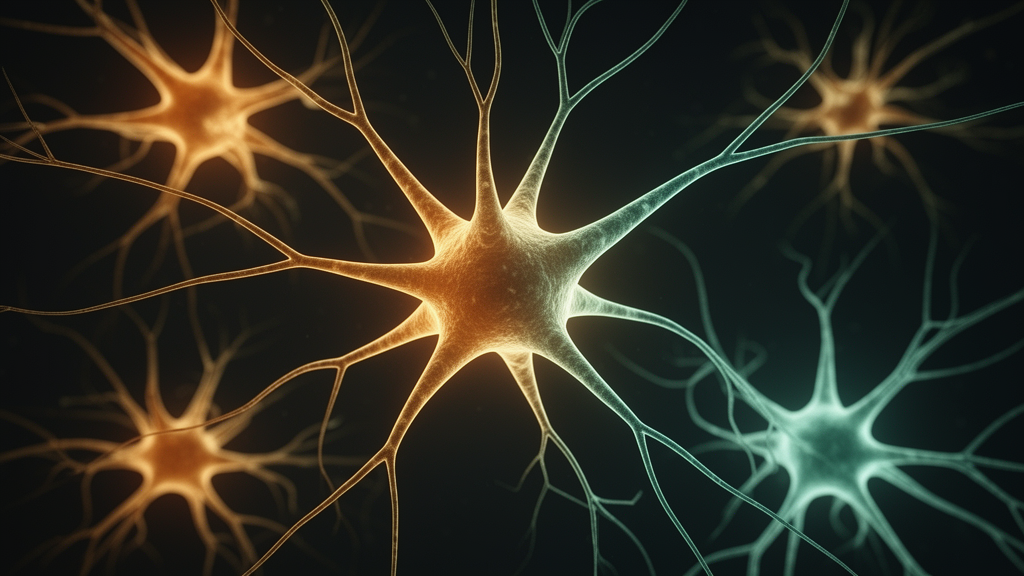
Scientists probing the biology of CDKL5 deficiency disorder, a rare and devastating childhood epilepsy, have turned their attention to a cell type long overshadowed by neurons: the astrocyte. In a new study published in Frontiers in Cellular Neuroscience, researchers from Imperial College London and Newcastle University report that astrocyte-like cells carrying a CDKL5 loss-of-function mutation show widespread abnormalities in gene expression, protein composition and cellular behaviour, hinting that these star-shaped support cells may contribute to the disorder in ways that have gone largely unexamined.
CDKL5 deficiency disorder is a developmental epileptic encephalopathy typically caused by loss-of-function variants in the gene encoding CDKL5, an X-linked serine-threonine kinase. The kinase is highly expressed in the brain during development, and its established neuronal roles include organising the cytoskeleton and maintaining synaptic stability. Yet the authors of the new work note that little is known about what astroglia do in the condition, despite the importance of these cells in synaptic development and homeostasis and their documented involvement in other epileptic diseases. That gap motivated their central hypothesis: astrocytes may contribute to CDD pathology.
To test the idea, the team derived induced pluripotent stem cells from fibroblasts of patients with CDD, using cells that harbour a CDKL5 loss-of-function mutation alongside isogenic controls in which the mutation was corrected. These stem cells were then differentiated into induced astrocytes, or iAstros. The comparison revealed transcriptomic, proteomic and functional dysregulation in the mutant cells, with the changes clustering around two broad themes: water transport and immunological function. Notably, the mutant astrocytes showed a diminished response when stimulated with TNFα, an inflammatory signalling molecule, suggesting that a key immune-related pathway behaves abnormally in CDKL5-deficient glia.
The cytoskeletal findings echo what has already been seen in neurons lacking CDKL5. The induced astrocytes displayed increased branching, a change in their complex three-dimensional shape, and reduced phosphorylation of end-binding protein 2, known as EB2, a target of the CDKL5 kinase. Because EB2 phosphorylation is a readout of CDKL5 activity, its reduction indicates that disrupted cytoskeletal regulation extends beyond neurons into astrocytes.
Beyond the stem cell model, the researchers report proof-of-concept for a second, complementary experimental system. They knocked down CDKL5 in adult and foetal human organotypic brain slices, living sections of human brain tissue maintained in the laboratory, by transducing the slices with an adeno-associated virus carrying a novel CDKL5 shRNA, a genetic tool that suppresses expression of the target gene. Slices receiving the CDKL5 shRNA displayed a trending increase in spontaneous network activity compared with slices transduced with a scrambled control sequence. The authors present this as evidence that the model is functional, since heightened network activity is consistent with the epileptic phenotype seen in patients.
Importantly, when the team interrogated these organotypic slices, they found dysregulation of key astrocytic proteins that matched the changes observed in the human glial stem cell model. This convergence across two independent systems, one built from patient-derived stem cells and the other from human brain tissue, strengthens the case that the astrocytic abnormalities are not an artefact of a single experimental platform.
The study’s design carries several caveats worth noting. The astrocyte findings come from cells differentiated in a dish, which capture some but not all features of mature human brain astrocytes. The organotypic slice work is described as proof-of-concept, and the increase in network activity was reported as a trend rather than a statistically definitive result. The authors frame their conclusions accordingly, describing the work as the generation of novel human models of CDD and initial findings of astrocytic dysfunction, rather than as a completed account of the disease mechanism.
By establishing two human experimental models, patient-derived induced astrocytes and CDKL5-knockdown organotypic brain slices, and by showing that both display congruent astrocytic protein changes, the researchers have laid groundwork that they say paves the way for novel discovery and therapeutic intervention.
Subject of Research: Astrocyte dysfunction in models of CDKL5 deficiency disorder
Article Title: Astroglial dysfunction in models of CDKL5 deficiency disorder
Article References: Pickering, C., Bakoulina, A., McLeod, F., Pantziarou, A., Goyal, A. A., Seet, Z. Y. A., Saleemi, A., Wu, Y., Clowry, G. J., Cowie, C. J. A., Kinali, M., & Mazarakis, N. D. (2026). Astroglial dysfunction in models of CDKL5 deficiency disorder. Frontiers in Cellular Neuroscience, 20, Article 1934251. https://doi.org/10.3389/fncel.2026.1934251
Image Credits: AI Generated
DOI: 10.3389/fncel.2026.1934251
Keywords: CDKL5 deficiency disorder, astrocytes, epilepsy, induced pluripotent stem cells, organotypic brain slices, cytoskeleton, TNFα, water transport, neuroinflammation, gene therapy, developmental encephalopathy, Astroglial
News Source: Drew Townsend. (October 30, 2026). Astrocytes Emerge as Unexpected Players in Rare Epileptic Disorder CDKL5. Scienmag.



