


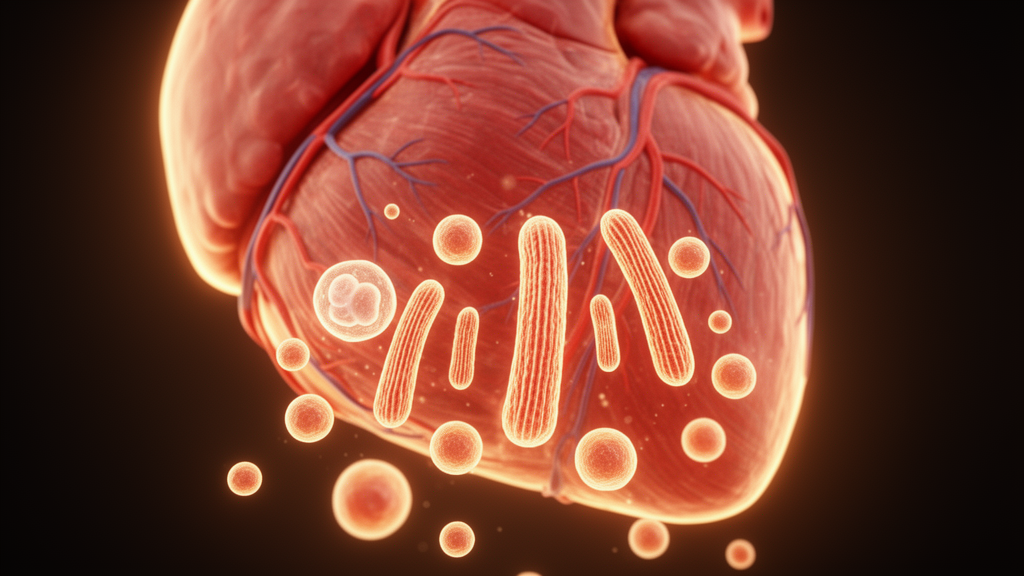
The heart has long been regarded as an organ that cannot repair itself. Under traditional concepts, cardiac muscle tissue lacks the cambial elements needed to replace lost cardiomyocytes, so injuries to the myocardium end with the defect being closed by a connective tissue scar, a process followed by the development of heart failure. A new open-access review published in Biological Research on 20 August 2026 examines whether that pessimistic picture still holds, surveying two decades of work on stem and progenitor cell populations found within the heart itself.
The review, led by Olga Payushina and colleagues, gathers evidence that the heart contains a heterogeneous population of stem and progenitor cells. According to the available data summarized by the authors, these cells could facilitate restoration of pathologically altered myocardium in two ways: by differentiating into cellular components of the tissue, including endothelial cells, vascular smooth muscle cells and possibly cardiomyocytes, or by exerting a paracrine regulatory influence on damaged tissue. The discovery of cardiac stem cells has therefore opened new perspectives in the treatment of various heart diseases, framing a research field that spans cell identity, localization and therapeutic transplantation.
The most technically consequential finding highlighted in the review concerns how these cells are identified. New methods of genetic lineage-tracing have revealed that c-kit and Sca-1, the markers traditionally used to sort cardiac stem cells, predominantly identify cells of the endothelial lineage that lack cardiomyogenic potential. In other words, many cells previously counted as cardiac stem cells may in fact belong to the blood-vessel lineage rather than representing a reserve of future muscle cells. This reinterpretation helps explain why data on the regenerative potential of cardiac stem cells, particularly their ability to differentiate into cardiomyocytes, remain controversial.
The review does not present these cells as a ready-made therapy. The authors state that the therapeutic efficacy of transplanting cardiac stem cells in patients remains questionable, a caution that sits alongside the lineage-tracing results. What the paper offers instead is a structured map of the field: the phenotypic and functional characteristics of different cardiac stem cell populations, where these cells are localized within the heart, how their numbers and behavior change with age, how they are altered in pathological conditions, the mechanisms behind their pro-regenerative effects, and their potential clinical applications.
For readers following regenerative cardiology, the review’s significance lies in its calibration of expectations. The paracrine route, in which transplanted or resident cells signal to damaged tissue rather than becoming new cardiomyocytes, emerges as a plausible mechanism by which cardiac stem and progenitor cells might still aid recovery even if direct conversion into heart muscle cells is limited. At the same time, the endothelial identity of c-kit- and Sca-1-positive populations underscores why early enthusiasm about endogenous heart repair has been difficult to confirm. As a review, the article synthesizes existing studies rather than reporting new experimental results, and its conclusions reflect the state of an actively debated field in which the regenerative capacity of the mammalian heart, and the best ways to harness it, are still being defined.
Subject of Research: A review of cardiac stem and progenitor cell populations and their contested role in myocardial regeneration.
Article Title: Cardiac stem cells as a source of myocardial regeneration
Article References: Payushina, O., Pykhanova, V., Tsomartova, D., Chereshneva, E., Kartashkina, N., Tsomartova, E., Kosobutskaya, S., Zharikova, T., Pires, L. A. S., Pontes-Silva, A., & Zharikov, Y. (2026). Cardiac stem cells as a source of myocardial regeneration. Biological Research. https://doi.org/10.1186/s40659-026-00718-6
Image Credits: AI Generated
DOI: 10.1186/s40659-026-00718-6
Keywords: cardiac stem cells, myocardial regeneration, c-kit, Sca-1, lineage tracing, cardiomyocytes, paracrine signaling, endothelial cells, heart failure, regenerative medicine, Cardiac, stem
News Source: Drew Townsend. (October 29, 2026). Cardiac Stem Cells Show Promise but Cardiomyocyte Potential Remains Contested. Scienmag.



