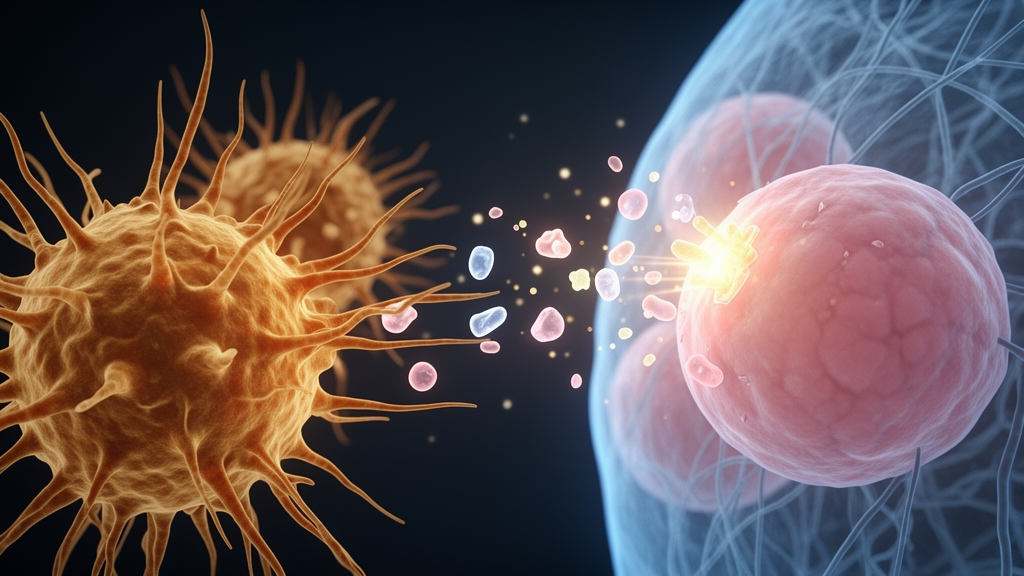
Chemotherapy response in nasopharyngeal carcinoma may depend not only on how sensitive tumor cells are to cytotoxic drugs, but also on the pretreatment tumor microenvironment surrounding them. A new study accepted in Cancer Immunology, Immunotherapy and published as a peer-reviewed, citable open-access article on 28 October 2026 set out to map the myeloid cell states associated with chemotherapy response in this cancer, integrating single-cell RNA sequencing, bulk transcriptomic survival analysis, and functional laboratory experiments.
The researchers profiled pretreatment biopsies from patients who responded to chemotherapy, defined as achieving complete or partial response, and from non-responders whose disease remained stable. The single-cell analysis revealed heterogeneous myeloid populations, including distinct subsets of macrophages, dendritic cells, monocytes, neutrophils, mast cells, and plasmacytoid dendritic cells. Functional scoring and enrichment analyses showed that the macrophage subsets carried prominent polarization-associated, phagocytic, angiogenic, lysosomal, and innate immune programs.
Cell-cell communication analysis of the single-cell data nominated SPP1-CD44 as a candidate macrophage-tumor communication axis. SPP1 is a secreted protein produced by the macrophage subsets, while CD44 is its receptor on tumor cells, making the pair a plausible channel through which macrophages could influence how tumor cells withstand chemotherapy.
Functional experiments tested that hypothesis directly. When SPP1 was depleted in macrophages, the protective activity of macrophage-conditioned medium was reduced, meaning the medium no longer shielded tumor cells as effectively.
The receptor side of the axis also proved important. Knocking down CD44 in tumor cells attenuated the protective effects of both macrophage-conditioned medium and recombinant SPP1, indicating that the tumor cells’ response to SPP1 depends on CD44. In animal work, tumor cell CD44 knockdown was associated with slower growth of xenografts treated with gemcitabine plus cisplatin, linking the axis to treatment outcomes in vivo.
Spatial evidence from patient tissue added a further layer. Multiplex immunofluorescence analysis of 10 pretreatment specimens showed that macrophage-associated SPP1 signals were more closely associated with CD44-positive tumor cells in non-responders than in responders, consistent with the axis being relevant to clinical chemotherapy tolerance rather than only a laboratory phenomenon.
The authors present these findings as supporting a functional SPP1-CD44 component of macrophage-associated chemotherapy tolerance in nasopharyngeal carcinoma, while explicitly noting that the work motivates validation in immune-competent and orthotopic models. The study is a preprint-stage accepted version subject to further edits, and its conclusions rest on a limited number of patient specimens and preclinical models, so the findings should be read as candidate mechanisms requiring further confirmation rather than established clinical practice.
For the field, the study illustrates how single-cell transcriptomics can move from descriptive cell-state mapping to a nominated signaling axis, then to perturbation experiments and spatial validation in patient tissue. Whether targeting the SPP1-CD44 axis can improve chemotherapy outcomes in nasopharyngeal carcinoma remains an open question for future research.
Subject of Research: Single-cell transcriptomic analysis of macrophage-tumor communication in chemotherapy tolerance in nasopharyngeal carcinoma
Article Title: Deciphering the macrophage–tumor communication landscape of chemotherapy tolerance in nasopharyngeal carcinoma through single-cell transcriptomics
Article References: Ding, R., Lei, M., Xiao, M., Quan, Q., & Long, Z. (2026). Deciphering the macrophage–tumor communication landscape of chemotherapy tolerance in nasopharyngeal carcinoma through single-cell transcriptomics. Cancer Immunology, Immunotherapy. https://doi.org/10.1007/s00262-026-04621-7
Image Credits: AI Generated
DOI: 10.1007/s00262-026-04621-7
Keywords: nasopharyngeal carcinoma, single-cell RNA sequencing, tumor microenvironment, macrophages, SPP1-CD44, chemotherapy tolerance, gemcitabine, xenograft, multiplex immunofluorescence, myeloid cells, Deciphering, macrophage
News Source: Nathaniel Bowman. (October 29, 2026). Macrophages Talk to Tumor Cells Through SPP1-CD44 to Foster Chemotherapy Tolerance in Nasopharyngeal Carcinoma. Scienmag.