Old age alone should not decide who receives tafamidis, the leading drug for transthyretin amyloid cardiomyopathy, according to one of the largest real-world analyses of treated patients published to date. In a pooled study of 1,924 people with the disease, outcomes among patients aged 80 and older were shaped far more by their baseline clinical profile—kidney function, nutritional status, and symptom burden—than by the number of years they had lived.
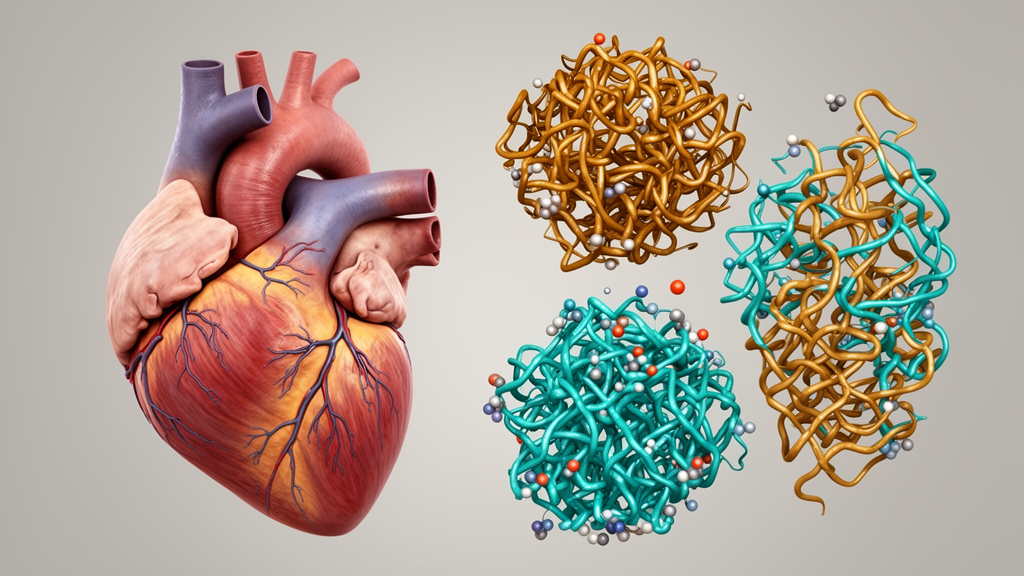
Transthyretin amyloid cardiomyopathy, or ATTR-CM, is a progressive and life-threatening disease caused by misfolded transthyretin protein depositing as amyloid fibrils in the heart muscle. It arises either from age-associated accumulation of the normal wild-type protein or from pathogenic variants in the TTR gene. Untreated, the prognosis is poor, but early diagnosis and treatment can improve outcomes. Tafamidis, the first disease-modifying therapy approved for the condition and still the only oral TTR kinetic stabilizer taken once daily, significantly reduced all-cause mortality and cardiovascular-related hospitalizations after 30 months compared with placebo in the pivotal phase 3 ATTR-ACT trial, and it is now approved in more than 50 countries.
Because ATTR-CM, particularly the wild-type form, predominantly affects older adults, questions about treatment in advanced age are central to everyday care. Underdiagnosis and undertreatment of older patients are common, and evidence suggests treatment uptake is lower among older than younger patients, raising concern for age-related treatment bias. Previous post hoc analyses of ATTR-ACT and its long-term extension showed benefits of tafamidis in patients aged 80 and older, including smaller declines in quality of life and functional capacity and smaller increases in NT-proBNP. Yet whether chronological age by itself should influence access to therapy remained unresolved.
To address this, researchers pooled data from two sources: an early access cohort that provided tafamidis to patients before commercial availability, and the Transthyretin Amyloidosis Outcomes Survey, or THAOS, a global observational registry that ran for 16 years and represents the longest and largest TTR amyloidosis registry to date. Patients from THAOS were included if they enrolled between 2019 and 2023, had a predominantly cardiac or mixed phenotype, and received only the approved tafamidis dose of 61 mg free acid or bioequivalent 80 mg meglumine. The analysis compared outcomes across three age groups: 1,188 patients younger than 80, 505 aged 80 to 85, and 231 older than 85. Mean ages at enrollment were 72.3, 82.1, and 88.0 years, respectively, and the large majority of patients in every group were men.
The baseline data revealed a striking gradient of clinical vulnerability with advancing age. Patients older than 85 had a lower mean estimated glomerular filtration rate than the other groups—39.7 versus 49.8 and 64.1 mL/min/1.73 m²—and a lower modified body mass index, a nutrition-adjusted measure used as a proxy for malnutrition risk, at 1047.1 versus 1084.0 and 1134.3 kg g/(m² L). A higher proportion of the oldest group was in New York Heart Association class IV, the most severe symptom category, at 3.3 percent compared with 0.8 and 0.9 percent, and a higher share was at National Amyloidosis Center stage III. Nearly all patients older than 85, 97.4 percent, had the wild-type genotype, and a larger fraction had a mixed cardiac and neurologic phenotype. Concomitant heart failure medication use before tafamidis initiation was reported in 62.3 percent of the oldest group versus 76.6 percent of the two younger groups.
Survival did decline with age, but the pattern tracked disease severity. Overall, 378 patients died during follow-up, and all-cause mortality occurred in 15.9, 23.4, and 30.7 percent of the three age groups. Kaplan–Meier estimated survival rates were 77.0, 66.2, and 56.3 percent at 30 months and 70.9, 57.2, and 42.9 percent at 42 months for patients younger than 80, aged 80 to 85, and older than 85, respectively. Median survival was not reached in the youngest group but was 47.4 months in the 80-to-85 group and 38.6 months in the oldest. In a Cox proportional hazards model adjusted for age, sex, TTR genotype, phenotype, NYHA class, and kidney function, patients older than 85 had a 49 percent higher risk of all-cause mortality than those younger than 80, with a hazard ratio of 1.49 and a 95 percent confidence interval of 1.11 to 2.01. No significant difference emerged between adjacent age groups.
Hospitalization outcomes told a different story. Cardiovascular-related hospitalizations occurred in 23.0, 23.0, and 24.2 percent of patients across the three groups, with total annual rates of 0.59, 0.65, and 0.79, and there were no significant differences in the risk of first or recurrent cardiovascular hospitalization across age groups. The composite endpoint of all-cause mortality or cardiovascular hospitalization, observed in 31.3, 38.2, and 42.9 percent of patients, likewise showed no significant differences across age groups. Across all ages, male participants had a 51 percent lower risk of all-cause mortality than female participants.
The most consequential findings came from exploratory subgroup analyses. Among patients with preserved nutritional status, defined as a modified body mass index of at least 1000 kg g/(m² L), or with milder NYHA class I/II symptoms, survival at 30 and 42 months in patients aged 80 to 85 was similar to that of patients younger than 80. A similar pattern appeared at 30 months among patients with kidney function of at least 45 mL/min/1.73 m². By contrast, in clinically vulnerable patients—those with NYHA class III symptoms or reduced kidney function—survival was numerically lower across all age groups, with no significant differences by age, suggesting that advanced clinical vulnerability can outweigh chronological age as a prognostic determinant. Survival differences by age were most evident among men, patients with wild-type disease, and those with a predominantly cardiac phenotype. In patients with low modified body mass index below 1000, survival was significantly lower in the older groups, with the largest absolute reduction seen among those aged 80 to 85.
Tolerability was broadly comparable across ages. In the early access cohort, treatment-emergent adverse events occurred in 87.1, 87.9, and 90.2 percent of the three age groups, and serious or severe events were numerically more frequent in the oldest patients, yet discontinuation of the drug due to adverse events remained infrequent at 0.4, 0.3, and 3.1 percent. In THAOS, no consistent age-related increase in adverse events was observed, and temporary or permanent discontinuation due to adverse events was uncommon at 3.4, 2.6, and 4.4 percent.
The authors are careful about what the study can and cannot show. Because the observational design included only patients selected for treatment, with no untreated comparator, it cannot assess treatment effectiveness, and the findings should be read as descriptive associations rather than evidence of treatment benefit or equivalence across age groups. Selection by treating physicians may have biased the oldest group, follow-up was relatively short at 1.6, 1.5, and 1.2 years, and data on frailty, disability, cognition, and other geriatric domains were not systematically collected. Cause-specific mortality was unavailable, so non-cardiovascular competing risks such as infection and malignancy could not be directly quantified, though the authors suggest such risks may partly explain the higher overall mortality in the oldest group despite similar hospitalization risks. Even so, the central message stands: outcomes in older patients treated with tafamidis were driven more by clinical phenotype than chronological age, and treatment decisions are best guided by multidimensional assessment of disease stage, renal function, nutrition, symptom burden, frailty, and patient goals rather than by a birth date.
Subject of Research: Real-world outcomes of tafamidis treatment in older patients with transthyretin amyloid cardiomyopathy
Article Title: Phenotypic Considerations for Tafamidis Use in a Real-World Cohort of Older Patients with Transthyretin Amyloid Cardiomyopathy
Article References: Fumagalli, C., Cappelli, F., Maurer, M. S., aus dem Siepen, F., Dispenzieri, A., Garcia-Pavia, P., Hanna, M., Carlsson, M., & Damy, T. (2026). Phenotypic Considerations for Tafamidis Use in a Real-World Cohort of Older Patients with Transthyretin Amyloid Cardiomyopathy. Cardiology and Therapy, 15(S1), 61-80. https://doi.org/10.1007/s40119-026-00474-4
Image Credits: AI Generated
DOI: 10.1007/s40119-026-00474-4
Keywords: transthyretin amyloid cardiomyopathy, tafamidis, ATTR-CM, older adults, THAOS registry, all-cause mortality, cardiovascular hospitalization, modified body mass index, NYHA class, geriatric assessment, real-world evidence, TTR kinetic stabilizer
News Source: Ophelia Keating. (October 29, 2026). Research report: Phenotypic Considerations for Tafamidis Use in a Real-World Cohort of Older Patients with Transthyretin Amyloid Cardiomyopathy. Scienmag.