• HOME
  • NEWS
  • EXPLORE
    • CAREER
      • Companies
      • Jobs
    • EVENTS
    • iGEM
      • News
      • Team
    • PHOTOS
    • VIDEO
    • WIKI
  • BLOG
  • COMMUNITY
    • FACEBOOK
    • INSTAGRAM
    • TWITTER
Friday, October 30, 2026
BIOENGINEER.ORG
No Result
View All Result
  • Login
  • HOME
  • NEWS
  • EXPLORE
    • CAREER
      • Companies
      • Jobs
        • Lecturer
        • PhD Studentship
        • Postdoc
        • Research Assistant
    • EVENTS
    • iGEM
      • News
      • Team
    • PHOTOS
    • VIDEO
    • WIKI
  • BLOG
  • COMMUNITY
    • FACEBOOK
    • INSTAGRAM
    • TWITTER
No Result
View All Result
Bioengineer.org
No Result
View All Result
Home NEWS Science News Biology

Circular RNA Shows Protective Signals in Mouse and Cell Models of Sepsis-Linked Kidney Injury

by
October 28, 2026
in Biology
Reading Time: 2 mins read
0
Circular RNA Shows Protective Signals in Mouse and Cell Models of Sepsis-Linked Kidney Injury

Circular RNA Shows Protective Signals in Mouse and Cell Models of Sepsis-Linked Kidney Injury

Share on FacebookShare on TwitterShare on LinkedinShare on RedditShare on Telegram

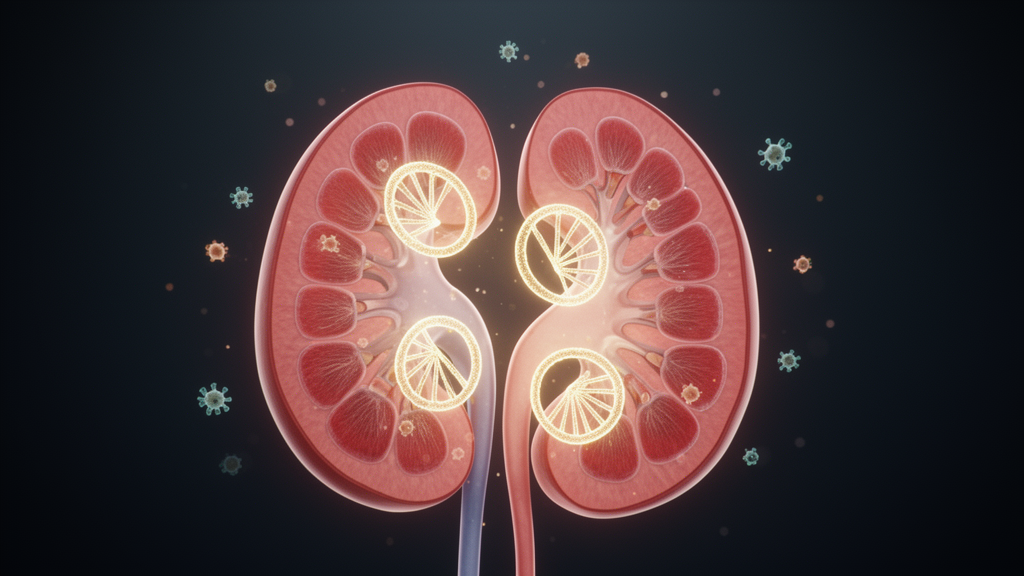
Sepsis-induced acute kidney injury (SAKI) is a frequent and life-threatening complication that currently lacks standardized therapeutic strategies. A new study in Biological Procedures Online reports that a circular RNA called circ_0000745, previously found to be significantly downregulated in the serum of septic patients, showed protective signals in experimental models of this condition through a regulatory pathway involving microRNA-671-5p and insulin-like growth factor binding protein 3 (IGFBP3).

The researchers established a cecal ligation and puncture (CLP) mouse model and a lipopolysaccharide (LPS)-stimulated HK-2 cell model of SAKI, complemented by serum samples from 15 patients with SAKI and 15 matched healthy controls. Circ_0000745 expression and localization were profiled by RT-qPCR and fluorescence in situ hybridization. The authors report that circ_0000745 expression was consistently suppressed in the clinical SAKI samples, the CLP-treated mice, and the LPS-stimulated cells.

When the researchers enforced expression of circ_0000745 in vivo, they observed improved renal histology and renal-function indices and reduced pro-inflammatory cytokine concentrations in kidney homogenates. In the cell model, circ_0000745 overexpression improved cell viability and attenuated apoptosis, as assessed using histology, TUNEL staining, flow cytometry, ELISA, CCK-8 assays, and Western blotting.

Mechanistically, the study indicates that circ_0000745 functioned as a competing endogenous RNA by sequestering miR-671-5p, thereby relieving post-transcriptional repression of IGFBP3. Interactions among circ_0000745, miR-671-5p, and IGFBP3 were validated by dual-luciferase reporter and RNA pull-down assays, and rescue experiments supported involvement of this regulatory axis. Manipulation of the axis also altered the autophagy-related markers Beclin1, LC3, and SQSTM1/p62 in a pattern the authors describe as compatible with increased autophagy-related activity during the early injury phase.

The authors are careful to note limitations. Because lysosomal-blockade experiments were not performed, the static markers do not establish increased autophagic flux. The results indicate that circ_0000745 attenuated measured renal and cellular injury endpoints in the experimental SAKI models through the miR-671-5p/IGFBP3 axis and was associated with favorable changes in static autophagy-related markers, but autophagic-flux assays and kidney-targeted models are required before direct renoprotective or autophagy-activating effects can be concluded.

Subject of Research: The role of the circular RNA circ_0000745 and the miR-671-5p/IGFBP3 axis in sepsis-induced acute kidney injury models

Article Title: Circ_0000745 Attenuates Sepsis-Induced Acute Kidney Injury Via the MiR‑671‑5p/IGFBP3 Axis, with Associated Changes in Autophagy-Related Markers

Article References: Wang, X., Wang, C., Wang, W., Li, H., Yao, Y., Gao, X., Peng, Y., Dong, H., Zhu, Z., & Kang, W. (2026). Circ_0000745 Attenuates Sepsis-Induced Acute Kidney Injury Via the MiR‑671‑5p/IGFBP3 Axis, with Associated Changes in Autophagy-Related Markers. Biological Procedures Online. https://doi.org/10.1186/s12575-026-00365-x

Image Credits: AI Generated

DOI: 10.1186/s12575-026-00365-x

Keywords: sepsis, acute kidney injury, circular RNA, circ_0000745, miR-671-5p, IGFBP3, autophagy markers, CLP mouse model, HK-2 cells, competing endogenous RNA, inflammation, apoptosis

News Source: Gregory Coleman. (October 28, 2026). Circular RNA Shows Protective Signals in Mouse and Cell Models of Sepsis-Linked Kidney Injury. Scienmag.

Tags: acute kidney injuryApoptosisautophagy markerscircular RNAcirc_0000745CLP mouse modelcompeting endogenous RNAHK-2 cellsIGFBP3inflammationmiR-671-5psepsis
Share12Tweet7Share2ShareShareShare1

Related Posts

Implanted heart monitors track baboon heart rates and rank-linked activity

Implanted heart monitors track baboon heart rates and rank-linked activity

October 30, 2026
Inflammatory stimulation reshapes microglial vesicle miRNA cargo and modestly alters recipient cells

Inflammatory stimulation reshapes microglial vesicle miRNA cargo and modestly alters recipient cells

October 30, 2026

Slovenia Rewrites Its Curriculum to Teach Evolution Earlier and More Completely

October 30, 2026

Ancestral genistein diet shifts quail body weight across three generations

October 30, 2026

POPULAR NEWS

  • Coronary calcium on lung scans may flag heart risk in pulmonary embolism patients

    Coronary calcium on lung scans may flag heart risk in pulmonary embolism patients

    29 shares
    Share 12 Tweet 7
  • Gold nanoparticles turn blue in the presence of milk fatty acids, pointing toward low-cost fat sensing

    29 shares
    Share 12 Tweet 7
  • Caper Flower Extract Shows Antioxidant and Vibrio-Killing Power in Lab Tests

    29 shares
    Share 12 Tweet 7
  • Cold agglutinin disease: rare anemia gets first approved drug as treatment map redrawn

    29 shares
    Share 12 Tweet 7

About

We bring you the latest biotechnology news from best research centers and universities around the world. Check our website.

Follow us

Recent News

Electric vehicle knowledge, attitude and practice may be one fused mindset, Indian survey suggests

Alisma-Derived Triterpenoid Eases Acute Lung Injury in Mice by Blocking IL-17A/NF-κB Signaling

Simulating the Microcirculation: How Models Reveal Hidden Blood Vessel Networks

Subscribe to Blog via Email

Enter your email address to subscribe to this blog and receive notifications of new posts by email.

Join 87 other subscribers
  • Contact Us

Bioengineer.org © Copyright 2023 All Rights Reserved.

Welcome Back!

Login to your account below

Forgotten Password?

Retrieve your password

Please enter your username or email address to reset your password.

Log In
No Result
View All Result
  • Homepages
    • Home Page 1
    • Home Page 2
  • News
  • National
  • Business
  • Health
  • Lifestyle
  • Science

Bioengineer.org © Copyright 2023 All Rights Reserved.