Many adults receiving HIV care in South Africa’s Western Cape Province are living with high blood pressure they do not know about, and even those who have been diagnosed are not eating or drinking in ways that protect their hearts, according to a cross-sectional study published in AIDS Research and Therapy.
Researchers assessed 742 adults attending primary health facilities for HIV care. The participants had a mean age of 38 years, 79.2 percent were female, and 93 percent were on antiretroviral treatment.
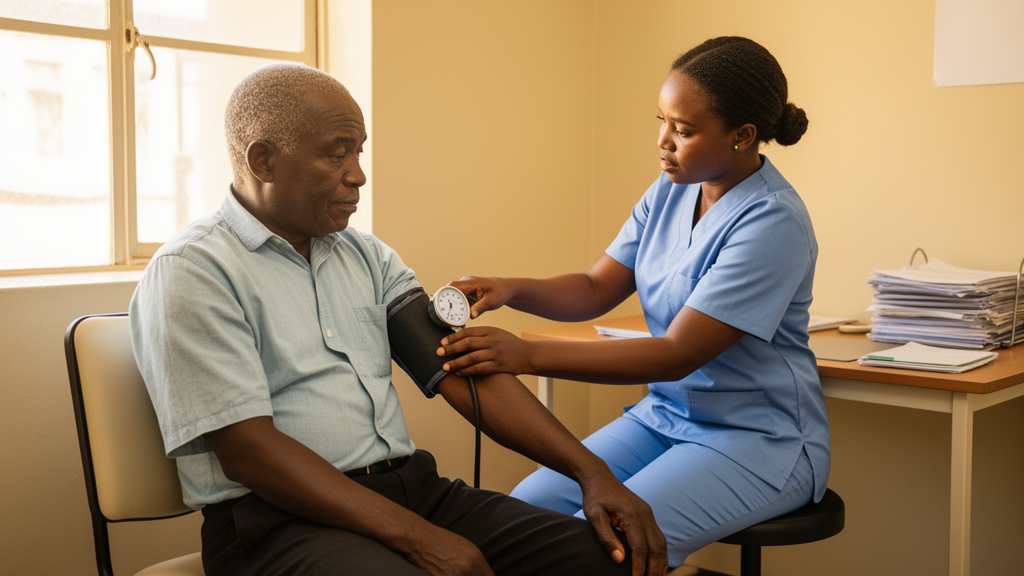
The results showed that 62 percent of participants had no hypertension, while 19 percent had newly diagnosed hypertension and another 19 percent had known hypertension. In other words, roughly one in three adults in this HIV care population had elevated blood pressure, and about half of those cases had gone undetected before the study measurement.
Dietary patterns were generally poor across all groups. About two-thirds of participants reported eating fruit or vegetables on four or more days per week, but very few consumed the recommended five or more servings of fruits and vegetables daily. This gap between frequency of consumption and actual quantity suggests that even regular fruit and vegetable intake fell short of guideline amounts.
Salt-related knowledge and behaviour diverged sharply among people with established hypertension. More than 90 percent of the known-hypertension group recognised that eating too much salt could cause serious health problems, yet 22 percent still added salt to their food before every or most meals. Awareness of the risk, in other words, had not translated into changed behaviour.
Compared with participants without hypertension, those with known hypertension were far less likely to eat five or more servings of fruits and vegetables daily, with an odds ratio of 0.01 (95 percent confidence interval 0.00 to 0.01, p < 0.001). This striking association indicates that a diagnosis alone was not accompanied by healthier eating.
Newly diagnosed hypertension showed a different pattern, one driven by alcohol. These participants were more likely than the no-hypertension group to report current alcohol use, with an odds ratio of 2.35 (95 percent confidence interval 1.53 to 3.60, p < 0.001), and more likely to report heavy alcohol use, with an odds ratio of 2.65 (95 percent confidence interval 1.40 to 5.20, p = 0.002). Because the data are cross-sectional, these associations cannot establish whether drinking raised blood pressure or whether elevated readings prompted different self-reports.
Receipt of health advice did differ by status. People with known hypertension reported receiving more general and dietary advice than those without hypertension, consistent with clinicians counselling diagnosed patients. Yet the study found that known hypertension was not associated with healthier lifestyle or dietary practices, meaning the extra counselling was not reflected in what participants actually ate or drank.
The authors conclude that dietary and lifestyle practices among people living with HIV were suboptimal regardless of hypertension status, and they call for tailored counselling that addresses barriers to healthy eating, alongside routine blood pressure screening within HIV care. As survival and life expectancy among people living with HIV improve, preventing and managing hypertension is becoming an integral part of HIV treatment, and this study suggests that screening and behaviourally effective support both need strengthening.
Subject of Research: Dietary and lifestyle behaviours and hypertension status among adults living with HIV in South Africa
Article Title: Dietary and lifestyle behaviours and health advice by hypertension status among people living with HIV in South Africa
Article References: Nguyen, K. A., Faber, M., Kengne, A. P., & Peer, N. (2026). Dietary and lifestyle behaviours and health advice by hypertension status among people living with HIV in South Africa. AIDS Research and Therapy. https://doi.org/10.1186/s12981-026-00974-2
Image Credits: AI Generated
DOI: 10.1186/s12981-026-00974-2
Keywords: hypertension, HIV, South Africa, diet, lifestyle, alcohol use, salt intake, cross-sectional study, Western Cape, HIV care, blood pressure screening, health advice
News Source: Daisy Hatcher. (October 28, 2026). High blood pressure often undiagnosed among South Africans living with HIV. Scienmag.