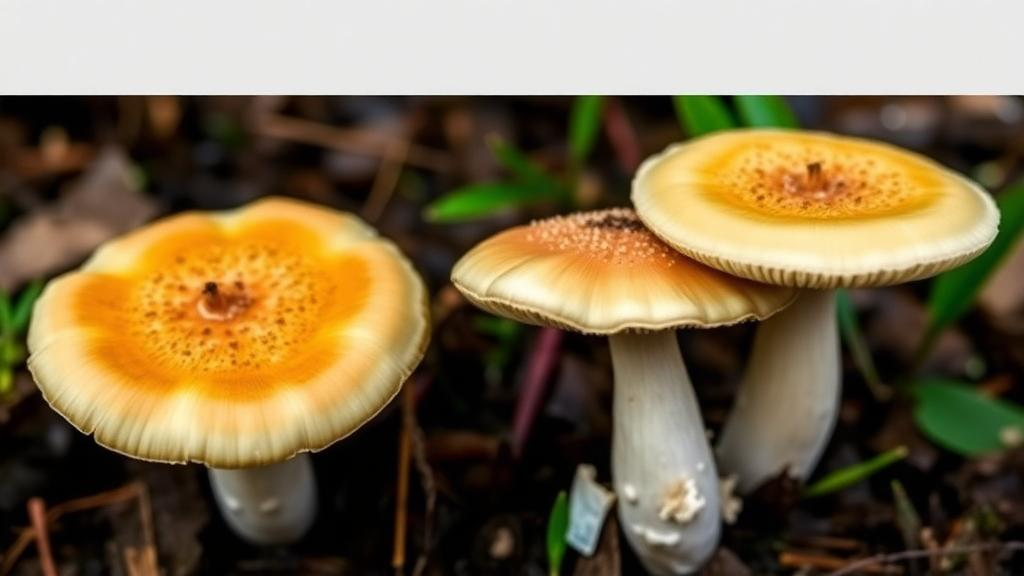
Two previously unknown species of waxcap mushrooms have been formally described from specimens collected in Anhui and Jiangxi provinces in southeastern China. The fungi, named Hygrocybe zhibaiensis and Hygrocybe longchuanensis, belong to the subgenus Hygrocybe within the family Hygrophoraceae, and their identification was established through a combination of detailed morphological study and DNA-based phylogenetic analysis.
Hygrocybe is a species-rich genus of macrofungi distributed across the world, from tropical to frigid regions. It was established in 1871 with Hygrocybe conica as its type species, and taxonomic databases currently list hundreds of species names: Fungal Names records 388 current species names for the genus, while Index Fungorum returns 771 results.
Ecologically, Hygrocybe species are intriguing in their own right. They typically grow in unimproved grasslands and are therefore considered ecological indicators. Their nutritional mode has long been debated: because they are commonly found in grasslands, they were historically considered saprotrophic fungi that live on decaying organic matter. However, isotope ratio mass spectrometry work by Griffith and colleagues revealed a distinctive carbon and nitrogen isotope pattern suggesting that Hygrocybe is not saprotrophic. Recent studies instead indicate that the genus is neither saprotrophic nor a typical ectomycorrhizal fungus, but rather a biotrophic endophyte, possibly forming mycorrhizal associations with plants.
According to the classification of Lodge and colleagues, Hygrocybe contains two subgenera: subgenus Hygrocybe and subgenus Pseudohygrocybe. Subgenus Hygrocybe is characterized by brightly colored pilei, most often red, orange, yellow, purple, or green, that become black with age or when bruised. The lamellae are free or narrowly attached, the lamellar trama is parallel with tapered ends usually exceeding 140 micrometers in length, and clamp connections are usually present in the context and hymenium unless the spores are ornamented with spines or the basidia are bisporic. Both of the newly described species were assessed against this framework.
The specimens behind the new species were collected in Anhui and Jiangxi provinces, with habitat photographs taken in the field and the growth environment, elevation, and geographic coordinates recorded at each site. The samples were dried at 46 to 48 degrees Celsius for 24 hours until completely dry and deposited in the Fungal Herbarium of Jiangxi Agricultural University. Macroscopic features were recorded from fresh samples, with colors described according to the Kornerup and Wanscher chart. For microscopic examination, the specimens were rehydrated in a 5 percent potassium hydroxide solution and stained with a 1 percent ammoniacal Congo red solution, and freehand sections were made using a stereomicroscope.
On the molecular side, DNA was extracted from the dried specimens using the CTAB method. The internal transcribed spacer (ITS) region was amplified with the primer pair ITS1/ITS4, and the large subunit ribosomal (LSU) region was amplified with LROR/LR5. The resulting sequences were compared against GenBank using BLASTn searches to identify closely related taxa, aligned with MAFFT version 7, and edited in BIOEDIT. Phylogenetic analyses were run with maximum likelihood, using RAxML-HPC with 1000 bootstrap replicates under the GTRGAMMA model, and with Bayesian posterior probability methods in MrBayes 3.2.7a, running six simultaneous Markov chains for 2 million generations and sampling trees every 1000th generation until the average standard deviation of split frequencies fell below 0.01. In total, 88 sequences were used for the ITS analysis and 54 for the LSU analysis.
The phylogenetic results gave each new species independent support, though from different loci. In the ITS analysis, Hygrocybe zhibaiensis formed an independent clade with high support, with maximum likelihood bootstrap of 100 percent and Bayesian posterior probability of 1, while the independent clade of H. longchuanensis received lower support, at 61 percent maximum likelihood and Bayesian posterior probability below 0.90. In the LSU analysis the pattern reversed: the independent clade of H. zhibaiensis had low support, below 60 percent maximum likelihood and below 0.90 Bayesian posterior probability, whereas H. longchuanensis formed an independent clade with high support, at 100 percent maximum likelihood and a Bayesian posterior probability of 1. BLAST searches of the holotype sequences reinforced the distinctness of both species. The closest match to the H. zhibaiensis holotype ITS sequence was an unidentified Hygrocybe sequence at 94.27 percent identity, and its closest LSU match was Hygrocybe aff. conica at 99.07 percent identity. For H. longchuanensis, the closest ITS match was an unidentified Hygrocybe at 96.23 percent identity and the closest LSU match was Hygrocybe aff. flavescens at 98.25 percent identity.
Hygrocybe zhibaiensis, whose name refers to its type locality of Zhibai Village in Jixi City, Anhui Province, is distinguished by a greenish pileus, a stipe that is bright yellow at the apex and gradually fades to white downwards, viscid surfaces on both pileus and stipe, and basidiomata that turn black upon bruising or with age. The pileus measures 9 to 42 millimeters across, is conical to parabolic when young and conic to campanulate when mature, and is bright yellowish green when fresh, turning grayish yellow to gray at the center and dark red or blackish green with age or when bruised, with distinct radial striations. The lamellae are free, cream yellow to white, and crowded, with 6 to 7 complete lamellae per centimeter. The stipe, 26 to 80 by 3 to 8 millimeters, shows distinct longitudinal striations and turns bluish green to dark blue when bruised. Microscopically, the basidiospores measure 6.3 to 8.4 by 8.3 to 10.6 micrometers, are ellipsoid to subglobose, some with a guttule, and inamyloid; the basidia are clavate with two sterigmata, and clamp connections were not observed. The species grows gregariously in mixed forests of bamboo and broad-leaved trees. The authors place it in subsection Hygrocybe based on its conical to campanulate pileus, free lamellae, and parallel hymenophoral trama hyphae. It differs from H. conica, which has a reddish orange pileus, a yellow stipe, and larger spores with a higher Q value, and from relatives such as H. griseonigricans, H. atrosquamosa, and H. astatogala in its bright yellowish green, glutinous pileus that turns dark red or blackish green.
Hygrocybe longchuanensis, named for Longchuan Village in Jixi City, is characterized by a bright red pileus at the center with an orange-yellow margin, a viscid surface, and an orange-yellow to yellow stipe, along with ellipsoid to subglobose basidiospores and no clamp connections. Its pileus measures 11 to 37 millimeters in diameter, is hemispherical, broadly convex to applanate, and does not change color when bruised. The lamellae are sinuate, cream yellow to cream white, and subdistant, and the stipe, 23 to 32 by 4 to 6 millimeters, is cylindrical, brittle, hollow, and glutinous when moist. The basidiospores measure 4.9 to 6.6 by 6.3 to 9.0 micrometers with an average length-to-width ratio of 1.3, and the pileipellis is an ixocutis with parallel hyphae. These features, together with its phylogenetic placement grouping with H. chlorophana, place the species in section Chlorophanae. It differs from H. chlorophana, which has an orange-yellow pileus with a concolorous margin and oblong to ellipsoid spores, and from H. flavescens, which has a yellow pileus and smaller spores. Notably, the collection localities of H. longchuanensis lie more than 600 kilometers apart, spanning both Anhui and Jiangxi provinces, which the authors interpret as evidence that this is a widely distributed species in southeastern China. The two specimens of H. zhibaiensis, meanwhile, were collected on opposite sides of a mountain range more than 10 kilometers apart within Jixi City, suggesting that species too is widely distributed locally.
The authors argue that these discoveries point to many widely distributed but still undiscovered Hygrocybe species in southeastern China. Dozens of articles reporting new Hygrocybe species from China have been published in recent years, a pattern the study attributes to the genus’s considerable regional variation, which has led most specimens to be commonly treated as European species, and to frequent misidentifications of species that closely resemble Hygrophorus in morphology. Testing how broadly the new species extend across the region, the authors note, will require more time and further in-depth field study.
Subject of Research: Taxonomic description of two new Hygrocybe mushroom species from southeastern China based on morphology and DNA phylogenetics
Article Title: Two new species of Hygrocybe subg. Hygrocybe ( Hygrophoraceae , Agaricales ) from southeast China
Article References: Xu, D.-Y., Hu, X.-C., Wu, X., Liu, J., Zhou, J.-P., Chen, M.-H., Zhai, Z.-J., Huang, J.-E., Liu, C.-W., Song, H.-Y., & Hu, D.-M. (2026). Two new species of Hygrocybe subg. Hygrocybe (Hygrophoraceae, Agaricales) from southeast China. MycoKeys, 142, 103-118. https://doi.org/10.3897/mycokeys.142.209944
Image Credits: AI Generated
DOI: 10.3897/mycokeys.142.209944
Keywords: Hygrocybe, waxcap mushrooms, new species, taxonomy, phylogenetics, ITS, LSU, China, Anhui, Jiangxi, Hygrophoraceae, Agaricales
News Source: Drew Townsend. (October 28, 2026). Two New Waxcap Mushrooms Discovered in Southeast China. Scienmag.