• HOME
  • NEWS
  • EXPLORE
    • CAREER
      • Companies
      • Jobs
    • EVENTS
    • iGEM
      • News
      • Team
    • PHOTOS
    • VIDEO
    • WIKI
  • BLOG
  • COMMUNITY
    • FACEBOOK
    • INSTAGRAM
    • TWITTER
Thursday, October 29, 2026
BIOENGINEER.ORG
No Result
View All Result
  • Login
  • HOME
  • NEWS
  • EXPLORE
    • CAREER
      • Companies
      • Jobs
        • Lecturer
        • PhD Studentship
        • Postdoc
        • Research Assistant
    • EVENTS
    • iGEM
      • News
      • Team
    • PHOTOS
    • VIDEO
    • WIKI
  • BLOG
  • COMMUNITY
    • FACEBOOK
    • INSTAGRAM
    • TWITTER
No Result
View All Result
Bioengineer.org
No Result
View All Result
Home NEWS Science News Health

Older Mothers Show Higher Risk of Persistent Isolated Hypothyroxinemia in Pregnancy

by
October 28, 2026
in Health
Reading Time: 2 mins read
0
Older Mothers Show Higher Risk of Persistent Isolated Hypothyroxinemia in Pregnancy

Older Mothers Show Higher Risk of Persistent Isolated Hypothyroxinemia in Pregnancy

Share on FacebookShare on TwitterShare on LinkedinShare on RedditShare on Telegram

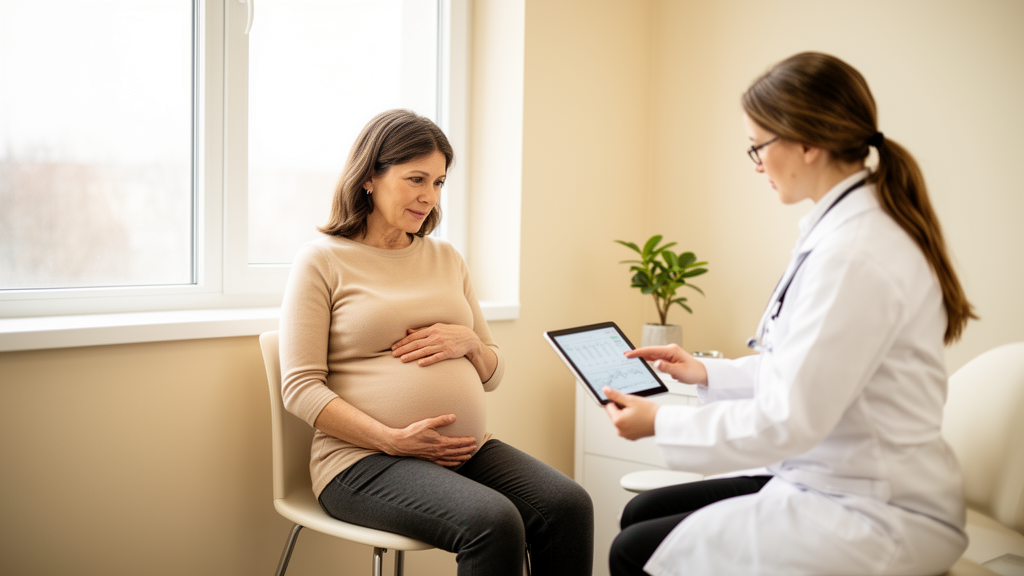
Older pregnant women are more likely to develop a persistent form of isolated hypothyroxinemia, according to a retrospective cohort study of 43,545 women with singleton pregnancies conducted at a hospital affiliated with Shanghai Jiao Tong University School of Medicine.

The study, published in Frontiers in Aging, set out to examine how maternal age relates to thyroid function in both early and late pregnancy, and to the way thyroid hormone levels change between these two stages. The researchers measured serum free thyroxine (FT4) and thyroid-stimulating hormone (TSH) in early and late pregnancy, along with the changes between the two measurements, and then analyzed how these values varied with the age of the mother.

Statistical modeling revealed a clear pattern. Maternal age showed significantly stronger negative associations with FT4 levels and with changes in FT4 than with TSH. In other words, as age increased, free thyroxine levels tended to fall more markedly, while TSH was comparatively less affected. The team used linear regression, restricted cubic splines, and piecewise linear regression to capture both linear trends and potential threshold effects in these relationships.

The association between age and isolated hypothyroxinemia followed a dose–response pattern: the older the mother, the higher the risk of the condition.

When the persistent pattern was examined by age group, the differences were substantial. Compared with women aged 18 to 24 years, those aged 35 to 39 years had roughly 1.89 times higher odds of persistent isolated hypothyroxinemia, and women aged 40 to 49 years had about 3.01 times higher odds, based on ordinal logistic regression models.

The study also connected these thyroid patterns to pregnancy outcomes. Risks of preeclampsia, macrosomia, and low birth weight increased progressively as women moved from the transient to the persistent pattern of isolated hypothyroxinemia, with all trend tests reaching statistical significance at P < 0.01. The authors note that persistent isolated hypothyroxinemia was linked to a broader range of adverse pregnancy outcomes than the transient form.

The researchers conclude that maternal age is an important factor influencing FT4 during pregnancy, and that increasing age is associated with a higher likelihood of persistent isolated hypothyroxinemia. Because the study is retrospective and observational, the findings describe associations rather than proven causal effects, and the cohort consisted of women with singleton pregnancies at a single Chinese hospital, which may limit how broadly the results apply to other populations.

Subject of Research: The association between maternal age, thyroid hormone levels during pregnancy, and patterns of isolated hypothyroxinemia.

Article Title: Maternal age-related thyroid changes during pregnancy: implications for isolated hypothyroxinemia patterns

Article References: Wang, S., Zhang, Y., Zhu, A., & Meng, Y. (2026). Maternal age-related thyroid changes during pregnancy: implications for isolated hypothyroxinemia patterns. Frontiers in Aging, 7, Article 1887671. https://doi.org/10.3389/fragi.2026.1887671

Image Credits: AI Generated

DOI: 10.3389/fragi.2026.1887671

Keywords: maternal age, pregnancy, thyroid function, free thyroxine, isolated hypothyroxinemia, TSH, preeclampsia, low birth weight, macrosomia, retrospective cohort study, FT4, adverse pregnancy outcomes

News Source: Harold Sullivan. (October 28, 2026). Older Mothers Show Higher Risk of Persistent Isolated Hypothyroxinemia in Pregnancy. Scienmag.


Tags: adverse pregnancy outcomesfree thyroxineFT4isolated hypothyroxinemialow birth weightmacrosomiamaternal agepreeclampsiaPregnancyretrospective cohort studythyroid functionTSH
Share12Tweet7Share2ShareShareShare1

Related Posts

Omega-3 Before Heat Stroke Shifts Postmortem Enzyme Patterns in Rats

Omega-3 Before Heat Stroke Shifts Postmortem Enzyme Patterns in Rats

October 29, 2026
MRI Tractography Maps the Brain's Temporal Stem in Vivid Detail

MRI Tractography Maps the Brain’s Temporal Stem in Vivid Detail

October 29, 2026

Simulation study maps how reverse and anatomic shoulder implants load the joint differently

October 29, 2026

Stem Cells from Placenta Show Promise for Healing Wounds and Aging Skin

October 29, 2026

POPULAR NEWS

  • Post-meal blood signatures reveal early metabolic stress in syndrome

    Post-meal blood signatures reveal early metabolic stress in syndrome

    29 shares
    Share 12 Tweet 7
  • AI Spots Dangerous Aggregate Clumps in Fresh Dam Concrete Before Vibration

    29 shares
    Share 12 Tweet 7
  • EEG Microstates Reveal Opposing Prefrontal and Posterior Brain Dynamics in Disorders of Consciousness

    29 shares
    Share 12 Tweet 7
  • Research report: Time-dependent diffusion MRI versus conventional DWI for dual-parameter assessment of non-enhancing gliomas: IDH mutation and Ki-67 labeling index

    29 shares
    Share 12 Tweet 7

About

We bring you the latest biotechnology news from best research centers and universities around the world. Check our website.

Follow us

Recent News

Omega-3 Before Heat Stroke Shifts Postmortem Enzyme Patterns in Rats

Fenced-off deer reveal how browsing reshapes forest floor plant traits

MRI Tractography Maps the Brain’s Temporal Stem in Vivid Detail

Subscribe to Blog via Email

Enter your email address to subscribe to this blog and receive notifications of new posts by email.

Join 85 other subscribers
  • Contact Us

Bioengineer.org © Copyright 2023 All Rights Reserved.

Welcome Back!

Login to your account below

Forgotten Password?

Retrieve your password

Please enter your username or email address to reset your password.

Log In
No Result
View All Result
  • Homepages
    • Home Page 1
    • Home Page 2
  • News
  • National
  • Business
  • Health
  • Lifestyle
  • Science

Bioengineer.org © Copyright 2023 All Rights Reserved.