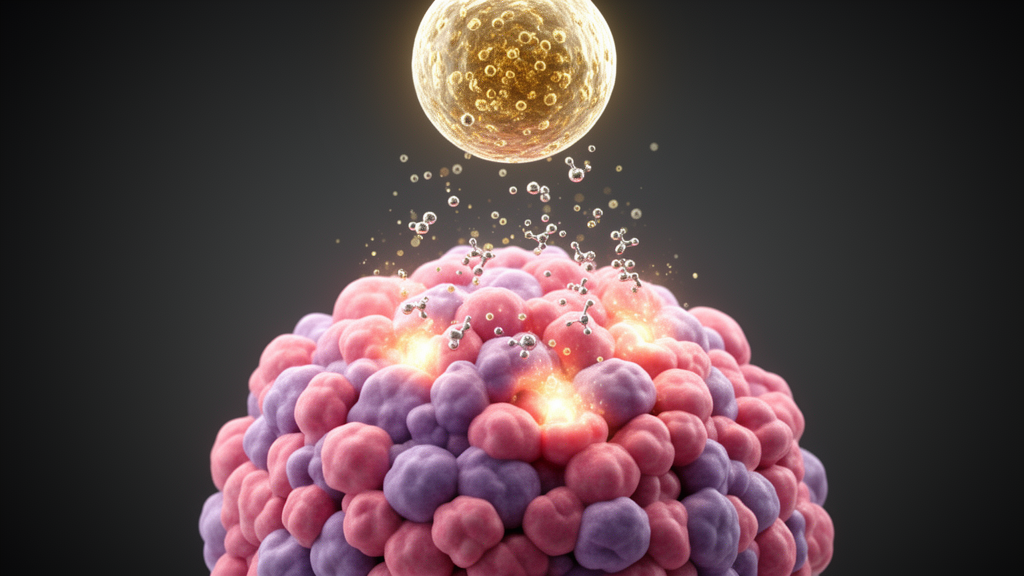
Researchers report that a novel platinum(IV) anticancer compound encapsulated in mesoporous silica nanoparticles killed oral squamous cell carcinoma cells more effectively than cisplatin, including in patient-derived models that tolerate standard cisplatin treatment. The study, published in Cancer Nanotechnology, compared the nanoparticle-delivered Pt(IV) prodrug directly against free cisplatin in both two-dimensional and three-dimensional laboratory models built from primary patient tumors.
According to the abstract, octahedral Pt(IV)-based compounds are chemically inert and remain intact until they are internalized within cells, an approach that has shown higher tolerability and selectivity towards cancer cells than Pt(II)-based analogs such as cisplatin.
The results showed a significant improvement in cytotoxic efficacy for Pt(IV)-cov@MSNs in both cisplatin-responsive and cisplatin-tolerant patient-derived OSCC models. The authors also report that the nanoparticle formulation elicited P53-dependent apoptotic cell death that was superior to that obtained with cisplatin treatment in the OSCC models.
The clinical context is significant: advanced oral squamous cell carcinoma patients with cisplatin-refractory tumors face a poor prognosis and limited therapeutic options, and cisplatin-based systemic chemotherapy has long been the gold standard despite producing often unmanageable adverse side effects and toxicity. The authors position their findings as highlighting three-dimensional primary patient-derived models as key tools for drug and nanocarrier testing, as well as pointing towards targeted and selective delivery strategies for novel chemotherapeutic agents.
As an in vitro study using laboratory models rather than patients, the findings do not establish clinical efficacy or safety in humans, and the reported improvements in cell killing and apoptosis will require further evaluation before any translation into treatment.
Subject of Research: Nanoparticle-mediated delivery of a Pt(IV) prodrug for treating cisplatin-tolerant oral squamous cell carcinoma in patient-derived 3D models
Article Title: Enhanced cytotoxicity in cisplatin-tolerant oral squamous cell carcinoma 3D models through nanoparticle-mediated Pt(IV) drug delivery
Article References: Griso-Acevedo, A. B., Navas, F., Berca, C., Madrid-Cardenas, E., Calvo, N., Morales, V., Castelo, B., Martín-Moro, J. G., Soto, M. J. M., Sanz, R., Cebrián-Carretero, J. L., García-Muñoz, R. A., & Sastre-Perona, A. (2026). Enhanced cytotoxicity in cisplatin-tolerant oral squamous cell carcinoma 3D models through nanoparticle-mediated Pt(IV) drug delivery. Cancer Nanotechnology. https://doi.org/10.1186/s12645-026-00435-5
Image Credits: AI Generated
DOI: 10.1186/s12645-026-00435-5
Keywords: oral squamous cell carcinoma, cisplatin tolerance, platinum(IV) prodrug, mesoporous silica nanoparticles, drug delivery, 3D tumor models, patient-derived models, apoptosis, P53, chemotherapy, Cancer Nanotechnology, nanomedicine
News Source: Nathaniel Bowman. (October 28, 2026). Nanoparticle-delivered Pt(IV) prodrug shows boosted killing of cisplatin-tolerant oral cancer cells in 3D models. Scienmag.