• HOME
  • NEWS
  • EXPLORE
    • CAREER
      • Companies
      • Jobs
    • EVENTS
    • iGEM
      • News
      • Team
    • PHOTOS
    • VIDEO
    • WIKI
  • BLOG
  • COMMUNITY
    • FACEBOOK
    • INSTAGRAM
    • TWITTER
Wednesday, October 28, 2026
BIOENGINEER.ORG
No Result
View All Result
  • Login
  • HOME
  • NEWS
  • EXPLORE
    • CAREER
      • Companies
      • Jobs
        • Lecturer
        • PhD Studentship
        • Postdoc
        • Research Assistant
    • EVENTS
    • iGEM
      • News
      • Team
    • PHOTOS
    • VIDEO
    • WIKI
  • BLOG
  • COMMUNITY
    • FACEBOOK
    • INSTAGRAM
    • TWITTER
No Result
View All Result
Bioengineer.org
No Result
View All Result
Home NEWS Science News Health

Phase-Separating Condensates Emerge as Drivers of Glioblastoma Progression and Drug Resistance

by
October 28, 2026
in Health
Reading Time: 2 mins read
0
Phase-Separating Condensates Emerge as Drivers of Glioblastoma Progression and Drug Resistance

Phase-Separating Condensates Emerge as Drivers of Glioblastoma Progression and Drug Resistance

Share on FacebookShare on TwitterShare on LinkedinShare on RedditShare on Telegram

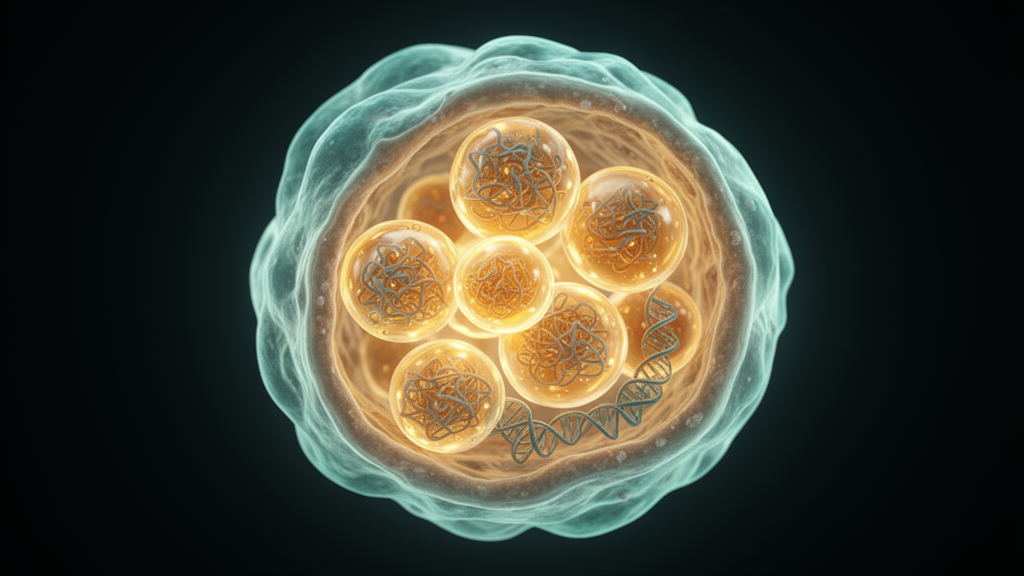
The authors, led by Shenghao Man, Xuebo Liu, Di Wang, and Qi Yu, synthesize existing research on how aberrant condensate formation reshapes gene regulatory networks in glioma cells.

According to the review, dysregulated expression and post-translational modifications of phase-separating proteins can promote oncogenic transcription at super-enhancers, dense clusters of regulatory elements that drive tumor-promoting gene expression programs. The authors also describe how condensates such as stress granules and P-bodies alter post-transcriptional mRNA metabolism, potentially changing which proteins glioma cells produce and how they respond to treatment.

The review identifies several established and proposed drivers of pathological condensation. These include intrinsically disordered protein regions and multivalent interactions involving the transcriptional co-activators YAP/TAZ, the stemness factor SOX2, and the fatty acid-binding protein FABP5. It also highlights the condensate-associated long noncoding RNAs NEAT1 and MALAT1, as well as crosstalk among phosphorylation, methylation, acetylation, and ubiquitination, chemical modifications that collectively modulate the formation and dynamics of condensates within tumor cells.

Beyond transcriptional control, the authors propose that phase separation may integrate major cancer signaling pathways, including Wnt/β-catenin, MAPK/ERK, PI3K-AKT-mTOR, and cGAS-STING, into signaling hubs. Such hubs, they suggest, could sustain glioma stem cell phenotypes and support microenvironmental adaptation, helping tumors survive hostile conditions and therapeutic pressure.

A substantial portion of the review is devoted to emerging therapeutic strategies that target pathological condensates. These include small-molecule inhibitors designed to disrupt harmful condensate formation, interventions directed at specific post-translational modifications, and nanocarrier systems that exploit condensate properties for selective drug delivery to tumor cells.

The authors frame the work as a conceptual framework for understanding tumor heterogeneity and treatment failure in glioblastoma, while identifying potential therapeutic vulnerabilities that future research could pursue. As a review article, it synthesizes and interprets existing literature rather than presenting new experimental data, and many of the mechanisms it describes, particularly the proposed signaling hubs and therapeutic approaches, remain hypotheses or early-stage findings that will require direct experimental validation in glioma models and, ultimately, clinical studies.

Subject of Research: The role of liquid-liquid phase separation and biomolecular condensates in glioblastoma progression and therapy resistance

Article Title: Pathological condensates in glioblastoma: phase separation drives progression and resistance

Article References: Man, S., Liu, X., Wang, D., & Yu, Q. (2026). Pathological condensates in glioblastoma: phase separation drives progression and resistance. Acta Neuropathologica Communications. https://doi.org/10.1186/s40478-026-02469-7

Image Credits: AI Generated

DOI: 10.1186/s40478-026-02469-7

Keywords: glioblastoma, liquid-liquid phase separation, biomolecular condensates, super-enhancers, stress granules, NEAT1, MALAT1, YAP/TAZ, SOX2, post-translational modifications, therapy resistance, glioma stem cells

News Source: Kristina Jarvis. (October 28, 2026). Phase-Separating Condensates Emerge as Drivers of Glioblastoma Progression and Drug Resistance. Scienmag.


Tags: Biomolecular condensatesGlioblastomaglioma stem cellsliquid-liquid phase separationMALAT1NEAT1post-translational modificationsSOX2stress granulessuper-enhancerstherapy resistanceYAP/TAZ
Share12Tweet7Share2ShareShareShare1

Related Posts

What Women Really Think About Overactive Bladder Treatments: A Qualitative Meta-Synthesis

What Women Really Think About Overactive Bladder Treatments: A Qualitative Meta-Synthesis

October 28, 2026
Antibiotic Spectrum, Not Dose or Duration, Drives ICU Carbapenem Resistance Risk

Antibiotic Spectrum, Not Dose or Duration, Drives ICU Carbapenem Resistance Risk

October 28, 2026

Genetic Study Links Specific Blood Lipids to Pre-eclampsia and Eclampsia Risk

October 28, 2026

Personality functioning severity tracks mentalizing and memory problems in BPD

October 28, 2026

POPULAR NEWS

  • Engineered Probiotic Co-Culture Eases Antibiotic-Linked Diarrhea in Mice

    Engineered Probiotic Co-Culture Eases Antibiotic-Linked Diarrhea in Mice

    29 shares
    Share 12 Tweet 7
  • Lessons from a global effort to center lived experience in climate and mental health research

    29 shares
    Share 12 Tweet 7
  • Vegetarian diet does not offset ABCG2 gene variant’s hyperuricemia risk in Taiwanese cohort

    29 shares
    Share 12 Tweet 7
  • Short-Term CD8+ T Cell Depletion Alters Tau Pathology in Aged Alzheimer’s Model Mice

    29 shares
    Share 12 Tweet 7

About

We bring you the latest biotechnology news from best research centers and universities around the world. Check our website.

Follow us

Recent News

What Women Really Think About Overactive Bladder Treatments: A Qualitative Meta-Synthesis

Rice’s Green Revolution traced to two key genes from a Taiwanese landrace

Antibiotic Spectrum, Not Dose or Duration, Drives ICU Carbapenem Resistance Risk

Subscribe to Blog via Email

Enter your email address to subscribe to this blog and receive notifications of new posts by email.

Join 85 other subscribers
  • Contact Us

Bioengineer.org © Copyright 2023 All Rights Reserved.

Welcome Back!

Login to your account below

Forgotten Password?

Retrieve your password

Please enter your username or email address to reset your password.

Log In
No Result
View All Result
  • Homepages
    • Home Page 1
    • Home Page 2
  • News
  • National
  • Business
  • Health
  • Lifestyle
  • Science

Bioengineer.org © Copyright 2023 All Rights Reserved.