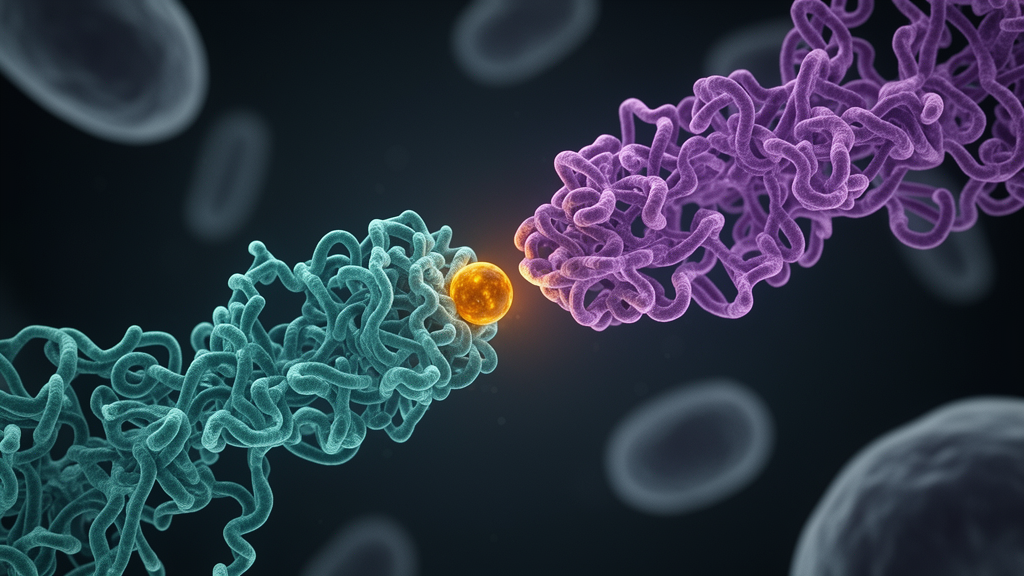
A single amino acid at position 53 of a nonstructural protein of porcine epidemic diarrhea virus (PEDV) helps the virus suppress a host antiviral factor and replicate more efficiently, according to a study published in the journal Animal Diseases. The finding, reported by a team of Chinese researchers, identifies the host protein DTX3L as a restriction factor against PEDV and shows that the virus actively drives down its expression, with alanine at position 53 of the viral nonstructural protein Nsp8 acting as a key determinant of that suppression.
PEDV causes porcine epidemic diarrhea, a highly contagious intestinal disease of swine. Infected piglets typically develop acute watery diarrhea, vomiting, dehydration, weight loss and high mortality, with newborn piglets particularly severely affected. The virus was first reported in Europe in the 1970s, and since 2010 variants belonging to the G2a, G2b and G2c subtypes have caused global outbreaks and substantial economic losses to the swine industry. The G2c variant is currently the predominant epidemic strain in China. PEDV is an enveloped virus with a single-stranded, positive-sense RNA genome of approximately 28 kilobases, encoding four structural proteins, one accessory protein and sixteen nonstructural proteins.
In the new study, the researchers first examined what happens to DTX3L, an interferon-stimulated gene that encodes a deltex E3 ubiquitin ligase, during PEDV infection. Using RT-qPCR, they measured DTX3L mRNA in the intestinal tissues of piglets infected with the recombinant PEDV strain rAH2012/12 and found significantly lower levels in the duodenum, jejunum and ileum compared with uninfected controls. Western blot analysis of infected Marc-145 cells confirmed that the virus reduced DTX3L protein levels at multiple time points after infection, indicating that the downregulation occurs both in vivo and in cultured cells.
To determine whether this reduction benefits the virus, the team knocked down DTX3L with small interfering RNAs in Marc-145 cells. When DTX3L was silenced, the amount of PEDV nucleocapsid protein increased and viral titers rose significantly, showing that removing DTX3L favors viral replication. The researchers then went further and generated a DTX3L knockout cell line using the CRISPR/Cas9 system, verifying the deletion by western blot and Sanger sequencing, which revealed a one-base insertion in the gene and absence of the protein. When these knockout cells and wild-type cells were infected with the G2b strain AH2012/12, the knockout cells were markedly more permissive, showing higher nucleocapsid protein levels, particularly at 12 hours post infection, and significantly greater viral loads at 12 and 18 hours. Immunofluorescence assay confirmed the increase in viral protein.
The pattern held across genetically distinct PEDV strains. The G1 strain JS2008 and the G2c strain CH-HK-2021 both replicated better in DTX3L knockout cells than in wild-type cells, as shown by western blot and viral titer assays. Taken together, the authors concluded that deletion of endogenous DTX3L promotes PEDV replication, positioning DTX3L as a potential host restriction factor against the virus.
Transcriptomic analysis of the knockout cells provided a mechanistic explanation. Differential expression analysis identified 1236 genes differing between knockout and wild-type cells, with 423 upregulated and 813 downregulated. Among the downregulated genes were interferon- and JAK/STAT signaling-related genes such as IRF7, TYK2 and PTPN22, and interferon-stimulated genes including IFIT1, SHFL and IFITM10. After stimulation with poly(I:C), a synthetic mimic of viral RNA, the knockout cells produced significantly lower levels of interferon transcripts and interferon-stimulated gene transcripts than wild-type cells, and showed reduced phosphorylation of the signaling kinases TBK1 and STAT1. Gene Ontology and KEGG enrichment analyses showed that the differentially expressed genes were also involved in processes such as system development, cell surface receptor signaling, the extracellular matrix, axon guidance and the Hippo signaling pathway, indicating that DTX3L modulates a broad range of cellular functions beyond antiviral immunity.
Having established that DTX3L restrains PEDV, the researchers asked which viral protein drives its suppression. Because Nsp8 is part of the viral replication-transcription complex and has previously been shown to antagonize type III interferon signaling, they tested its effect on DTX3L. Sequence alignment revealed that most PEDV strains carry an alanine at position 53 of Nsp8, but the G2b strain AH2012/12 and its high-passage derivative AH2012/12-P102, which had been passaged 102 times, carry a valine at that site. In transfection experiments in Marc-145 cells stimulated with poly(I:C), both Nsp8 variants downregulated DTX3L expression, but the alanine-53 version exerted a stronger effect than the valine-53 version. Comparison with other alphacoronaviruses showed that position 53 is predominantly alanine across these viruses, with occasional substitutions to leucine, valine, isoleucine or serine, suggesting the site is a hotspot of adaptive variation rather than an invariant residue.
To test the functional consequence of the residue directly, the team used a reverse genetics system to introduce a valine-to-alanine substitution at position 53 into the AH2012/12 genome, generating a recombinant virus designated rNsp8-V53A. Five rounds of passaging in Vero cells did not revert the substitution, and the recombinant produced cytopathic effects similar to those of the rescued parental virus, characterized by syncytium formation. In Vero cells the recombinant and parental viruses showed comparable growth kinetics, but in Marc-145 cells infected at a multiplicity of 0.1, the recombinant virus outperformed the parental strain: nucleocapsid protein levels were higher at 12 and 18 hours post infection, viral titers were markedly increased, and immunofluorescence revealed substantially more PEDV-positive cells. The recombinant virus also reduced DTX3L protein expression to a greater extent than the parental strain.
The decisive experiment compared the two viruses in wild-type and DTX3L knockout Marc-145 cells. In wild-type cells, rNsp8-V53A replicated significantly more efficiently than rAH2012/12, with its titer reaching 5.74-fold that of the parental virus. In DTX3L knockout cells the recombinant virus still replicated to higher levels, but the advantage shrank to a 2.38-fold difference in titer. This partial loss of the replication benefit when DTX3L is absent indicates that the alanine-53 residue promotes PEDV replication in a partially DTX3L-dependent manner: part of its effect operates through suppression of DTX3L, while other mechanisms remain to be identified.
The authors note that Nsp8 is emerging as a central player in PEDV immune evasion. Previous work has shown that it downregulates IFN-λ1 activity, targets the peroxisomal membrane protein PEX13 to impair MAVS-mediated type III interferon production, interacts with host lysozyme to facilitate replication, and binds heat shock protein HSPA1A to promote assembly of the replication-transcription complex. The precise molecular mechanism by which Nsp8 downregulates DTX3L remains unresolved, and the authors call for structural studies to determine how the valine-to-alanine substitution alters the conformation or binding behavior of Nsp8. They also emphasize that coronavirus evolution is not confined to the spike gene: mutations in nonstructural proteins have been shown to compensate for replication defects caused by spike mutations in SARS-CoV-2 Omicron JN.1, and nonstructural and accessory proteins of PEDV vary during clinical transmission and cell passaging. Because alanine at position 53 is carried by the vast majority of PEDV strains and is predominantly conserved across other alphacoronaviruses, the authors suggest that this residue may confer a selective advantage during natural infection, and they propose that the findings provide a theoretical basis for developing antiviral strategies against PEDV.
Subject of Research: How a single amino acid in PEDV nonstructural protein Nsp8 downregulates the host antiviral factor DTX3L to promote viral replication
Article Title: PEDV Nsp8 alanine-53 promotes viral replication in a partially DTX3L-dependent manner
Article References: Sun, M., Liu, S., Weng, L., Zhuang, K., Wang, J., Fan, Y., Guo, R., Fan, B., Zhou, J., & Li, B. (2026). PEDV Nsp8 alanine-53 promotes viral replication in a partially DTX3L-dependent manner. Animal Diseases, 6(1), Article 58. https://doi.org/10.1186/s44149-026-00273-3
Image Credits: AI Generated
DOI: 10.1186/s44149-026-00273-3
Keywords: PEDV, Nsp8, DTX3L, interferon signaling, immune evasion, viral replication, reverse genetics, CRISPR knockout, porcine epidemic diarrhea virus, alphacoronavirus, nonstructural proteins, host-pathogen interaction
News Source: Kristina Jarvis. (October 28, 2026). Single amino acid in PEDV Nsp8 helps the virus evade a host antiviral factor. Scienmag.