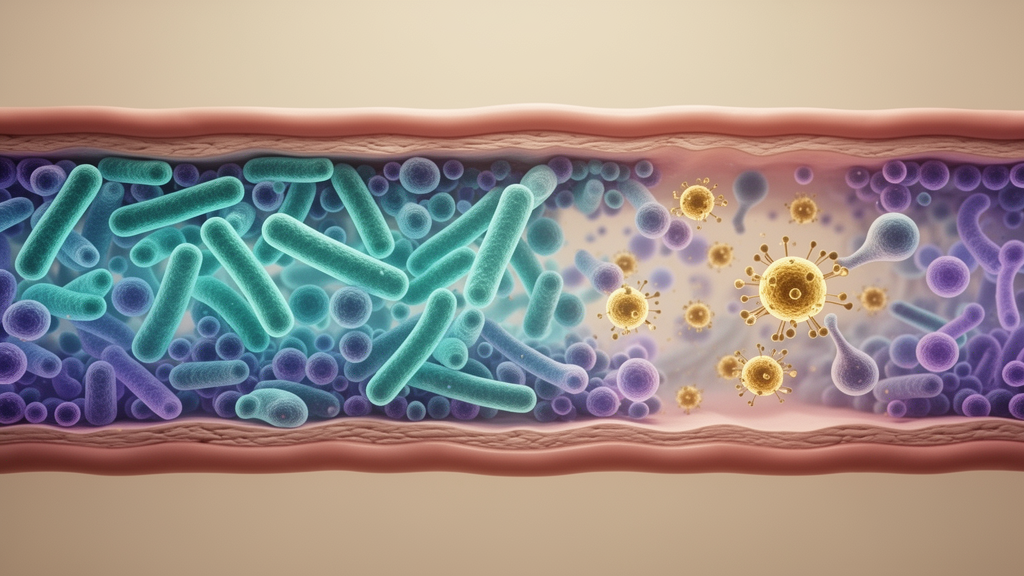
Messenger RNA vaccines transformed vaccinology with their rapid development and deployment, an advantage demonstrated most clearly during the COVID-19 pandemic. Yet people respond to these vaccines very differently, and a growing body of research points to an unexpected contributor: the trillions of microbes living in the gut. A new narrative review published in Discover Immunity brings together mechanistic and clinical evidence suggesting that the composition and metabolic activity of the gut microbiota can modulate the pharmacodynamics of mRNA vaccines, shaping antibody titers, T-cell activation, and possibly the durability of protection. The authors argue that this emerging field, known as pharmacomicrobiomics, could eventually inform microbiome-informed immunization strategies, although they caution that the evidence base remains largely observational.
The review frames mRNA vaccines as biological compounds subject to microbial modulation, extending pharmacomicrobiomics, a discipline traditionally concerned with how gut microbes influence drug metabolism, pharmacokinetics, and pharmacodynamics, into vaccinology. mRNA vaccines deliver nucleoside-modified mRNA encapsulated in lipid nanoparticles into host cells, where the mRNA is translated into antigenic proteins. These antigens are presented through both major histocompatibility complex class I and class II pathways, activating cytotoxic CD8-positive T lymphocytes and helper CD4-positive T lymphocytes and thereby initiating cellular and humoral immune responses. The mRNA and lipid nanoparticle components also stimulate innate immune receptors, including Toll-like receptors TLR3 and TLR7/8 and the RNA sensor RIG-I, giving the vaccines an immunostimulatory profile without a separate adjuvant. A newer class of self-amplifying mRNA vaccines, which incorporate replicase sequences, is gaining attention because it can drive greater antigen production and stronger immune reactions at lower doses.
Among all available vaccine platforms, mRNA vaccines have achieved the widest public reach, yet immune responses vary widely between individuals. The review identifies age, sex, host genetics, comorbidities, environmental exposures, and especially the composition and function of the gut microbiota as contributors to this variance. The authors describe two main pharmacokinetic phases for mRNA vaccines: a pharmacologic phase, encompassing delivery to target tissue, cellular uptake, translation, and antigen presentation, and an immunological phase beginning with antigen presentation and the cascade of immunogenic processes. Most mRNA vaccines are given intramuscularly, and the mRNA can be considered a prodrug because it undergoes intracellular conversion into the active antigen. After injection, lipid nanoparticle-encapsulated mRNA remains partly at the injection site before spreading to plasma, draining lymph nodes, and other tissues, where white blood cells such as monocytes, dendritic cells, and neutrophils take up the vaccine. The authors note that pharmacokinetic and pharmacodynamic characterization in preclinical mRNA cancer vaccine research is not standard practice, and that these parameters remain largely underexplored.
A central mechanistic theme of the review concerns short-chain fatty acids, particularly butyrate, acetate, and propionate, which gut bacteria produce by fermenting dietary fiber. According to the evidence assembled, SCFAs promote B-cell differentiation, class-switch recombination, and antibody production, and support the development of regulatory T cells and T follicular helper cells through inhibition of histone deacetylase and G-protein coupled receptor signaling. The review reports that SCFAs improve B-cell metabolism and gene expression, facilitating the development of B cells into antibody-secreting plasma cells, and that dietary fiber deficiency or a compromised microbiota can hamper the generation of pathogen-specific antibodies, with SCFA supplementation restoring this immunological function in experimental settings. Butyrate in particular, owing to its roles in energy metabolism and immune cell histone acetylation, has been linked to increased immunogenicity in high-responder individuals after mRNA vaccination. The authors also emphasize the context-dependent nature of this cross-talk: SCFAs can have immunogenic roles in some settings and suppressive roles in others, and they have been shown to inhibit co-stimulatory molecule expression and reduce dendritic cell production of IL-6 and IL-12, potentially limiting antigen presentation and subsequent T-cell responses.
Beyond metabolites, structural microbial components act as natural adjuvants. Microbial-associated molecular patterns such as lipopolysaccharide, flagellin, and peptidoglycan can activate pattern recognition receptors including Toll-like receptors and NOD2, promoting antigen presentation, dendritic cell maturation, and cytokine production. The review cites animal work showing that mice lacking the flagellin receptor TLR5 have reduced antibody responses to influenza vaccines, a deficiency that can be corrected by restoring gut colonization with flagellated Escherichia coli. In germ-free mice, impaired antibody responses to intranasal vaccines were restored by NOD2 activation or colonization with NOD2-stimulating bacteria. The review also describes microbiota-driven education of T and B cells: commensals such as Roseburia increase IL-27, which improves post-vaccination Th1-mediated antiviral responses, while Clostridium species support regulatory T cells and segmented filamentous bacteria promote Th17 development. Cross-reactivity adds another layer, as commensals sharing epitopes with vaccine antigens can generate pre-existing cross-reactive T and B-cell memory; the review notes pre-existing antibodies derived from Streptococcus salivarius and Bacteroides in people never exposed to SARS-CoV-2, and reports that supplementation with Streptococcus salivarius improved COVID-19 vaccine responses by increasing mucosal IgG and IgA.
Observational studies in humans provide the most direct clinical evidence. In a 2022 study using shotgun metagenomic sequencing of stool samples from recipients of the Pfizer-BioNTech mRNA vaccine BNT162b2, Roseburia faecis, Eubacterium rectale, and Bifidobacterium adolescentis were abundant in individuals with stronger antibody responses and fewer adverse effects, whereas Bacteroides thetaiotaomicron, Bacteroides vulgatus, and Ruminococcus gnavus were more prevalent in those with weaker responses. The authors of that study proposed that fimbriae of E. rectale and flagella of R. faecis enhanced stimulation of neutralizing antibodies through Toll-like receptor pathways, and that participants harboring Megamonas species and Prevotella copri experienced fewer side effects. A 2024 study on longer-term immunogenicity found Clostridium leptum and Bifidobacterium pseudocatenulatum enriched among individuals producing stronger neutralizing antibody responses, with those individuals also enriched in metabolic pathways involving thiamine salvage, pyrimidine ribonucleotide biosynthesis, and folate transformation. In contrast, Haemophilus parainfluenzae, Bacteroides stercoris, and Streptococcus parasanguinis were more abundant in weaker responders. A 2025 study of 50 vaccinated healthcare workers, analyzed by 16S rRNA sequencing, found Odoribacter splanchnicus, Clostridiales, Clostridia, and Ruminococcaceae positively associated with anti-spike IgG levels, while Sutterella wadsworthensis and Hallella were negatively associated, and acetate-producing pathways and butyrate-producing bacteria were linked to higher titers.
Negative associations also feature prominently. One study found that the rhamnose/fucose degradation pathway of the gut microbiota was negatively correlated with BNT162b2 vaccine response, with greater pathway activity linked to poorer vaccine-induced T-cell responses through baseline expression of AP-1 transcription factors including ATF3, FOSB, and FOS, and the enzyme PTGS2; the genus Blautia, the dominant taxon encoding L-fucose mutarotase, was enriched among weaker T-cell responders. Greater baseline presence of Bacteroides has been related to lower IgG responses to mRNA vaccines, attributed to immunosuppressive LPS production, with the Clostridium innocuum group and Colidextribacter also negatively correlated. Evidence from non-mRNA vaccines reinforces the general principle: in a large human cohort study, 43 microbial species were associated with BCG immunogenicity, with Eggerthella lenta positively linked to BCG-specific T-cell memory responses and Roseburia negatively related to BCG-induced cytokine production. In Bangladeshi infants, abundant Bifidobacterium longum subspecies infantis was associated with stronger BCG responses, including larger thymus size and higher antibody levels, while higher Clostridiales, Pseudomonadales, and Enterobacteriales indicated weaker responses. Rotavirus vaccine studies in Pakistan and Ghana found Proteobacteria and Enterobacteria associated with stronger responses in some settings, though the direction of taxon effects differed across populations.
The review also examines factors that modulate the gut-vaccine interaction. Broad-spectrum antibiotics have been shown in clinical research to lower microbial populations and reduce H1N1-specific antibody responses, particularly in individuals with already weakened immunity, and newborn mice treated with ampicillin and neomycin exhibited reduced antibody responses to multiple widely administered infant vaccines. Diet shapes microbial diversity, with high-fat, low-fiber diets diminishing the microbial community and reducing Bifidobacterium, while omega-3-rich diets support beneficial bacteria such as Bifidobacteria and Lachnospiraceae. Dietary fiber reaches the colon undigested and is fermented into SCFAs, and fiber deficiency suppresses SCFA production. Host factors matter as well: age-related changes in the gut microbial profile have been linked to reduced COVID-19 vaccine responses in older adults, and genetic variants in fucosyltransferase 2, ABO, and lactase genes may influence microbiome composition and, in turn, immune function and vaccine efficacy, although the overall impact of host genetics on the microbiota appears modest.
The authors are careful about the limits of the evidence. Findings often diverge across studies, attributable to differences in study design, populations, sequencing methods such as 16S rRNA versus shotgun metagenomics, dietary intake, antibiotic use, and host genetics. Most studies cover short observation periods of thirty days to one year post-vaccination, leaving the long-term durability of microbiota-mediated responses unclear, and one 2023 study estimated roughly a 30 percent reduction in IgG levels among microbiome-depleted mice, a finding that may not translate to humans. Immunocompromised individuals were generally not included across the reviewed studies. Still, the review concludes that early interventional approaches, including diet, probiotics, prebiotics, butyrate supplements, Bifidobacterium preparations, and fecal microbiota transplantation, may offer strategies to improve vaccine responses, particularly in people with suboptimal immunity, and calls for well-controlled, longitudinal human studies integrating microbiome composition, immune profiling, and metabolomics, along with randomized trials of microbiota-targeted interventions as adjuncts to mRNA vaccines.
Subject of Research: How gut microbiota composition and microbial metabolites modulate immune responses to mRNA vaccines
Article Title: Pharmacomicrobiomics of mRNA vaccines: gut microbiota-driven modulation of vaccine pharmacodynamics
Article References: Mehmood, M. S., Ahmed, E., Ahmed, A., Nisa, N. U., Taj, J., Bibi, B., Azam, A., & Nazari, M. J. (2026). Pharmacomicrobiomics of mRNA vaccines: gut microbiota-driven modulation of vaccine pharmacodynamics. Discover Immunity, 3(1), Article 14. https://doi.org/10.1007/s44368-026-00033-y
Image Credits: AI Generated
DOI: 10.1007/s44368-026-00033-y
Keywords: mRNA vaccines, gut microbiota, pharmacomicrobiomics, short-chain fatty acids, COVID-19 vaccines, Bifidobacterium, vaccine immunogenicity, dysbiosis, probiotics, Bacteroides, antibody response, microbiome profiling
News Source: Morgan Morrow. (October 28, 2026). Gut microbes may shape how strongly people respond to mRNA vaccines. Scienmag.