


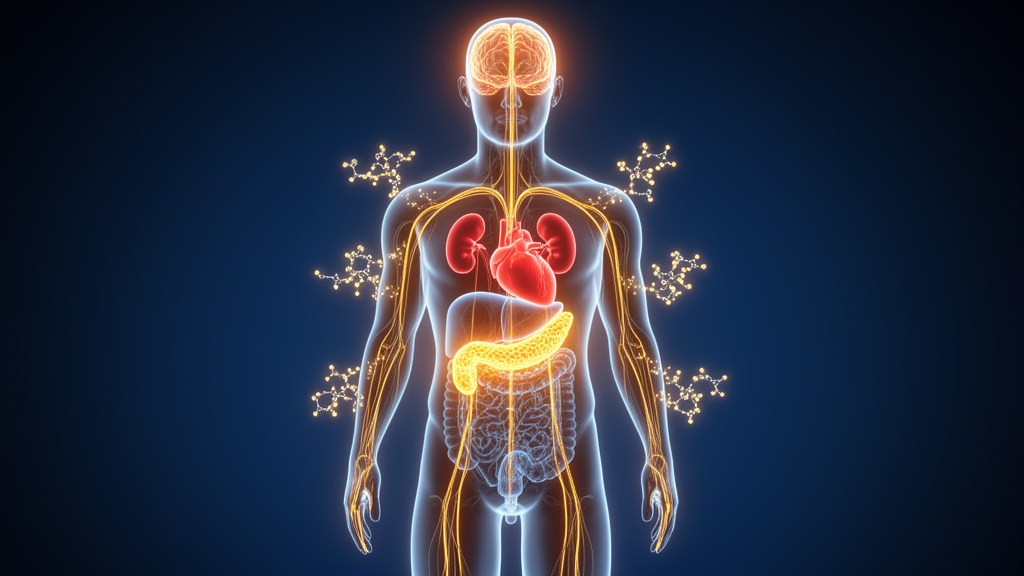
Drugs once prescribed almost exclusively to lower blood sugar are being repositioned as broad protectors of the heart, kidneys, and metabolism, according to a narrative review published on 7 September 2026 in Cardiovascular Diabetology – Endocrinology Reports. The review, led by Ahmed Elsayed and colleagues, argues that glucagon-like peptide-1 receptor agonists (GLP-1RAs) should now be understood as foundational components of cardiometabolic care rather than adjuncts to it, with benefits that extend substantially beyond glucose lowering across the cardiovascular-kidney-metabolic (CKM) continuum.
The clinical backbone of this repositioning comes from a series of major randomized outcome trials. A meta-analysis of nine cardiovascular outcomes trials involving 69,730 patients with type 2 diabetes found a 13 percent reduction in major adverse cardiovascular events (MACE), driven by a 12 percent reduction in cardiovascular death and a 15 percent reduction in stroke. The SELECT trial, published in 2023, extended these benefits to people without diabetes: among 17,604 patients with overweight or obesity and established atherosclerotic cardiovascular disease, weekly semaglutide 2.4 mg reduced three-point MACE by 20 percent over a median follow-up of 39.8 months, with benefits consistent across all baseline weight and waist circumference categories.
The FLOW trial of 2024 added a dedicated kidney dimension. Enrolling 3,534 patients with type 2 diabetes and chronic kidney disease on background RAAS inhibition, it reduced the composite of kidney failure, at least 50 percent eGFR reduction, or kidney or cardiovascular death by 24 percent, with a number needed to treat of 17 over 34.6 months. Secondary outcomes included an 18 percent MACE reduction, a 20 percent reduction in all-cause mortality, and a 1.16 mL/min/1.73 m² per year slower eGFR decline versus placebo. The trial was stopped early for efficacy. The review positions GLP-1RAs as a fourth pillar of diabetic kidney disease management alongside RAAS inhibitors, SGLT2 inhibitors, and finerenone.
Perhaps the most provocative finding concerns what the drugs’ benefits cannot be explained by. Exploratory mediation analyses from SELECT suggest that only approximately 30 to 40 percent of the MACE reduction attributable to semaglutide is explained by changes in measured cardiometabolic risk factors; in one pre-specified exploratory analysis, waist circumference reduction accounted for roughly 33 percent of the benefit, leaving 67 percent unexplained by measured adiposity and cardiometabolic changes. The review’s authors stress that these analyses were exploratory rather than pre-specified primary endpoints, that mediation models assume no unmeasured confounding, and that the residual fraction may reflect measurement limitations rather than distinct pleiotropic mechanisms. The finding is hypothesis-generating and informs ongoing mechanistic investigation rather than establishing specific causal pathways.
Mechanistically, GLP-1 receptors are expressed on cardiomyocytes, endothelial cells, renal tubular cells, and immune cells. Receptor activation triggers cAMP-dependent signaling that suppresses NF-κB-mediated inflammation and promotes cell survival. Human and early clinical evidence includes enhanced endothelial nitric oxide bioavailability, suppression of pro-inflammatory cytokines such as TNF-α, IL-6, and IL-1β in CVOT biomarker sub-studies, and augmented natriuretic peptide signaling contributing to blood pressure reduction independent of weight loss. In renal tissue, GLP-1RAs promote afferent arteriolar vasodilation and natriuresis, and have been proposed to promote efferent vasodilation through suppression of angiotensin II, though direct human evidence for some pathways remains limited. The precise molecular substrates of GLP-1RA benefit in humans remain incompletely understood, and the REMODEL mechanistic trial is designed to interrogate renal mechanisms in vivo.
Heart failure evidence has also shifted. Earlier safety concerns have been substantially revised: pooled analyses of the STEP-HFpEF and STEP-HFpEF DM trials together with SELECT and FLOW, covering 3,743 HFpEF participants, showed that semaglutide reduced cardiovascular death or worsening heart failure events by 31 percent and worsening heart failure events alone by 41 percent, with no significant reduction in cardiovascular death alone, indicating the primary benefit is symptomatic and hospitalization-related. A network meta-analysis of 39 HFpEF trials ranked GLP-1RAs highest for the cardiovascular death and heart failure hospitalization composite, with unique advantages in functional outcomes such as six-minute walk distance and Kansas City Cardiomyopathy Questionnaire scores. In heart failure with reduced ejection fraction, by contrast, SGLT2 inhibitors retain superior efficacy, and the two classes are not interchangeable.
Combination therapy with SGLT2 inhibitors represents the next frontier, but the review is emphatic that no dedicated randomized trial has yet tested combination versus monotherapy as a primary question. Observational data are consistently directionally favorable: a propensity-matched cohort of 58,525 patients with heart failure and type 2 diabetes found dual therapy associated with lower all-cause mortality and acute myocardial infarction versus SGLT2 inhibitor monotherapy, and a target trial emulation of 504,151 individuals with type 2 diabetes found combination therapy reduced kidney failure risk by 28 percent versus GLP-1RA monotherapy, rising to 46 percent in those with baseline CKD or heart failure. These findings are hypothesis-generating and subject to channeling bias, since patients receiving combination therapy are systematically different from those on monotherapy. The review calls prospective sequencing trials the field’s most urgent randomized trial priority.
Safety data are broadly reassuring at the randomized-trial level. Gastrointestinal adverse events are the most consistently documented side effects, generally resolving with continued therapy, and real-world discontinuation due to intolerance is estimated at 8 to 12 percent, higher than trial rates of approximately 5 percent. Hypoglycemia risk is low with monotherapy, and large meta-analyses have not demonstrated increased risks of acute pancreatitis, chronic pancreatitis, pancreatic cancer, or retinopathy worsening. Two observational signals warrant attention: a pharmacovigilance analysis suggested a potential association between GLP-1RA use and nonarteritic anterior ischemic optic neuropathy, which does not establish causation, and survey-reported hair shedding at 55 to 70 percent prevalence among users, likely reflecting telogen effluvium from rapid weight loss rather than a direct drug effect, is not RCT-confirmed.
Competition is also reshaping the landscape. The SURPASS-CVOT trial, published in December 2025, enrolled 13,299 patients with type 2 diabetes and established ASCVD and found tirzepatide, a dual GIP/GLP-1 receptor agonist, non-inferior to dulaglutide for the primary composite of cardiovascular death, myocardial infarction, or stroke (HR 0.92), without demonstrating superiority. Tirzepatide achieves superior glycemic and weight outcomes versus GLP-1RA monotherapy, but no dedicated kidney outcomes trial for tirzepatide has been completed, and semaglutide retains the only regulatory indication for MACE reduction in non-diabetic obesity. The review cautions that tirzepatide should not be substituted for established GLP-1RAs on the basis of assumed cardio-renal superiority.
Despite the strength of the trial evidence, real-world uptake remains limited to approximately 8 to 14 percent of eligible patients, constrained by cost, insurance restrictions, and limited physician recognition of cardio-renal benefits independent of glycemic targets. Annual out-of-pocket expenses reach $1,000 to $1,350 in the United States, and only 48 percent of surveyed physicians recognized cardiovascular benefits in diabetic patients. Prescribing disparities compound the problem: Black patients receive GLP-1RAs 20 to 30 percent less often than White patients, and a 2026 genome-wide association study of 27,885 users found the GLP1R efficacy allele least common in African ancestry populations. The review proposes a CKM Disease-Modification Framework that guides therapy by dominant organ risk rather than glycemic status, arguing that the population-level impact of these agents is currently constrained not by biology but by cost, access, and awareness.
Subject of Research: Repositioning GLP-1 receptor agonists as multi-organ protective therapies across the cardiovascular-kidney-metabolic continuum
Article Title: GLP-1 receptor agonists beyond glycemic control: integrated cardio-renal-metabolic protection across the cardiovascular kidney metabolic continuum
Article References: Elsayed, A., Ayoub, W. J., Elsayed, N., Stephens, J., Udongwo, N., Elsayed, Y., & Ghali, J. K. (2026). GLP-1 receptor agonists beyond glycemic control: integrated cardio-renal-metabolic protection across the cardiovascular kidney metabolic continuum. Cardiovascular Diabetology – Endocrinology Reports, 12(1), Article 60. https://doi.org/10.1186/s40842-026-00322-3
Image Credits: AI Generated
DOI: 10.1186/s40842-026-00322-3
Keywords: GLP-1 receptor agonists, semaglutide, SELECT trial, FLOW trial, cardiovascular-kidney-metabolic, chronic kidney disease, SGLT2 inhibitors, tirzepatide, MACE reduction, HFpEF, combination therapy, implementation gap
News Source: Ophelia Keating. (October 28, 2026). GLP-1 drugs emerge as multi-organ protectors far beyond blood sugar control. Scienmag.



