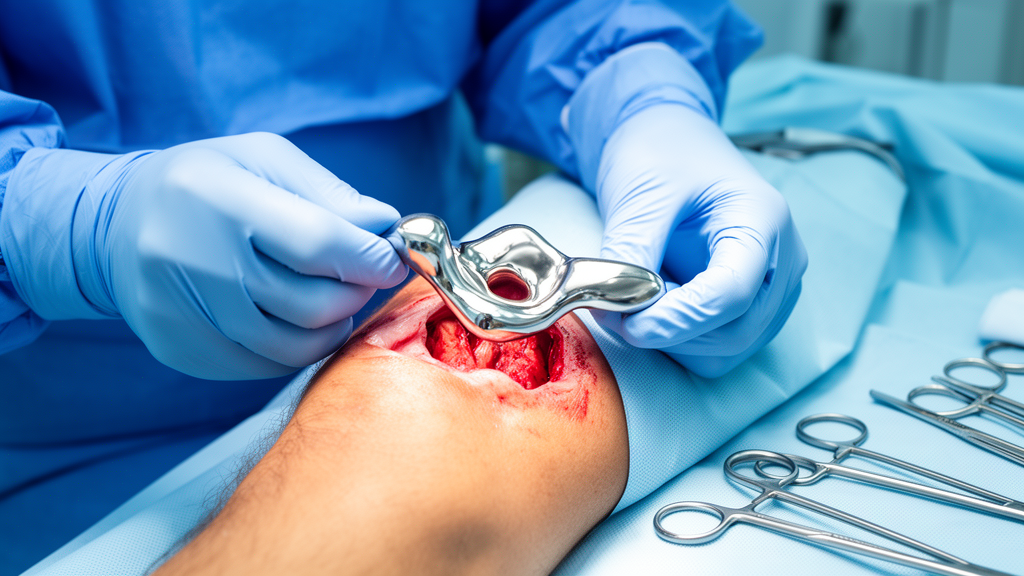
Whether surgeons should resurface the patella during a primary total knee arthroplasty has divided the orthopaedic community for decades. A new umbrella review published in the journal Arthroplasty synthesised fourteen previously published meta-analyses comparing patellar resurfacing with patellar retention in primary total knee replacement, and its central message is strikingly asymmetric: resurfacing consistently lowers the risk of reoperation, yet it delivers no clinically meaningful improvement in patient-reported function and only limited, inconsistent effects on anterior knee pain. The review, conducted according to the 2020 PRISMA guidelines, pooled effect estimates at the meta-analysis level using random-effects models, quantified heterogeneity with the I2 statistic, and tested robustness through prediction intervals, a combination that allowed the authors to distinguish durable findings from statistical artefacts.
The debate over patellar management is far from academic. Total knee arthroplasty is an effective treatment for end-stage knee osteoarthritis, improving quality of life and enabling most patients to return to recreational activities, yet dissatisfaction persists among roughly 5 to 20 percent of patients. Anterior knee pain has long been attributed, at least in part, to patellofemoral biomechanics, cartilage degeneration, and the interaction between the implant and the patella, which is why resurfacing has been advocated as a way to reduce postoperative pain and secondary procedures. But resurfacing carries its own risks, including patellar fracture, component loosening, extensor mechanism injury, longer operative time and higher costs. Surgeon practice reflects this uncertainty: in a survey of 619 surgeons, 28 percent always resurfaced the patella, 48 percent did so selectively, and 24 percent never did, with no significant differences by surgical experience or case volume. Registry data show resurfacing rates ranging from 4 percent in Sweden to 94 percent in the United States, with rates in Australia exceeding 70 percent from 2019 onwards.
To map this contested evidence base, the researchers searched PubMed, Scopus and Web of Science in January 2026 with no time restriction, screening 240 records and ultimately including fourteen meta-analyses published between 2011 and 2025. Most were classified as level I evidence, and the number of primary studies per meta-analysis ranged from 10 to 50, covering patient populations from approximately 1,000 to more than 500,000 individuals. Anterior knee pain was assessed in all included meta-analyses, while functional outcomes were most commonly measured with the Knee Society Score and the Knee Function Score. Methodological quality was appraised with AMSTAR-2, and the verdict was sobering: only one of the fourteen reviews (7.1 percent) provided high confidence in its findings, twelve (85.7 percent) were rated low confidence, and one (7.1 percent) critically low confidence, mainly because of missing protocol registration, non-transparent reporting of excluded studies, and insufficient integration of risk-of-bias assessments.
The headline results hinge on a methodological subtlety that turned out to be decisive. When anterior knee pain was pooled using odds ratios, no significant association with resurfacing emerged (OR 1.13, 95 percent CI 0.71 to 1.82), with very high heterogeneity (I2 = 88 percent) and an extremely wide prediction interval of 0.22 to 5.74, signalling poor reproducibility. When the same outcome was synthesised using relative risks, however, resurfacing was associated with a significantly lower risk of anterior knee pain (RR 0.75, 95 percent CI 0.65 to 0.86), with no heterogeneity (I2 = 0 percent) and a narrow prediction interval entirely below unity (0.64 to 0.88). The authors attribute this discrepancy to methodological rather than clinical differences: the odds-ratio synthesis included fewer meta-analyses (k = 4 versus k = 9) and showed substantial between-review variability, whereas the relative-risk analysis drew on a larger body of evidence.
Reoperation rates told a parallel story, and here the relative-risk finding was the more clinically consequential one. Odds-ratio-based analyses showed no significant association (OR 1.44, 95 percent CI 0.54 to 3.84; k = 3), with extreme heterogeneity (I2 = 94 percent) and a prediction interval so wide (0.02 to 97.9) that it precluded meaningful interpretation. Relative-risk-based analyses, drawing on ten meta-analyses, demonstrated a significantly reduced reoperation risk with resurfacing (RR 0.59, 95 percent CI 0.52 to 0.67), with moderate heterogeneity (I2 = 51 percent) and a prediction interval (0.43 to 0.82) that remained fully below unity. In plain terms, across the pooled evidence, patients whose patellae were resurfaced were roughly 41 percent less likely to undergo a further operation, an effect the authors describe as clinically relevant and reproducible.
Function and motion, by contrast, showed essentially nothing. The pooled mean difference in the Knee Function Score did not reach statistical significance (MD 0.63, 95 percent CI −0.42 to 1.68; k = 9), with substantial heterogeneity (I2 = 72 percent) and a wide prediction interval. The Knee Society Score showed a small but statistically significant difference in favour of resurfacing (MD 0.92, 95 percent CI 0.34 to 1.50; k = 11), but with moderate heterogeneity and a prediction interval that crossed the null (−0.67 to 2.51), suggesting the benefit may not replicate in future settings. Postoperative knee range of motion did not differ significantly (MD 0.73, 95 percent CI −2.94 to 4.39; k = 5), with high heterogeneity (I2 = 89 percent) and an extremely broad prediction interval of −11.6 to 13.1 degrees, indicating no reliable evidence of a meaningful effect.
Why does resurfacing reduce reoperations without clearly relieving pain? The authors argue that anterior knee pain after knee replacement is multifactorial, shaped by extensor mechanism biomechanics, quadriceps function, component positioning and rotation, patellar height, soft-tissue balance, central pain modulation, and local cartilage pathology. Resurfacing addresses only the cartilage-related nociceptive sources, by modifying contact mechanics and eliminating degenerated articular surfaces. When pain instead originates from maltracking due to rotational errors, altered extensor kinematics, or non-mechanical pain pathways, resurfacing is mechanistically unlikely to help. The small signal seen in some studies likely reflects a restricted subgroup of patients whose patellofemoral cartilage pathology is the dominant pain generator, an effect that becomes diluted when heterogeneous, non-stratified populations are pooled. This frames resurfacing less as a functional enhancer and more as a preventive strategy against late patellofemoral failure, with benefits that appear indication-dependent rather than universal.
The review also exposes an uncomfortable truth about how this evidence accumulated. Across the fourteen meta-analyses, 367 raw primary-study citations collapsed to 326 occurrences representing just 71 unique primary cohorts, yielding a corrected covered area of 27.6 percent, a level classified as very high overlap. A small set of historical randomised trials from the 1990s and early 2000s, several reporting fewer than 100 knees, were repeatedly re-pooled across nearly every meta-analysis identified. Much of the apparent precision gained from three decades of successive meta-analyses is therefore, in the authors’ words, illusory: the new evidence largely consists of the same cohorts re-analysed under different statistical models rather than genuinely independent confirmation. Additional limitations compound the caution. Reoperation was not uniformly defined across reviews, some counting any return to theatre and others restricting it to patellofemoral-related procedures, and the pooled estimates reflect this broader composite endpoint rather than formal implant revision specifically. Follow-up duration varied markedly, and older trials used femoral components with less anatomically accurate trochlear geometry, so meta-analyses spanning decades combine fundamentally different biomechanical environments. The review itself was not prospectively registered, and inter-rater reliability of the quality appraisal was not formally quantified.
Where does this leave surgeons and patients? The evidence supports patellar resurfacing as a data-driven approach for risk mitigation, reducing the likelihood of secondary surgery, while offering no clinically meaningful improvement in patient-reported outcomes and only limited, inconsistent effects on anterior knee pain. Selective resurfacing, the conceptually appealing middle path, has not been adequately evaluated, because most randomised trials compared routine resurfacing with systematic non-resurfacing without stratifying patients by patellar cartilage status, morphology, or extensor mechanism characteristics. The authors call for future trials designed around clearly defined patellofemoral phenotypes and contemporary implant technologies, with prospective stratification by cartilage status, preoperative anterior knee pain, and implant design, standardised criteria for selective resurfacing, and longer follow-up. Until such studies arrive, the decision to resurface remains less a question of function or pain relief than one of long-term risk management, a conclusion that, after thirty years of accumulating and re-accumulating the same evidence, is itself a finding worth reporting.
Subject of Research: Patellar resurfacing versus retention in primary total knee arthroplasty, synthesised through an umbrella review of meta-analyses
Article Title: Patellar resurfacing in primary total knee arthroplasty is associated with fewer reoperations but comparable clinical and functional outcomes: an umbrella review of meta-analyses
Article References: Migliorini, F., Maffulli, N., Schäfer, L., Pipino, G., Betsch, M., & Vaishya, R. (2026). Patellar resurfacing in primary total knee arthroplasty is associated with fewer reoperations but comparable clinical and functional outcomes: an umbrella review of meta-analyses. Arthroplasty, 8(1), Article 75. https://doi.org/10.1186/s42836-026-00438-y
Image Credits: AI Generated
DOI: 10.1186/s42836-026-00438-y
Keywords: total knee arthroplasty, patellar resurfacing, anterior knee pain, reoperation, umbrella review, meta-analysis, patient-reported outcomes, knee replacement, orthopaedic surgery, AMSTAR-2, prediction intervals, evidence overlap
News Source: Ophelia Keating. (October 28, 2026). Knee Replacement Study Finds Patellar Resurfacing Cuts Reoperations, Not Pain. Scienmag.