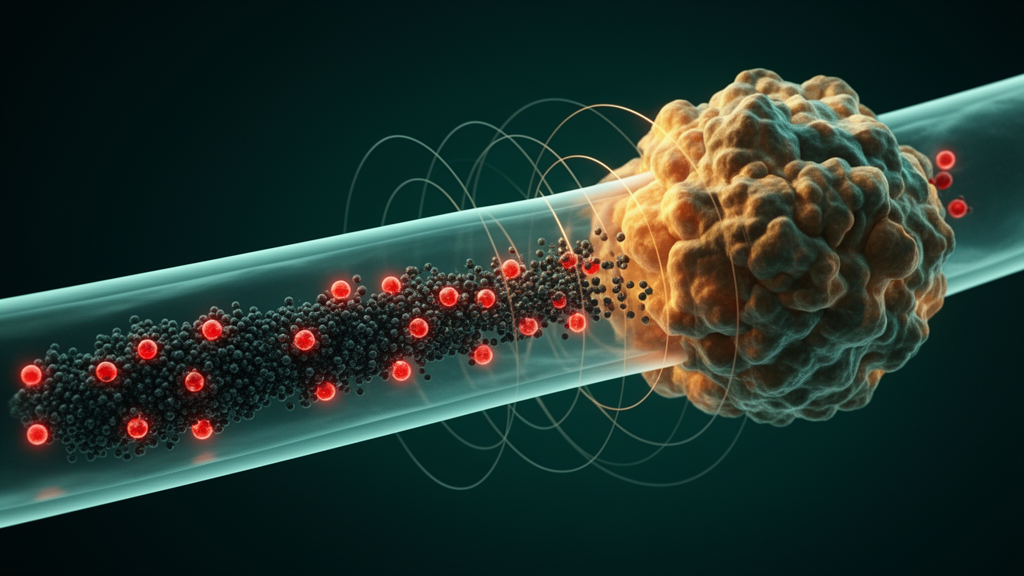
Researchers have developed a doxorubicin delivery system that combines three targeting strategies in a single nanoparticle, aiming to send the chemotherapy drug more selectively to triple-negative breast cancer tumors while sparing healthy tissue. The platform, described in Cancer Nanotechnology, pairs hyaluronic acid-decorated PLGA nanoparticles co-loaded with superparamagnetic iron oxide and doxorubicin with pulsed electromagnetic field guidance.
Doxorubicin is a potent chemotherapeutic agent for treating triple-negative breast cancer, but its clinical utility is severely limited by non-specific biodistribution and dose-limiting systemic toxicity, particularly cardiotoxicity and nephrotoxicity. The new system, abbreviated HDSPs, was designed to address this challenge by integrating passive accumulation through optimal nanoparticle size and charge, hyaluronic acid-mediated engagement of the CD44 receptor, and magnetic guidance via the iron oxide cargo under an external field.
In laboratory tests with CD44-positive MDA-MB-231 triple-negative breast cancer cells, the decorated nanoparticles showed enhanced cellular internalization and greater intracellular doxorubicin delivery. When the researchers competitively blocked CD44 with free hyaluronic acid, nanoparticle uptake dropped, indicating that a receptor-mediated component contributes to how the particles enter the cells.
Magnetic guidance added a second layer of targeting. Exposure to a pulsed electromagnetic field further increased intracellular iron uptake in the cultured cells, although the accompanying differences in cell viability did not reach statistical significance in those experiments.
The team then evaluated the system in triple-negative breast cancer xenograft models. Applying a localized pulsed electromagnetic field increased tumor accumulation of the nanoparticles by approximately 1.5-fold compared with non-PEMF treatment, with correspondingly lower signals detected in the kidney and liver, suggesting less off-target exposure to the carrier.
Therapeutic performance followed the same pattern. The combination of the hyaluronic acid-decorated, iron oxide-loaded nanoparticles with pulsed electromagnetic field application produced the greatest suppression of tumor growth among the groups tested in the study.
Safety signals in the animal model were also notable. No overt histopathological alterations were observed in the heart or kidney at the dose and schedule used, in contrast to the changes seen after treatment with free doxorubicin, the unencapsulated form of the drug.
The authors report that these findings suggest combining hyaluronic acid-mediated CD44 engagement with pulsed electromagnetic field-assisted magnetic guidance can improve tumor-selective doxorubicin delivery while limiting off-target exposure in triple-negative breast cancer, and they position the results as supporting further evaluation of the strategy.
As with all preclinical work, the results come from cell culture and xenograft models rather than patients, and the reported viability differences under magnetic exposure did not reach statistical significance. The study was published open access on 16 October 2026 as a peer-reviewed, accepted research article carrying a permanent DOI, with a final version of record to follow.
Subject of Research: Magnetic and CD44-targeted nanoparticles for tumor-selective doxorubicin delivery in triple-negative breast cancer
Article Title: Magnetically-guided hyaluronic acid-decorated PLGA nanoparticles for enhanced tumor selective doxorubicin delivery in triple-negative breast cancer
Article References: Choi, S., Lee, J., Cho, H., Hwang, Y., Park, S., Lee, Y.-H., & Key, J. (2026). Magnetically-guided hyaluronic acid-decorated PLGA nanoparticles for enhanced tumor selective doxorubicin delivery in triple-negative breast cancer. Cancer Nanotechnology. https://doi.org/10.1186/s12645-026-00436-4
Image Credits: AI Generated
DOI: 10.1186/s12645-026-00436-4
Keywords: triple-negative breast cancer, doxorubicin, PLGA nanoparticles, hyaluronic acid, CD44 receptor, superparamagnetic iron oxide, pulsed electromagnetic field, drug delivery, xenograft model, cardiotoxicity, nanomedicine, Cancer Nanotechnology
News Source: Nathaniel Bowman. (October 28, 2026). Magnetic nanoparticles steer doxorubicin toward triple-negative breast tumors. Scienmag.