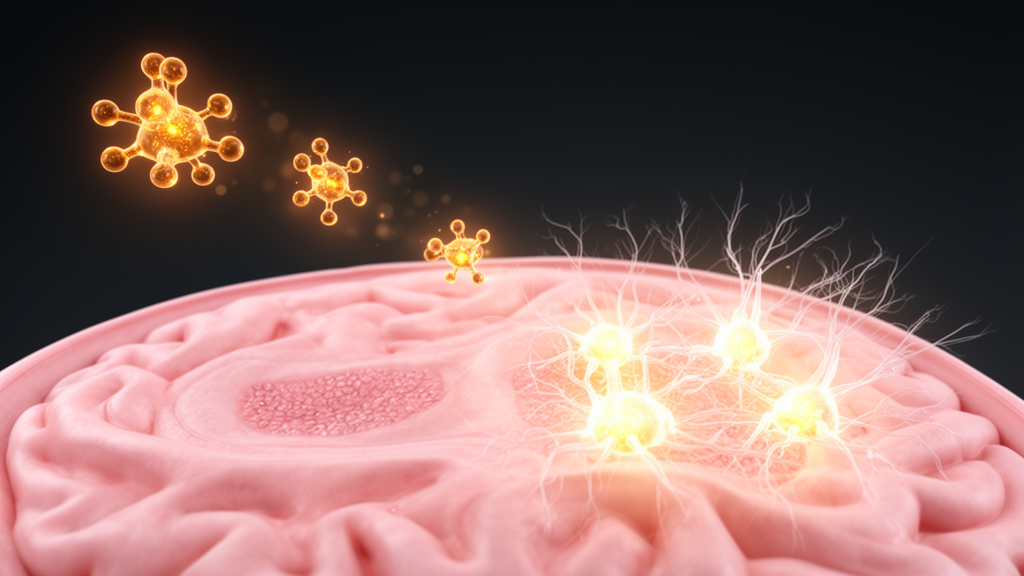
Transthyretin, a thyroid hormone-binding protein best known for ferrying hormones through the cerebrospinal fluid to brain cells, appears to play a surprising role in one of the brain’s most important stem cell niches, according to a new mouse study published in Fluids and Barriers of the CNS.
The research team, led by Pieter Vancamp and colleagues with senior author Sylvie Remaud, set out to investigate how the gene encoding transthyretin, Ttr, is expressed and functions in the murine subventricular zone, the largest postnatal neural stem cell niche in the brain.
To map where and when Ttr is active, the researchers re-analysed public single-cell RNA sequencing datasets and found a transcriptional peak of Ttr at postnatal day 7 across the neurogliogenic lineage, the family of cells that gives rise to neurons and glia. RNAscope confirmed that messenger RNA for Ttr is present broadly, though weakly, throughout the subventricular zone at this stage.
Strikingly, immunohistochemistry failed to detect TTR protein in the subventricular zone, even though the same staining robustly labelled the choroid plexus, the tissue that produces cerebrospinal fluid. The study therefore uncovers a developmental window in which Ttr transcripts are abundant in the niche but no protein can be detected, a mismatch whose significance remains to be established.
To probe function, the team exposed neurospheres derived from the postnatal day 7 subventricular zone to exogenous TTR and analysed the cells using single-cell RNA sequencing alongside in vitro functional assays. The results showed a pronounced shift toward more differentiated populations, including neuroblasts, oligodendrocyte precursor cells and committed oligodendrocyte precursors.
At the same time, TTR treatment reduced progenitor proliferation and repressed stemness and proliferation-related pathways, while activating mitochondrial programs. Lower doses of TTR reproduced the anti-proliferative effects, indicating that this response is dose-sensitive.
The experiments also revealed a partial overlap with thyroid hormone signalling. TTR treatment partially mimicked the outcomes induced by thyroid hormone, suggesting that TTR-responsive and thyroid hormone-responsive pathways at least partially converge, despite minimal endogenous thyroid hormone signalling activity detected in the cells. The authors emphasise that the mechanisms behind this convergence remain unknown.
The researchers caution that these findings come from re-analysed public datasets and in vitro neurosphere experiments in mice, and that exogenous TTR was sufficient, but not necessarily required, to alter progenitor behaviour. Nevertheless, they conclude that the work expands the functional landscape of transthyretin beyond hormone transport and highlights potential relevance for neurodevelopment, as well as for neurodegenerative and thyroid hormone-related disorders.
Subject of Research: Developmental expression and thyroid hormone-convergent effects of transthyretin in the murine postnatal subventricular zone
Article Title: Developmental expression of transthyretin and thyroid hormone-convergent effects on murine postnatal SVZ progenitors
Article References: Vancamp, P., Valcárcel-Hernández, V., Blay, K. L., & Remaud, S. (2026). Developmental expression of transthyretin and thyroid hormone-convergent effects on murine postnatal SVZ progenitors. Fluids and Barriers of the CNS. https://doi.org/10.1186/s12987-026-00894-3
Image Credits: AI Generated
DOI: 10.1186/s12987-026-00894-3
Keywords: transthyretin, thyroid hormone, subventricular zone, neural stem cells, neurogenesis, oligodendrocyte precursors, single-cell RNA sequencing, neurospheres, postnatal brain development, choroid plexus, cerebrospinal fluid, mice
News Source: Cassandra Pierce. (October 27, 2026). Thyroid Hormone Carrier TTR Pushes Young Brain Stem Cells Toward Differentiation in Mice. Scienmag.