Metabolic reprogramming stands as a fundamental characteristic of hepatocellular carcinoma (HCC), providing malignant cells with the necessary machinery to sustain proliferation, adapt to nutrient and oxygen limitations, evade immune surveillance, and survive intense therapeutic stress. Recent research has illuminated the critical role of RNA modification networks in this process, revealing an intricate and bidirectional crosstalk between metabolic states and post-transcriptional gene regulation. This intricate interplay is not merely correlative; it establishes reciprocal regulatory circuits that fundamentally drive cancer progression and therapeutic resistance.
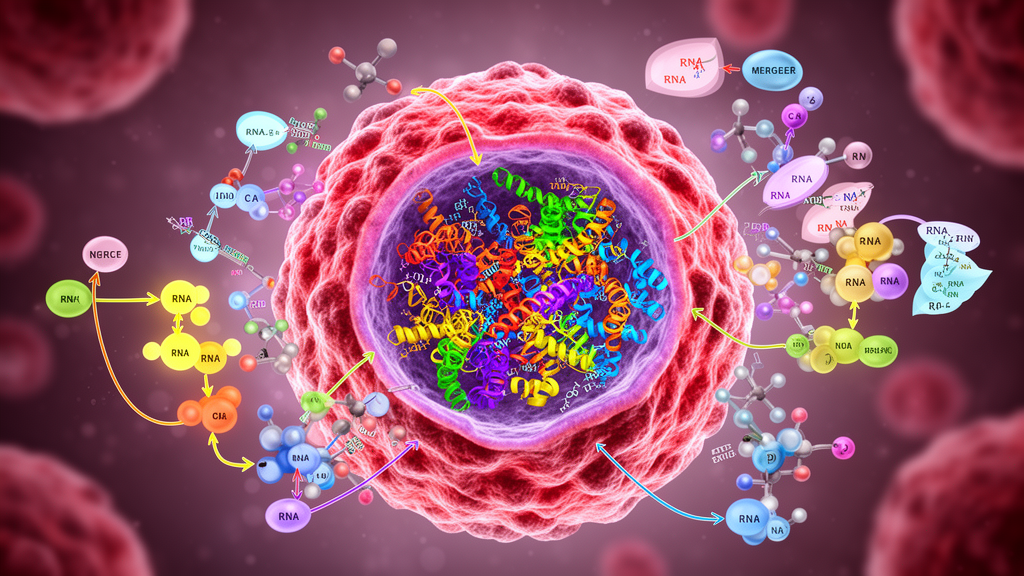
RNA modifications, alongside their associated enzymatic machinery—writers, erasers, and readers—serve as a crucial interface between the cellular metabolic landscape and the post-transcriptional regulatory landscape. These modifications possess the capacity to reshape glucose, lipid, and amino acid metabolism within cancer cells. They achieve this by directly influencing various aspects of RNA fate, including RNA stability, translational efficiency, RNA processing, and RNA–protein interactions. Essentially, the modification status of an RNA molecule dictates how the cell processes and utilizes its genetic information in response to its metabolic environment.
The influence of metabolism on RNA regulation is equally profound. Conversely, the availability of essential nutrients, the rate of glycolytic activity, and the accumulation of specific metabolites—such as lactate, acetyl-CoA, and S-adenosylmethionine—can exert significant control over RNA-modifying enzymes. These metabolic cues, in turn, influence the abundance of specific RNA modifications, the activity of their associated readers, and the ultimate fate of the RNA molecule. This dynamic feedback loop establishes a sophisticated metabolic–RNA regulatory circuit that underpins the survival and aggressive phenotype of HCC cells.
However, the functional relationship between RNA-modifying proteins and their modification-dependent roles is complex. It is essential to recognize that the functions of proteins associated with RNA modification are not always exclusively dependent on the modification itself. Several regulators can exert catalytic-independent or non-canonical effects, operating through protein-protein interactions, chromatin regulation, or metabolic signaling pathways. Distinguishing these distinct mechanisms is paramount for accurately defining genuine epitranscriptomic regulation and moving beyond simple association to functional causality.
These reciprocal regulatory networks extend their influence far beyond the immediate tumor-cell-autonomous metabolism. They are deeply integrated into broader cellular processes critical for cancer development, including maintaining redox homeostasis, driving regulated cell death pathways such as ferroptosis and cuproptosis, promoting cancer stemness, influencing tumor immunity, and contributing to therapeutic resistance. Furthermore, the landscape is complicated by the involvement of non-coding RNAs, specifically long non-coding RNAs and circular RNAs, which function as regulators, scaffolds, or even modification substrates within the RNA modification machinery, adding another layer of metabolic plasticity to the cancer phenotype.
This review critically examines how major RNA modifications, with a particular focus on N6-methyladenosine (m⁶A) and the less extensively characterized roles of m⁵C, m⁷G, and ac⁴C, interface with the core metabolic pathways of glucose, lipid, and amino acid utilization in HCC. The investigation delves into the intricate mechanisms by which metabolic remodeling feeds back onto the RNA-modification machinery, and how this, in turn, dictates modification-dependent RNA regulation. By integrating non-coding RNA crosstalk, tumor immunometabolism, regulated cell death, and therapeutic adaptation into this framework, the research provides a comprehensive view of the metabolic-epigenetic axis in liver cancer.
The understanding of these complex interactions opens up new avenues for therapeutic intervention. The field is actively evaluating strategies that target the RNA-modification machinery or the downstream metabolic dependencies of HCC. These strategies are being explored in combination with established treatments such as targeted therapies, chemotherapy, induction of ferroptosis or cuproptosis, and immune checkpoint blockade, aiming to overcome current limitations in cancer treatment.
Despite the significant progress, several persistent challenges remain in fully elucidating these mechanisms. These include the uneven quality of mechanistic evidence across different classes of RNA modifications, the limited scope of site-specific causal validation, insufficient measurements of metabolic flux within the tumor microenvironment, and the unresolved issue of catalytic-independent functions of modification-associated proteins. Moreover, the inherent cell-type and spatial heterogeneity within tumors complicates the translation of these findings into clinical practice.
To advance the field, a more rigorous distinction between RNA modification-dependent and modification-independent mechanisms is deemed critical. This precision will be essential for identifying context-specific vulnerabilities within HCC and for successfully translating these complex metabolic–RNA regulatory networks into biomarker-guided precision therapies. The current body of evidence underscores the necessity of a holistic approach to HCC research, one that simultaneously addresses both the metabolic and the epitranscriptomic dimensions of this devastating disease.
Subject of Research: Bidirectional crosstalk between RNA modification networks and metabolic reprogramming in hepatocellular carcinoma
Article Title: Bidirectional crosstalk between RNA modification networks and metabolic reprogramming in hepatocellular carcinoma
Article References: Li, Q., Chen, W., Zhang, L., Ning, S., Wang, H., Deng, D., & Jiang, X. (2026). Bidirectional crosstalk between RNA modification networks and metabolic reprogramming in hepatocellular carcinoma. Molecular Cancer. https://doi.org/10.1186/s12943-026-02825-0
Image Credits: AI Generated
DOI: 10.1186/s12943-026-02825-0
Keywords: Hepatocellular Carcinoma, RNA Modification, Metabolic Reprogramming, Epitranscriptomics, Cancer Metabolism, m6A, Ferroptosis, Cancer Therapeutics, Bidirectional, crosstalk, between, modification
News Source: Nathaniel Bowman. (October 27, 2026). RNA Modifications and Metabolism: Decoding Crosstalk in Liver Cancer. Scienmag.