Researchers have developed a platelet-engineered adeno-associated virus (AAV) delivery system that selectively silences the fatty acid transporter CD36 in injured heart tissue, and in a male mouse model of ischemia-reperfusion injury the approach promoted cardiac repair by reprogramming myocardial fatty acid metabolism. The study, published in Nature Communications, addresses a central obstacle in cardiology: the adult mammalian heart has very limited capacity to regenerate after ischemic damage, and abnormal fatty acid metabolism is known to contribute to this failure of repair.
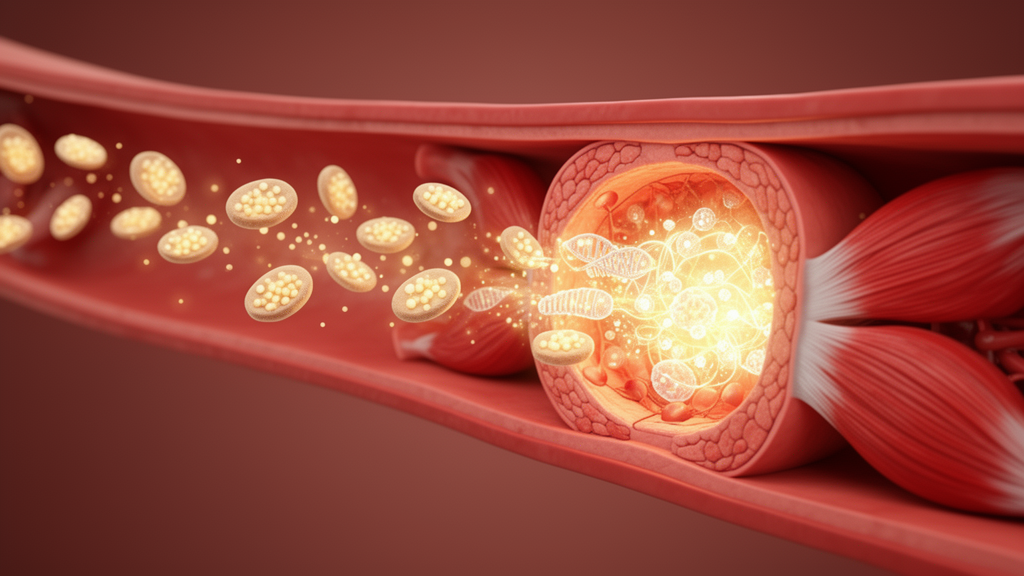
The delivery strategy exploits platelets as injury-responsive carriers. Because platelets naturally home to sites of vascular damage and tissue injury, the engineered vectors preferentially accumulate in damaged myocardium rather than dispersing throughout the body. The platform also reduced neutralization by circulating antibodies, a common barrier to effective AAV gene therapy, and thereby enhanced cardiac delivery of the therapeutic payload. Once in the heart, the system suppressed CD36, a transporter that mediates fatty acid uptake into cardiomyocytes.
Reducing fatty acid oxidation has previously been shown to encourage cardiomyocyte proliferation, but excessive suppression of this metabolic pathway risks disrupting lipid handling and worsening injury. The reported results suggest the intervention struck a careful balance: CD36 knockdown reduced fatty acid utilization and reshaped cardiac lipid metabolism without causing overt lipid overload in the myocardium. Alongside these metabolic shifts, the researchers observed increased cardiomyocyte cell-cycle activity, indicating a renewed proliferative response in heart muscle cells that normally remain quiescent after birth.
Functionally, male mice receiving the treatment showed improved cardiac structure and function following ischemia-reperfusion injury, the experimental model that mimics the damage caused by a heart attack followed by restored blood flow. The authors describe these findings as establishing a platelet-guided gene delivery strategy that links metabolic reprogramming to myocardial regeneration, and they suggest the approach may hold promise for ischemic heart repair.
Important caveats frame the work. The study was conducted exclusively in male mice, and the published version is an accepted manuscript shared early for faster access, subject to further edits before the final Version of Record. Whether platelet-engineered AAV silencing of CD36 can be translated safely and effectively to human patients, whose immune responses to AAV vectors and cardiac metabolic profiles differ from mice, remains untested. The findings therefore represent a preclinical proof of concept rather than a demonstrated therapy, but they outline a targeted strategy that couples injury-seeking biological carriers with metabolic intervention to coax the damaged heart toward self-repair.
Subject of Research: Platelet-engineered AAV silencing of myocardial CD36 to reprogram fatty acid metabolism for cardiac regeneration in male mice
Article Title: Platelet-engineered AAV silencing of myocardial CD36 reprograms fatty acid metabolism to promote cardiac regeneration in male mice
Article References: Zhang, N., Ting, M. H., Liu, S., Jiao, X., Li, X., Wang, P., Fu, G., Li, H., Ge, J., Sun, Y., Zhao, S., Zhou, B., & Zhang, W. (2026). Platelet-engineered AAV silencing of myocardial CD36 reprograms fatty acid metabolism to promote cardiac regeneration in male mice. Nature Communications. https://doi.org/10.1038/s41467-026-79082-8
Image Credits: AI Generated
DOI: 10.1038/s41467-026-79082-8
Keywords: AAV vectors, CD36, fatty acid metabolism, cardiac regeneration, platelets, gene therapy, ischemia-reperfusion injury, cardiomyocyte proliferation, metabolic reprogramming, male mice, Nature Communications, Platelet-engineered
News Source: Daisy Hatcher. (October 26, 2026). Platelet-guided gene therapy reprograms heart metabolism to promote repair in male mice. Scienmag.