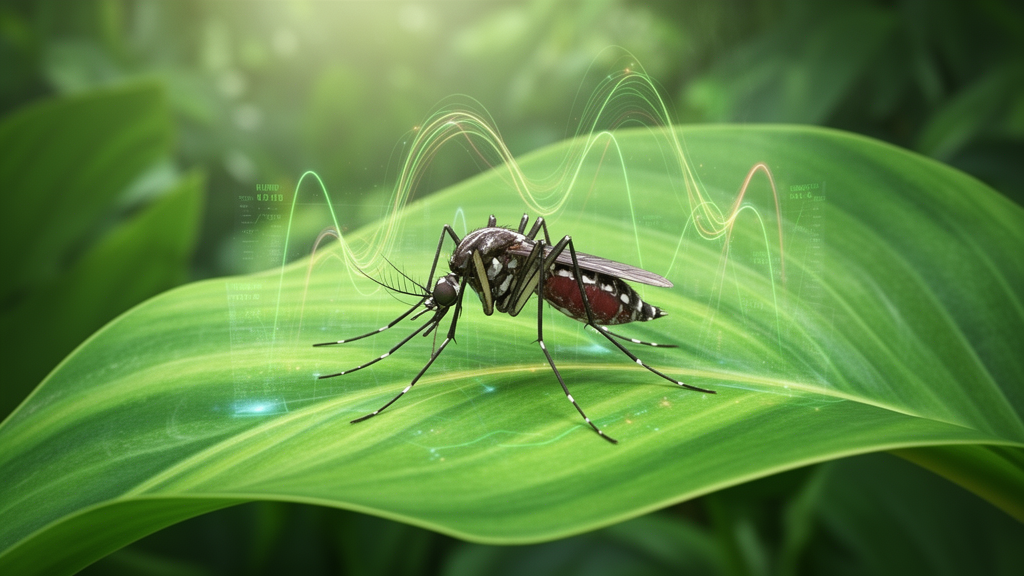
A systematic review published in BMC Public Health has synthesized evidence from 53 studies to map how environmental conditions shape malaria transmission, concluding that temperature, humidity, and precipitation are the most influential and most frequently studied environmental determinants of the disease. The review, led by Md. Rasel Hossain and colleagues, drew its evidence base from major bibliographic databases including Web of Science, PubMed, and Scopus, and set out to identify which environmental variables researchers most often examine, how consistently their associations with malaria point in a given direction, and which analytical methods dominate the field.
The most commonly investigated environmental variables across the included studies were temperature, precipitation, humidity, wind speed, air pressure, air pollution, and sky clarity. To assess how these factors relate to malaria outcomes, the reviewed research relied predominantly on regression-based and correlation-based statistical approaches. Malaria remains a major mosquito-borne infectious disease, transmitted primarily by female Anopheles mosquitoes, and its transmission is strongly influenced by the surrounding environmental conditions.
Across the evidence base, most studies reported positive associations between temperature, humidity, and malaria transmission, meaning that higher values of these variables tended to accompany greater transmission intensity. The review identified specific minimum temperature thresholds as crucial for transmission: approximately 18 degrees Celsius for Plasmodium falciparum and approximately 15 degrees Celsius for Plasmodium vivax.
Humidity emerged as another decisive factor. The review found that mosquito survival was enhanced when humidity levels rose above 60 percent. Precipitation played a more context-dependent role: it aided mosquito breeding, particularly in dry environments where rainfall creates the standing water that Anopheles larvae require.
Notably, the review did not find unanimous agreement across the literature. Several studies reported negative or non-significant relationships between malaria and environmental conditions, demonstrating variation among locations and study methods. This heterogeneity is an important caution against reading the review as a set of universal dose-response rules.
The authors concluded that environmental determinants, notably temperature, humidity, and precipitation, have a major influence on malaria transmission while their effects vary depending on the situation. On the strength of this synthesis, they argued that environmental variables deserve systematic incorporation into malaria surveillance and prediction models. Doing so, they suggested, could improve early warning systems that flag periods of elevated transmission risk, and could support evidence-based malaria control strategies.
The review’s framing of context-dependent effects carries practical weight for control programs. Because precipitation aids breeding especially in dry environments, rainfall-based indicators may be most valuable in arid and seasonally dry regions, whereas humidity-based indicators may matter more where survival of adult mosquitoes limits transmission.
As a synthesis of previously published research, the review summarizes associations reported across 53 studies rather than testing new interventions or models itself. Its contribution lies in consolidating the direction and consistency of environmental associations with malaria outcomes and in cataloging the analytical methods the field has favored. The authors present the findings as evidence that environmental determinants should be treated as core inputs to malaria prediction, a conclusion grounded in the repeated positive associations with temperature and humidity, the identified parasite-specific temperature thresholds, and the documented humidity and precipitation effects on mosquito survival and breeding.
Subject of Research: Environmental determinants of malaria transmission
Article Title: Impact of environmental determinants on malaria incidence: a systematic review
Article References: Hossain, M. R., Faruk, M. O., Hossain, K., & Bhuiyan, M. E. J. (2026). Impact of environmental determinants on malaria incidence: a systematic review. BMC Public Health. https://doi.org/10.1186/s12889-026-29225-9
Image Credits: AI Generated
DOI: 10.1186/s12889-026-29225-9
Keywords: malaria, systematic review, temperature, humidity, precipitation, Anopheles mosquitoes, Plasmodium falciparum, Plasmodium vivax, early warning systems, environmental determinants, BMC Public Health, Impact
News Source: Ophelia Keating. (October 26, 2026). Temperature and Humidity Emerge as Key Environmental Drivers of Malaria in Systematic Review. Scienmag.