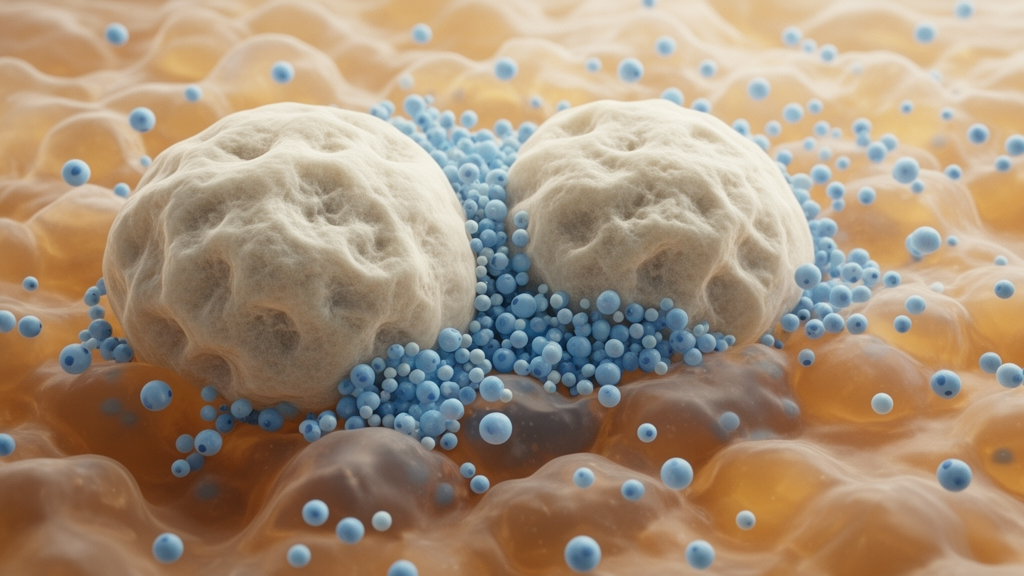
A new review in Molecular Biology Reports examines how anticancer treatments that fail to kill tumor cells outright can instead push them into a durable, non-lethal stress state known as therapy-induced senescence, and how that state rewires the immune landscape of the tumor. The authors, led by Xiaonan Geng and Xinjun Hu, frame senescence not as a passive endpoint of chemotherapy, radiotherapy or targeted therapy, but as an active biological program with consequences for treatment success and failure.
Senescent cells remain metabolically active. Their defining feature in this context is the senescence-associated secretory phenotype, or SASP: a heterogeneous mixture of cytokines, chemokines, growth factors, proteases, extracellular vesicles and immune-modulatory signals released into the tumor microenvironment. Through this secretory output, senescent malignant and stromal cells communicate with surrounding tissue and can profoundly influence how the tumor interacts with the immune system.
The review emphasizes that this influence is not uniformly beneficial or harmful. When senescence is transient and senescent cells are efficiently cleared, the SASP can support immune surveillance against the tumor. When senescent cells persist, however, the same secretory program can drive chronic inflammation, immune suppression, remodeling of the stroma, tumor recurrence and resistance to further treatment. The authors describe this as a biphasic nature of SASP-mediated immunity, in which timing and duration determine whether the signal helps or harms the host.
A substantial portion of the review is devoted to the molecular regulation of the SASP itself and to immune-cell-specific remodeling of the tumor immune microenvironment. Rather than treating the TIME as a single compartment, the authors trace how distinct immune cell populations are reshaped by senescence-associated signals, a framing they present as central to understanding the TIS-SASP-TIME axis.
On the therapeutic side, the review lays out a vocabulary that is becoming standard in the field. Senogenic interventions are those that induce cellular senescence. Senolytic approaches selectively eliminate senescent cells. Senomorphic strategies suppress or remodel harmful senescence-associated phenotypes without necessarily killing the cells that carry them. The authors argue that these tools, particularly in combination with immune checkpoint inhibitors, may convert therapy-induced senescence from a liability into a therapeutically exploitable state.
A key proposal is sequential senogenic-senolytic therapy: first using standard treatments to drive tumor cells into senescence, then deploying senolytic or senomorphic agents to clear or reprogram the resulting senescent population before its secretory output turns protumoral. The rationale rests on capturing the immune-activating phase of the SASP while avoiding the chronic inflammation and immune suppression associated with persistent senescent cells.
The review is equally explicit about the barriers standing between this concept and clinical practice. Biomarker specificity remains a problem, because markers that identify senescent cells are not fully selective. Cell-type heterogeneity means that senescence programs differ across malignant and stromal populations. Treatment timing is critical, since intervening too early or too late could forfeit the beneficial phase of the SASP. Safety concerns and the need for spatially resolved monitoring of senescent niches within tumors add further translational hurdles.
By consolidating the molecular regulation of the SASP, its biphasic immunological effects and the logic of sequential senogenic-senolytic combinations, the authors position therapy-induced senescence as a double-edged feature of modern oncology. Whether senolytics, senomorphics and checkpoint blockade can reliably tip that balance toward tumor control will depend on resolving the biomarker, timing and monitoring challenges the review identifies.
Subject of Research: Cellular senescence and tumor immunology
Article Title: Reshaping the tumor immune microenvironment via therapy-induced senescence: senescence-associated secretory phenotype networks and senolytic strategies
Article References: Geng, X., Li, P., Xu, K., Yang, S., & Hu, X. (2026). Reshaping the tumor immune microenvironment via therapy-induced senescence: senescence-associated secretory phenotype networks and senolytic strategies. Molecular Biology Reports, 53(1), Article 1824. https://doi.org/10.1007/s11033-026-13049-2
Image Credits: AI Generated
DOI: 10.1007/s11033-026-13049-2
Keywords: therapy-induced senescence, SASP, tumor immune microenvironment, senolytics, senomorphics, cancer therapy, Reshaping, tumor, immune, microenvironment, therapy-induced, senescence
News Source: Nathaniel Bowman. (October 26, 2026). Therapy-induced senescence reshapes the tumor immune microenvironment, review argues. Scienmag.