Electrochemical CO2 reduction, which uses renewable electricity to convert carbon dioxide into value-added fuels and chemicals, has long been promoted as a promising route for carbon recycling. Yet most laboratory studies to date rely on high-purity CO2 feeds, while the practical carbon sources that matter for real deployment, such as industrial flue gas and ambient air, contain only dilute CO2 mixed with impurities including O2, SOx, and NOx. A team of scientists at The Chinese University of Hong Kong, working with collaborators at the University at Buffalo, has now reviewed recent progress in the electrochemical capture and conversion of dilute CO2, outlining the strategies needed to bring CO2 electrolysis closer to realistic carbon sources. Their review is published in the journal Industrial Chemistry & Materials on July 15, 2026.
The central difficulty, the researchers explain, is maintaining sufficient CO2 availability at the catalytic active sites under dilute feed conditions while minimizing competing reactions and impurity effects. Low CO2 concentrations limit mass transport to the catalyst surface and promote the competing hydrogen evolution reaction, which wastes electrons on hydrogen gas instead of carbon products. Impurities add further complications: O2 can compete for electrons through the oxygen reduction reaction, SOx may cause irreversible poisoning of catalytic sites, and NOx can undergo competing reduction reactions. “One of the key challenges is to maintain sufficient CO2 availability at the active sites under dilute CO2 while minimizing the effects of competing reactions and impurities,” explains Ying Wang, a professor at The Chinese University of Hong Kong.
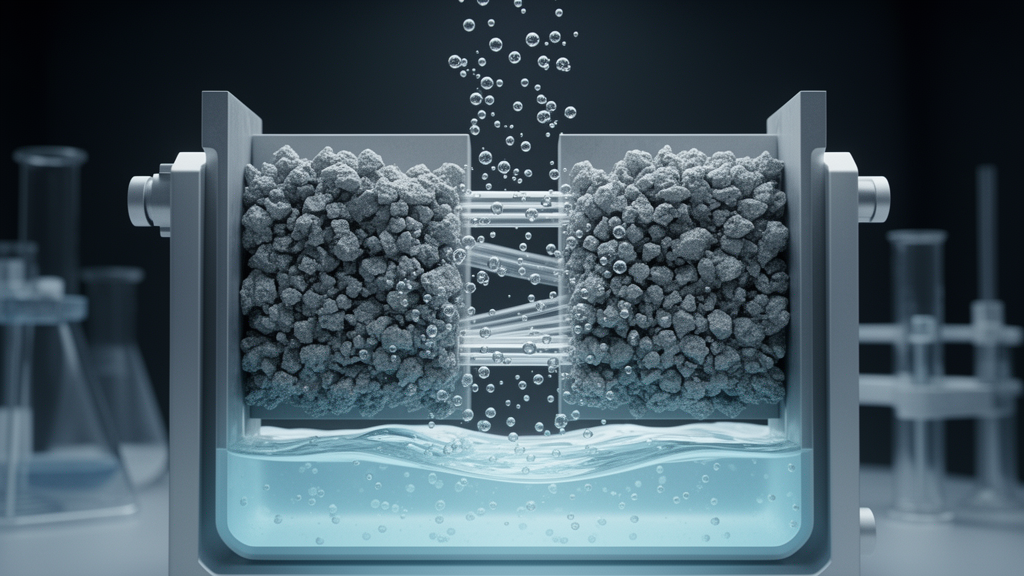
The review highlights two main approaches for utilizing dilute CO2. The first is integrated CO2 capture and conversion. In single electrolytic cell systems, captured carbon species are converted directly within the same device, while dual electrolytic cell systems separate CO2 capture from electrochemical conversion, allowing the two processes to be optimized independently. The second route is the direct electrolysis of dilute CO2, which avoids a separate capture step but faces greater challenges in CO2 transport and impurity tolerance. Strategies such as porous catalyst structures, CO2-affinity functional groups, and wettability regulation can increase the local CO2 concentration near active sites and stabilize the gas-liquid-solid reaction interface, making direct flue-gas electrolysis increasingly feasible.
Developing catalysts and interfaces that favor CO2 transport and conversion while suppressing unwanted pathways driven by O2, SOx, and NOx is therefore identified as important for direct flue-gas electrolysis. But the researchers emphasize that catalyst development alone is not sufficient. Gas diffusion layers, flow-field design, pressure, temperature, humidity, and electrolyte composition all influence reactant transport, product selectivity, and long-term stability. “Dilute CO2 electrolysis is not simply a catalyst problem, but a system-level challenge,” says Professor Wang. “Catalyst design and electrolyzer engineering need to be considered together to achieve efficient and stable operation under realistic conditions.”
Looking ahead, the team identifies several research priorities: multifunctional catalysts that combine CO2 enrichment with impurity tolerance, a better understanding of catalyst deactivation under mixed contaminants, operando measurement of local CO2 concentrations at active sites, and improved mass-transfer uniformity during electrolyzer scale-up. These advances, the reviewers argue, could help enable selective, durable, and scalable electrochemical conversion of low-concentration CO2 from practical carbon sources, closing the gap between high-purity laboratory demonstrations and the dilute, impurity-laden streams that industrial decarbonization will actually need to process.
Subject of Research: Electrochemical capture and conversion of low-concentration CO2 from dilute sources such as flue gas and air
Article Title: Electrochemical low‑concentration CO₂ capture and conversion: from catalyst design to electrolyzer engineering
Article References: Electrochemical low‑concentration CO₂ capture and conversion: from catalyst design to electrolyzer engineering. Original publication (Bibliographic details unavailable.)
Image Credits: AI Generated
DOI: Not provided
Keywords: CO2 reduction, dilute CO2, electrocatalysis, carbon capture, flue gas, hydrogen evolution reaction, gas diffusion layer, electrolyzer, impurity tolerance, carbon recycling, Electrochemical, concentration
News Source: Bethany Barker. (October 26, 2026). Electrochemical Conversion of Dilute CO2 Demands Catalyst and Electrolyzer Co-Design. Scienmag.