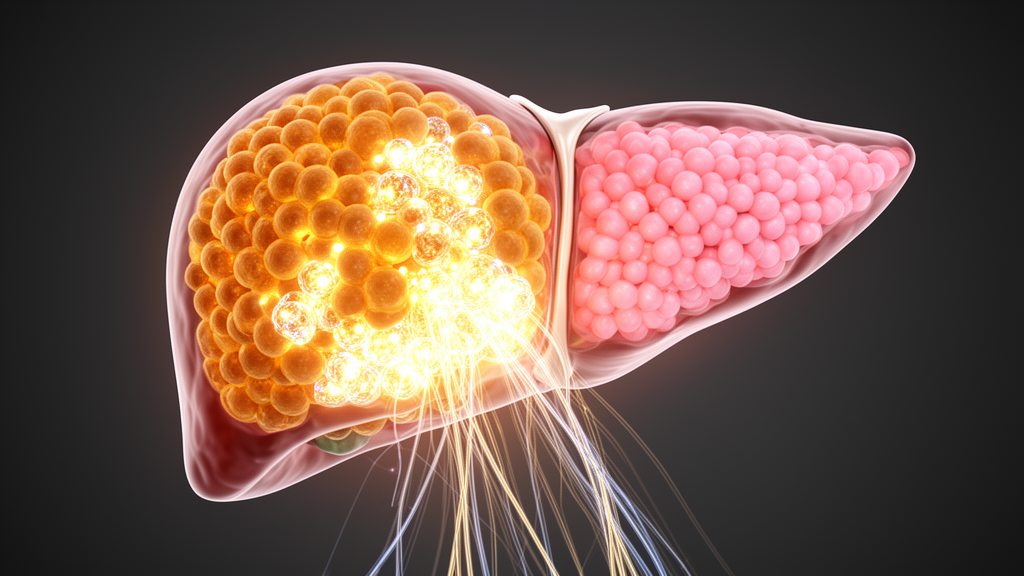
An experimental study published in MedScience reports that P53 and DNA damage-regulated gene 1 (PDRG1) is significantly upregulated in hepatocellular carcinoma (HCC) and promotes the proliferation and metastasis of this cancer by activating the Wnt/β-catenin pathway. The researchers further identified the transcription factor Specificity Protein 1 (SP1) as a direct activator of PDRG1 expression, delineating an SP1–PDRG1–Wnt/β-catenin axis in liver cancer cells. HCC ranks as the third leading cause of cancer-related mortality worldwide, and prognosis remains poor, particularly for patients diagnosed at advanced stages, when early metastasis and rapid recurrence contribute to unfavorable outcomes.
The team systematically examined PDRG1 expression in HCC tissues and found it elevated at both the mRNA and protein levels. Clinicopathological correlation analysis showed that high PDRG1 expression was significantly associated with advanced tumor stage, higher histological grade, and microvascular invasion. Patients with high PDRG1 levels had poorer overall and disease-free survival, and PDRG1 emerged as an independent prognostic factor in the cohort studied.
Functional experiments using gain-of-function and loss-of-function approaches supported an oncogenic role for the protein. Silencing PDRG1 in HCC cells significantly suppressed proliferation, colony formation, migration, and invasion in vitro, and inhibited tumor growth and lung metastasis in xenograft mouse models in vivo. Conversely, PDRG1 overexpression promoted HCC cell proliferation, migration, and invasion, confirming the direction of the effect in both experimental settings.
Mechanistically, the study centered on the Wnt/β-catenin pathway, a conserved signaling cascade that regulates cell proliferation, apoptosis, migration, invasion, stem cell maintenance, and tissue homeostasis. In the absence of Wnt ligand activation, β-catenin is bound by a destruction complex comprising Axin, APC, and GSK-3β, which phosphorylates β-catenin and targets it for ubiquitin-mediated proteasomal degradation. Upon pathway activation, this complex is inhibited, allowing non-phosphorylated β-catenin to accumulate and translocate to the nucleus, where it associates with TCF/LEF transcription factors to initiate transcription of target genes such as c-Myc and cyclin D1. Aberrant Wnt/β-catenin signaling is prevalent in HCC, where mutations in CTNNB1 and AXIN1 occur in approximately 20 to 40 percent of cases, yet upstream regulators of the pathway remain incompletely characterized. The researchers found that PDRG1 activates this cascade, as evidenced by increased levels of total and nuclear β-catenin, elevated expression of the downstream targets c-Myc and cyclin D1, and increased phosphorylation of GSK-3β at the Ser9 residue. Importantly, the Wnt pathway inhibitor XAV939 effectively reversed the oncogenic effects of PDRG1 overexpression, indicating that the protein’s pro-tumor activity is functionally dependent on Wnt/β-catenin signaling.
Tracing the signal one step upstream, the researchers used bioinformatic analysis to identify multiple putative SP1 binding sites within the PDRG1 promoter region and established SP1 as a direct transcriptional activator of the gene. SP1 is a ubiquitous transcription factor that binds GC-rich promoter elements and regulates genes involved in cell proliferation, differentiation, apoptosis, and angiogenesis, and it is frequently overexpressed and activated in various human cancers, including HCC. PDRG1 itself, located on chromosome 20q13.12, encodes a small protein of 133 amino acids. First identified in 2003, it was initially linked to the cellular DNA damage response, with expression regulated by ultraviolet radiation and the tumor suppressor p53, and elevated expression has since been reported in colorectal, ovarian, lung, gastric, breast, and uterine cancers.
Because PDRG1 functioned as an independent prognostic factor in the analyzed cohort and its oncogenic activity was reversed by pharmacological Wnt pathway inhibition in the experimental models, the study positions PDRG1 as a candidate biomarker and potential therapeutic target for a disease in which effective options for advanced stages remain limited. The findings derive from cell culture systems and xenograft mouse models, and clinical translation would require further validation in patient-based studies. The pathogenesis of HCC is complex and multifactorial, involving genetic susceptibility and environmental factors such as chronic viral hepatitis, alcohol consumption, non-alcoholic fatty liver disease, and aflatoxin exposure, and the reported SP1–PDRG1–Wnt/β-catenin axis adds a defined molecular link to this map.
Subject of Research: The role of SP1-induced PDRG1 in activating Wnt/β-catenin signaling to drive hepatocellular carcinoma progression
Article Title: PDRG1 induced by SP1 facilitates the proliferation and metastasis of hepatocellular carcinoma by activating the Wnt/β-catenin pathway
Article References: PDRG1 induced by SP1 facilitates the proliferation and metastasis of hepatocellular carcinoma by activating the Wnt/β-catenin pathway. Original publication (Bibliographic details unavailable.)
Image Credits: AI Generated
DOI: Not provided
Keywords: hepatocellular carcinoma, PDRG1, SP1, Wnt/beta-catenin pathway, beta-catenin, GSK-3beta, XAV939, metastasis, prognostic biomarker, liver cancer, transcriptional regulation, oncogene
News Source: Nathaniel Bowman. (October 25, 2026). SP1-induced PDRG1 drives hepatocellular carcinoma growth via Wnt/β-catenin signaling. Scienmag.