An analysis of complete tumour genomes from 1,001 men with prostate cancer identified eight faulty cellular processes that together account for the DNA damage in 85% of cases. The international observational study found that most tumours carried several processes simultaneously, while their combination and relative strength varied among patients and were associated with the likelihood of cancer spread. The researchers said the findings may eventually help develop prognostic tests and guide more individualized treatment, but they require confirmation in independent patient groups and prospective clinical studies before they can influence care.
The study, published in Nature on 9 September 2026, was co-led by the Spanish National Cancer Research Centre within the Pan Prostate Cancer Group, an international consortium that has assembled what the researchers described as the world’s largest collection of prostate cancer genomes. It examined 959 tumour samples donated by men in seven countries. All samples were processed in the same way and paired with medical follow-up over a median of seven years. The investigators also checked the findings in a second, independent set of tumours, although the research release did not provide details about the size or composition of that set.
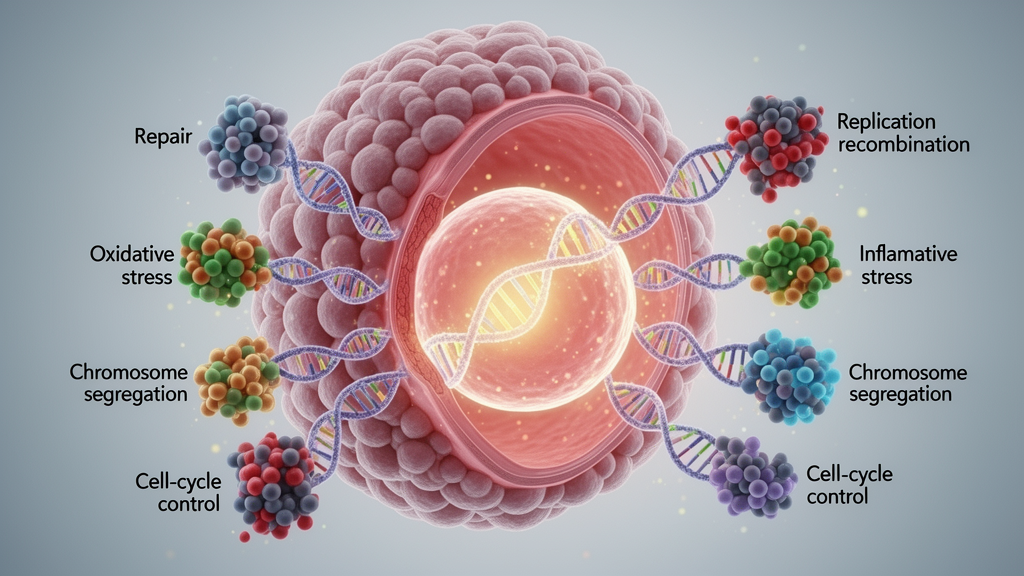
Rather than treating each form of genomic alteration as a separate phenomenon, the team integrated four classes of DNA damage: single-letter changes, short stretches of DNA gained or lost, large structural rearrangements, and large losses or gains of genetic material. These patterns are known as mutational signatures, which provide clues about the biological processes that produced them. Previous studies had generally examined one type at a time. By analysing all four together, the investigators identified eight recurring processes related mainly to hormone signalling, defective DNA copying, faulty DNA repair and ageing. Most prostate cancers were therefore not characterized by a single isolated defect but by several active processes at once.
The balance among those processes differed between patients. Geoff Macintyre, head of the Computational Oncology Group at the CNIO and one of the study’s supervisors, said that the balance of processes operating within a tumour is associated with how likely the cancer is to spread. The release quoted him saying that reading one type of DNA damage at a time is like transcribing a symphony from the cello part alone: it reveals the tempo but not the whole work. In the combined analysis, the eight processes emerged as overlapping biological states rather than sealed compartments that could cleanly sort patients into distinct groups.
One prominent result concerned a process that, when it was the most active in a tumour, was associated with a greater likelihood of metastatic spread. The association remained after the researchers accounted for patient age, tumour stage and the grade assigned by a pathologist examining the tumour under a microscope. This linked the relative prominence of a genomic process with disease behaviour beyond those conventional factors. Because the study was observational, however, it did not establish that the process directly causes metastasis or show that measuring it would improve predictions in routine clinical practice.
The researchers also linked one active process to a small group of 25 patients who appeared to respond better to a specific type of therapy. This finding came from a post hoc subgroup analysis rather than a trial designed to test whether the process should guide treatment selection. The small number of participants and the lack of a prospective comparison mean that the observation remains exploratory. It does not yet establish which therapy should be selected for an individual patient, but it identifies a hypothesis that would need evaluation in larger, independently designed clinical studies.
Another striking feature was the scarcity of signatures associated with external carcinogens. The investigators searched for recognizable DNA traces of tobacco, ultraviolet radiation and other environmental agents, comparable to those readily detected in lung or skin cancers, but found practically none across almost 1,000 genomes. Barbara Hernando, a researcher at the CNIO and one of the study’s four joint first authors, said the team was surprised by the scale of damage arising from within the cell. The absence of these signatures did not mean that environmental exposures or lifestyle were irrelevant to prostate cancer. Hernando said diet, weight and inflammation can influence whether the disease develops without leaving a detectable trace in the DNA.
The analysis nevertheless brings the prospect of prognostic biomarkers closer. Macintyre said the findings must first be confirmed in other patient groups. A candidate measurement would then need to become a test that produces the same answer every time, be evaluated in men making actual treatment decisions and be shown to help them. Joachim Weischenfeldt, a professor at the Biotech Research and Innovation Centre of the University of Copenhagen and Rigshospitalet and another study supervisor, said the work was not expected to change treatment immediately. These requirements extend beyond the observational analysis and the exploratory treatment-response finding reported here.
Weischenfeldt described the contribution as a map of the biological processes that drive prostate cancer and emphasized that it uses DNA sequencing already performed by several health systems. The proposed approach is to read existing data differently rather than build a new test from scratch. The practical promise lies in using the combinations and relative strengths of mutational signatures to represent the multiple processes operating within a tumour more fully. The present evidence comes from human tissue samples, however, and remains insufficient to support a clinical recommendation or a change in how prostate cancer is treated.
Subject of Research: Mutational processes associated with DNA damage and progression in human prostate cancer tumours
Article Title: Scientists reveal what damages the DNA in most prostate cancers
Article References: Scientists reveal what damages the DNA in most prostate cancers. Original publication (Bibliographic details unavailable.)
Image Credits: AI Generated
DOI: Not provided
Keywords: prostate cancer, cancer genomics, mutational signatures, DNA damage, tumour heterogeneity, DNA repair, metastasis, computational oncology, prognostic biomarkers, personalized medicine, Scientists, reveal
News Source: Nathaniel Bowman. (October 22, 2026). Observational genome study links eight processes to most prostate cancer DNA damage. Scienmag.